7 Best Blending Boards For Fiber Art Worth Using
Discover the 7 best blending boards for fiber art to elevate your spinning projects. Explore our top expert recommendations and upgrade your craft today.
Creating custom rolags or art batts transforms raw fleece into a personalized spinning experience that mass-produced roving simply cannot match. A quality blending board acts as the canvas for these fiber creations, allowing for precise color blending and texture layering. Choosing the right tool requires balancing budget, portability, and the specific density of the carding cloth. This guide evaluates seven industry standards to help makers invest in equipment that aligns with their long-term fiber goals.
Ashford Blending Board: Best Overall for Spinners


The Ashford blending board is the industry standard for a reason: it balances durability with a highly functional design. It features a solid wooden construction that stays put on a tabletop, preventing the frustration of a board that slides while fiber is being loaded.
The included blending brush is well-balanced, making it easier to flick fibers onto the board without excessive wrist strain. This is an essential consideration for those who spend hours preparing fiber for a large sweater project where consistency is key.
Because of its widespread popularity, finding replacement parts or instructional tutorials is effortless. If the goal is a reliable, “set it and forget it” tool that performs consistently, this remains the most logical choice.
Kromski Blending Board: Top Pick for Art Batts

Kromski blending boards are designed for those who gravitate toward wild, textural art batts. The surface is generous in size, allowing for the inclusion of locks, silk scraps, and Angelina fibers without overcrowding the teeth.
The craftsmanship is aesthetically pleasing, often matching other Kromski spinning wheels, which appeals to makers who value a cohesive studio look. Beyond looks, the board’s geometry makes it exceptionally easy to remove the finished batt in a clean roll.
This board shines when creating gradients or high-contrast colorways. For those who enjoy spinning bulky, textured yarns for a statement cowl or heavy-duty mittens, this board offers the necessary room to experiment.
Howard Brush Blending Board: The Professional’s Choice
For the serious fiber artist, Howard Brush is synonymous with precision. The carding cloth on these boards is of a higher grade, meaning it grips even the most stubborn, short-staple fibers with ease.
This is not a budget tool, but the investment reflects in the longevity of the teeth. If you frequently blend luxury fibers like fine merino, cashmere, or angora, you need the superior grab that only high-quality carding cloth provides.
The heavy-duty base ensures stability during vigorous brushing. When precision and a professional finish are non-negotiable, Howard Brush sets the standard for quality.
The Woolery Blending Board Kit: Best for Beginners

Entering the world of fiber preparation can feel overwhelming, but this kit simplifies the process by providing everything required to start immediately. It eliminates the guesswork of sourcing accessories separately.
The board is sized comfortably for those who have limited tabletop space in their craft rooms. It offers enough surface area for learning basic color blending techniques without being physically cumbersome to store between projects.
Beginners often struggle with how much pressure to use; this board is forgiving and durable enough to withstand the initial learning curve. It is the perfect entry point before graduating to more specialized, professional equipment.
Clemes & Clemes Blending Board: The Heirloom Option
Clemes & Clemes is a name that represents old-world craftsmanship in a modern era. These boards are built with a level of wood quality and finish that makes them true heirlooms.
The carding cloth is hand-set and incredibly dense, offering a level of control that mass-produced boards cannot replicate. This board is designed for the maker who intends to use the same tool for the next thirty years.
While the cost is higher, the performance on high-end, delicate fibers is unmatched. It is an investment in quality that pays off by reducing fiber waste and ensuring a smooth, even draft during spinning.
Schacht Blending Board: Most Versatile Design

Schacht has engineered their board with an adjustable back support that allows for multiple angles of use. This is a game-changer for those who experience fatigue in their shoulders or wrists during long blending sessions.
The board is modular and well-integrated into the broader Schacht ecosystem. Its design allows for easy cleaning, which is vital when alternating between greasy raw fleeces and clean, processed rovings.
If your workspace is limited or you find yourself needing to transport your tools to a spinning guild meeting, the ergonomic, foldable design is a significant advantage. It balances professional-grade performance with user-friendly accessibility.
Paradise Fibers Blending Board: Great Budget Pick

Paradise Fibers offers a practical solution for makers who want to experiment with blending without a massive upfront financial commitment. It provides all the necessary functionality to create beautiful, consistent batts.
The board is lightweight yet sturdy, making it a great option for makers who need to clear their workspace quickly. It performs exceptionally well with standard wool breeds like Corriedale or Bluefaced Leicester.

While it may lack some of the premium aesthetic details of higher-end boards, it does not sacrifice the actual blending performance. It proves that you can achieve high-quality results without breaking your budget.
How to Choose the Right Blending Board for You
- Portability: Do you need to pack your tools for fiber retreats, or will it stay in a dedicated studio space?
- Fiber Type: Are you blending fine, slippery fibers like silk, or coarse, long-staple wool?
- Ergonomics: Consider how long you plan to blend in a single sitting; adjustable angles are worth the extra cost if you have repetitive strain issues.
- Storage: Measure your available space to ensure the board fits securely without being in the way.
What is TPI? Choosing Your Carding Cloth Density
TPI stands for “teeth per inch,” a critical metric for determining how well your board will handle specific fibers. A lower TPI is generally better for coarse, long-staple fibers like Lincoln or Leicester Longwool, as it prevents the fibers from becoming tangled or “nested” too deeply.
Conversely, a higher TPI is essential for fine fibers such as Merino or Rambouillet. The tighter density grips the fine hairs more effectively, preventing them from slipping through and ensuring a smooth, uniform blend.
Always match the TPI to the fibers you use most often. Using a very high-density cloth for coarse, heavy fiber will make it nearly impossible to remove the finished batt without tearing.
Blending Board vs. Drum Carder: Which is Better?
A blending board is a manual tool, offering maximum control over color placement and fiber orientation. It is perfect for creating small, one-off custom rolags for a unique yarn, but it requires more physical effort for large volumes of fiber.
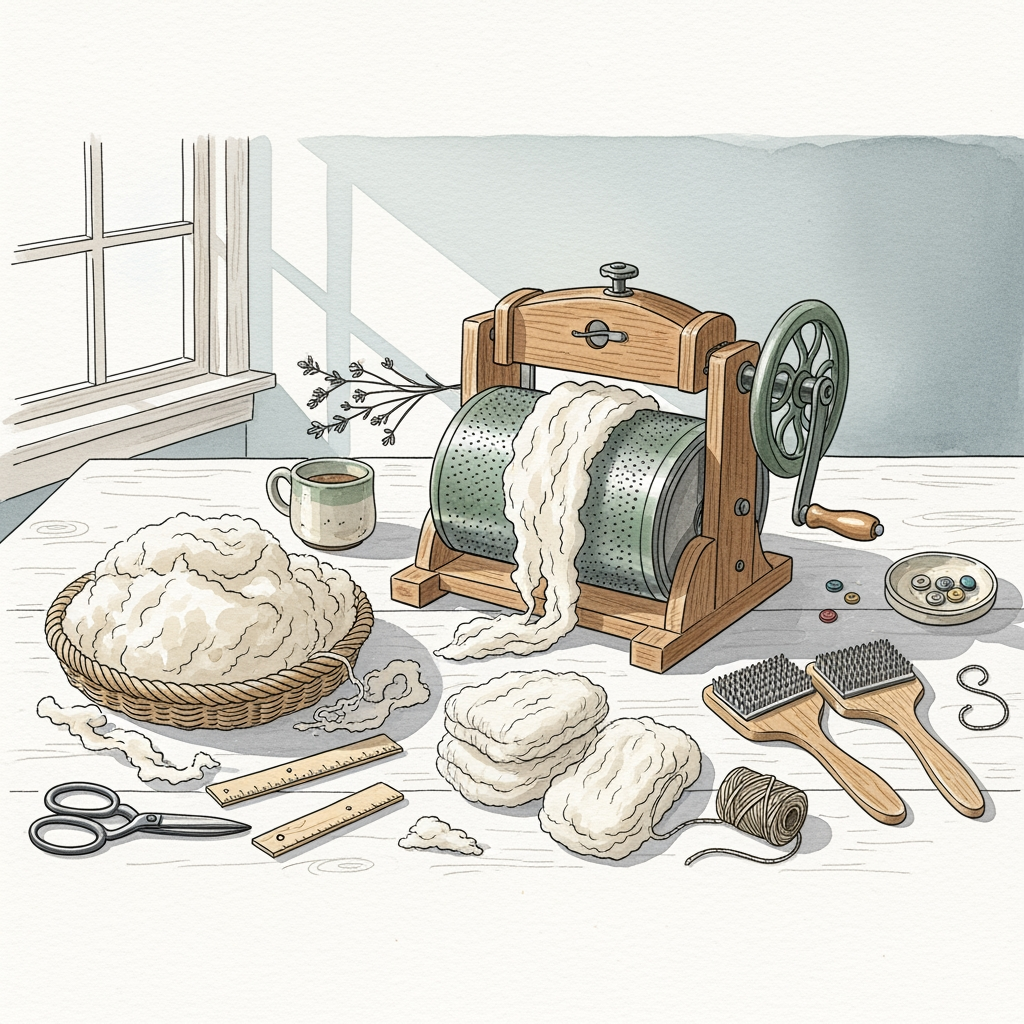
A drum carder, by contrast, is a mechanical solution meant for mass production. It is superior for carding large quantities of fleece for a full sweater’s worth of yarn, but it lacks the granular color control that a blending board provides.
For most knitters and spinners, the blending board is the better starting point for artistic exploration. Reserve the drum carder for when you need to process entire fleeces in record time.
Ultimately, the best blending board is the one that fits into your creative workflow without becoming a source of physical strain or frustration. Whether you prioritize professional-grade density or an affordable, portable design, these boards provide the foundation for infinite fiber possibilities. Experimentation is the heart of fiber art; choose a tool that encourages you to keep creating, blending, and spinning your own unique narratives.