6 Best Journaling Pens For Acid Free Surfaces
Discover the 6 best journaling pens for acid-free surfaces. Preserve your memories perfectly with our expert recommendations. Shop our top-rated picks today.
Finding the right pen to record your knitting journey is as important as selecting the perfect yarn for a complex heirloom project. When you document your gauge, dye lot numbers, or specific yarn fiber content, you need ink that won’t fade or migrate over the years. Acid-free, archival-quality pens ensure your notes remain legible long after the project has been bound off the needles. Choosing the wrong tool can lead to smudging on delicate tags or bleeding through thin project planner pages.
Sakura Pigma Micron: The Archival Standard
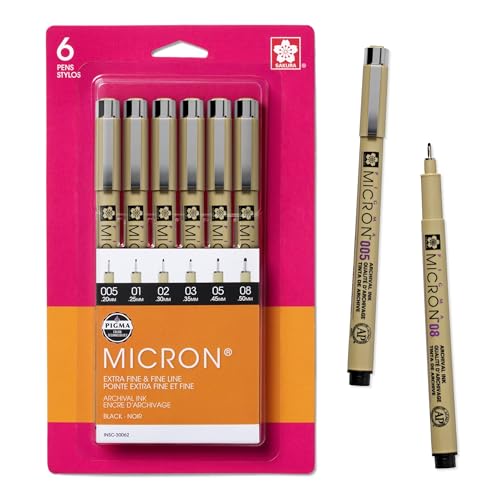

The Sakura Pigma Micron is widely regarded as the gold standard for archival work because of its pH-neutral, pigment-based ink. When you are noting down intricate row counts or lace chart modifications, the consistent ink flow prevents skips that might cause confusion months later.
Because these pens are waterproof once dry, they hold up exceptionally well when attached to project bags that might encounter a stray drop of tea or water. The nibs range from ultra-fine 003 to thicker 08 sizes, allowing for precise labeling of small yarn labels.
Be mindful that these are fiber-tipped pens, which means they can fray if pressed too hard against rough, textured surfaces like untreated wool or linen. Use a light touch to extend the life of the nib and keep your lines crisp.
Faber-Castell Pitt Pen: Artist’s Choice

Faber-Castell Pitt pens utilize India ink, which is prized for its extreme lightfastness and permanence. For knitters working with expensive hand-dyed yarns, these pens offer a high degree of protection against the gradual fading that can happen to ink stored in bright knitting rooms.
The brush nib option provides a unique advantage for labeling decorative swatch journals or writing project names in a stylized hand. It allows for variable line width, which is a sophisticated touch for documenting professional-grade garment construction.
These pens are exceptionally durable, but they require a moment to set on certain coated papers. If you are rushing to log a transition between colorwork sections, give the ink a few seconds to cure before closing your notebook.
Staedtler Pigment Liner: For Fine Details
Staedtler Pigment Liners offer a metal-clad tip that provides incredible stability, making them ideal for writing on small surfaces like plastic or paper yarn tags. When you are dealing with a tiny bit of space on a ball band, the precision of these tips prevents overcrowding.
The ink is designed to be smudge-proof and water-resistant, which is a major advantage when juggling multiple projects. If you accidentally brush your hand across a freshly labeled tag while reaching for a stitch marker, the ink is unlikely to smear.
These pens also feature a “dry safe” capability, meaning they won’t dry out if left uncapped for a short period. This is a practical benefit for those who frequently pause to re-orient a complex cable pattern while keeping their project notes open.
Uni-ball Signo: Smoothest Archival Gel Ink
The Uni-ball Signo stands out in the gel pen category for its use of pigment-based, archival-quality ink that behaves like a fountain pen but functions with the convenience of a rollerball. For knitters who prefer a bold, dark line that stands out against white notebook paper, this is the superior choice.
Gel ink sits on top of the paper fibers rather than soaking deep into them, which helps prevent feathering. This is particularly useful if your journal uses thinner, lightweight paper that would otherwise struggle with wetter inks.
Because the ink is thicker, it provides a very tactile, smooth writing experience that requires almost no pressure. It is an excellent option for long journaling sessions where you are detailing a project’s backstory or reflecting on the meditative aspects of your craft.
Zebra Sarasa Clip: Best Everyday Carry Pen
The Zebra Sarasa Clip is a workhorse that fits perfectly into any portable knitting kit or notion pouch. Its pigment-based ink is water-resistant, ensuring that your quick notes on dye lots and fiber percentages stay secure, even if the bag gets jostled or exposed to humidity.
The standout feature is the strong, spring-loaded binder clip that attaches securely to almost any journal cover or project bag handle. It ensures you are never hunting for a pen when it is time to note a sudden increase or a change in needle size.
While the ink is reliable, it is a faster-drying formula than many gel pens, which is a significant advantage for left-handed knitters. It minimizes the risk of the “smear” that often occurs when your hand drags across a page while working through a pattern.
Sharpie Art Pen: Most Widely Available Pick
Sharpie Art Pens are a accessible, reliable option that manages to avoid the dreaded bleed-through associated with traditional permanent markers. They use a non-toxic, acid-free ink that is specifically formulated for paper, making them safe for archival journals.
The felt tip is firm enough to handle writing on slightly textured yarn labels without catching or pulling. This provides a balance between the fine lines of a technical pen and the smooth glide of a marker.
While they are excellent for general notation, they are not strictly waterproof in the same way as the pigment-heavy options listed above. Use these for your primary knitting logs and journals, but consider a different option if you are labeling items that will be submerged in water during a heavy blocking session.
What to Look For in an Archival Journal Pen
When selecting a pen for fiber arts documentation, prioritize ink chemistry over barrel aesthetics. You want a pen labeled “archival” or “pigment-based” to ensure the ink won’t acidify the paper over time, which would cause the paper to yellow or rot at the point of contact.
Consider the drying time relative to your journaling habits. If you are a fast-paced writer who tends to flip pages quickly, opt for quick-drying gel or pigment liners. If you are patient and detail-oriented, you have more flexibility with ink types.
Also, evaluate the tip size based on the surface area you intend to use. A 0.5mm tip is a standard, versatile choice, but keep a 0.3mm or smaller on hand specifically for tiny yarn tags or the cramped margins of a knitting pattern.
- Lightfastness: Ensures ink won’t fade in sunlight.
- Waterproof/Water-resistant: Protects against tea spills or blocking mist.
- Acid-Free/pH Neutral: Prevents long-term paper degradation.
- Bleed Resistance: Keeps the backside of your journal pages clean.
Pigment vs. Dye Ink: Which Is Best for You?
Understanding the difference between pigment and dye ink is critical for long-term project archiving. Pigment ink consists of solid particles suspended in a carrier, which rest on the surface of the paper. This makes it far more resistant to light and environmental factors, making it the clear winner for archival purposes.
Dye ink, by contrast, is absorbed into the fibers of the paper. While it often produces vibrant, saturated colors, it is more prone to fading and can bleed or feather if the paper quality is not high.
If you are choosing a pen to track projects you plan to save for decades, always lean toward pigment-based inks. They provide the structural integrity required for legacy documentation where information must remain legible for future generations.
Tips for Writing on Yarn Tags and Swatches
Writing on yarn tags requires a different approach than writing in a notebook because the surfaces are often slick, glossy, or highly textured. For glossy ball bands, let the ink sit for a longer duration to prevent smearing, as non-porous coatings hold ink on the surface longer.
When labeling yarn swatches that have been blocked, ensure the tag is completely dry before writing. Any residual moisture in the fiber or the tag will cause the ink to wick outwards, resulting in blurry, illegible text.
If you find yourself writing on fabric labels or ribbon, use a permanent, pigment-based fabric marker instead of a paper pen. This ensures the ink bonds with the textile weave and will withstand the friction of being moved around your yarn stash.
How to Prevent Smudging and Bleed-Through
Smudging is almost always the result of a mismatch between the ink flow rate and the paper’s absorbency. To prevent this, keep a small scrap of clean blotting paper or a dry paper towel in your project bag to place under your hand while you write.
Bleed-through occurs when ink saturates the paper completely, reaching the reverse side. If you use a journal with thinner paper, switch to a finer tip pen, such as a 0.1mm or 0.2mm, to reduce the total volume of ink deposited on the page.
If you are ever in doubt about a specific pen, conduct a “bleed test” on the final page of your journal. Write a few lines, let them dry, and check the reverse side to ensure the ink hasn’t compromised the integrity of the underlying page.
Documenting your projects is a rewarding practice that turns your knitting hobby into a permanent archive of your creative evolution. By investing in the right pens, you ensure that every note, adjustment, and fiber discovery remains as clear as the day you first put needle to yarn.