7 Best Weaving Tutorials For Specific Loom Types
Master your craft with our 7 best weaving tutorials for specific loom types. Find the perfect step-by-step guide for your equipment and start creating today.
Weaving is a natural progression for the fiber arts enthusiast, offering a structural approach to thread that complements the fluid loops of knitting. Choosing the right loom can feel as overwhelming as selecting the perfect yarn for a complex lace shawl. Mastering these tools requires understanding the specific mechanics behind the frame, the tension, and the weave structure. This guide breaks down the essential tutorials to bridge the gap between curiosity and craft.
Kelly Casanova’s Rigid Heddle Basics: For Beginners
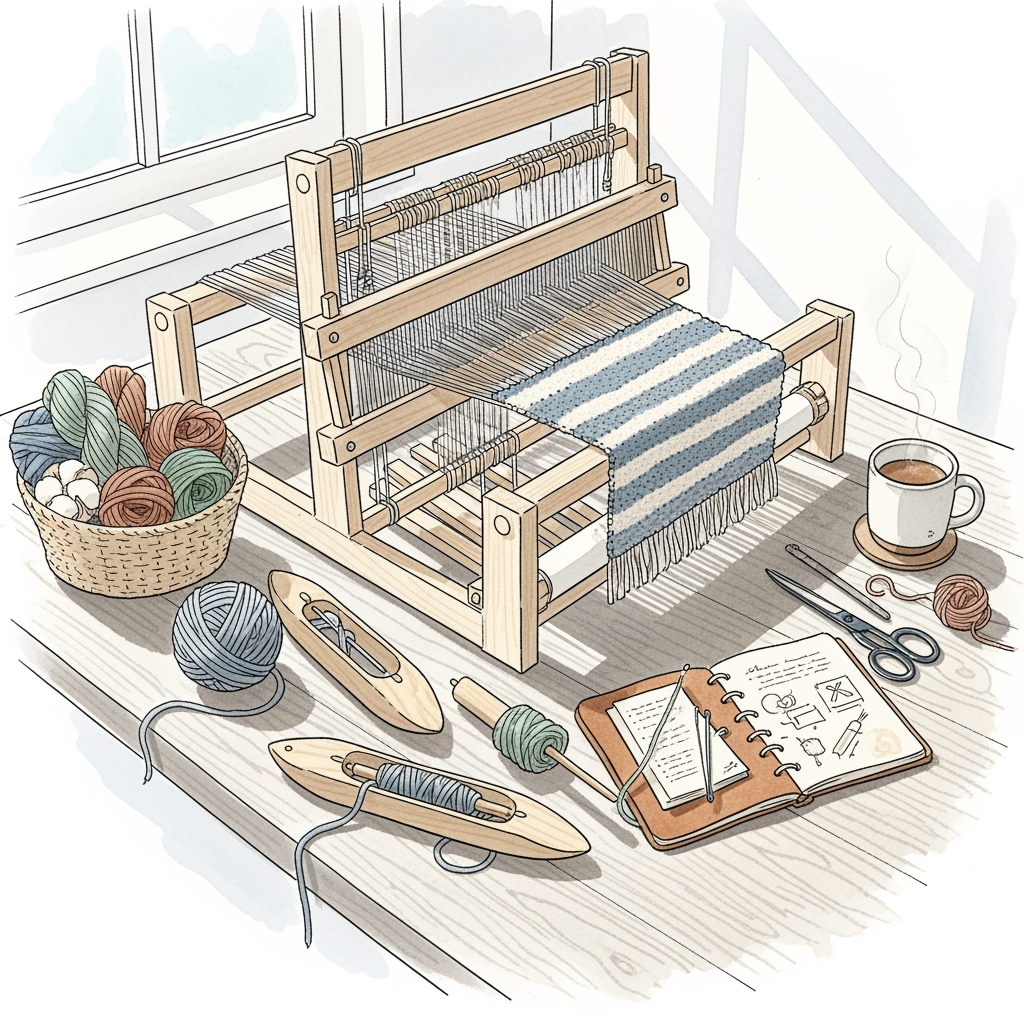
The rigid heddle loom is the ideal bridge for knitters transitioning into weaving because it utilizes a single shedding device that is both approachable and versatile. This tutorial demystifies the process of “direct warping,” a method that simplifies the setup phase significantly.
For those accustomed to the repetitive motion of circular needles, the rhythmic throw of a shuttle feels surprisingly intuitive. The focus here is on achieving consistent tension, which prevents the “draw-in” common in early weaving projects where edges become uneven.
This course is best suited for those who want to produce scarves, table runners, or even yardage for sewing. It removes the intimidation factor of traditional looms, ensuring that the first project doesn’t end up as a tangled mess on the floor.
Hello Hydrangea’s Frame Loom Weaving 101
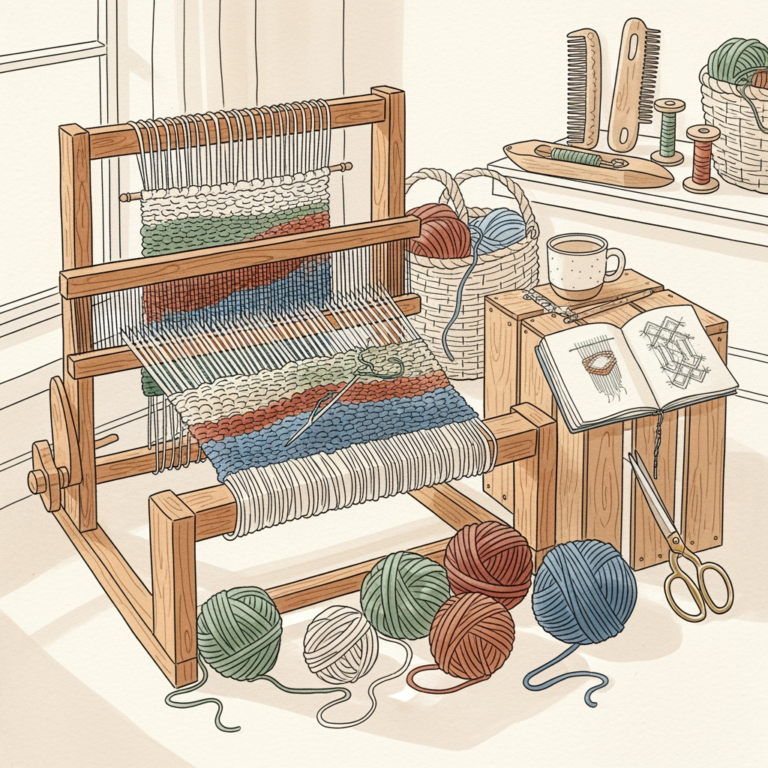
Frame looms represent the most accessible entry point into the world of fiber arts, functioning similarly to a simple knitting hoop or a peg loom. This tutorial centers on the artistic freedom of tapestry weaving, where texture and color play a larger role than structural precision.
Unlike complex multi-shaft looms, frame looms prioritize creativity and tactile exploration. It is an excellent environment for experimenting with “art yarns”—thick, thin, or highly textured fibers that might be difficult to work with on a precision knitting machine.
If the goal is to create wall hangings with varying pile heights and mixed materials, this is the definitive starting point. The trade-off is speed; frame looms are labor-intensive and not designed for producing large quantities of fabric efficiently.
Jane Stafford School’s First Floor Loom Project
Transitioning to a floor loom is equivalent to moving from basic stockinette to intricate cable work or lace construction. These machines allow for complex pattern work, utilizing multiple shafts to create intricate structures like twills and satins.
The tutorial emphasizes the importance of ergonomics, as weaving on a floor loom requires a full-body engagement that differs significantly from sedentary knitting. Understanding how to manage the “warp” (the vertical threads) across a wide breadth is crucial for success.
This resource is designed for the serious crafter who wants to produce professional-quality garments or home textiles. While the learning curve is steeper, the ability to create complex fabrics that are impossible to knit is well worth the investment of time.
Schacht’s Intro to Inkle Loom Weaving
Inkle weaving creates incredibly durable, narrow bands that are perfect for straps, belts, and decorative trims. If there is a need for high-tension, non-stretchy fabric, the inkle loom is the superior tool.
Because inkle weaving uses a continuous warp, the setup requires precision and a good understanding of color sequencing. The result is a double-faced fabric that is virtually indestructible, much like a tightly knit wool cord.
These tutorials are perfect for those who want to integrate custom-made straps into their handmade bags or accessories. It is a focused, technical skill that yields high-utility results in a compact space.
Purl & Loop’s Weave-It Loom Masterclass
Pin looms offer a unique approach where small squares are woven individually and then joined together, much like a granny square in crochet. This is an excellent way to use up “stash” yarn that may not have enough yardage for a full sweater.
The masterclass covers the assembly process, which is the most critical step in creating a cohesive textile. The technique requires careful attention to tension so that the individual squares maintain a uniform gauge.
This method is highly portable, allowing for “on-the-go” weaving that mimics the convenience of taking a small knitting project to a coffee shop. It is ideal for making blankets, pillows, or items where individual block design is preferred.
Rebecca Mezoff’s Tapestry Weaving Basics
Tapestry weaving is essentially painting with fiber, focusing on images and shapes rather than continuous yardage. This tutorial explores the technical nuances of controlling the “weft” (the horizontal thread) to create curves and lines.
In knitting, gauge is measured in stitches per inch; in tapestry, it is measured in ends per inch (EPI). Understanding this distinction is vital for maintaining the structural integrity of a pictorial design.
This path is for those who view their fiber practice as a visual art form. Expect to learn advanced techniques like hatching and blending, which elevate a project from a simple mat to a gallery-worthy piece.
Elewys’s Beginner Tablet Weaving Class
Tablet weaving, or card weaving, is a historic technique that uses punched cards to twist warp threads into intricate, structural patterns. It is an ancient craft that creates complex, beautiful bands with distinct geometric motifs.
The tutorial explains the “threading” of the tablets, which is the most intricate part of the process. It is a highly cerebral form of weaving that rewards those who enjoy the logic of charts and pattern repeats.
If the desire is to recreate historical patterns or create sophisticated jewelry and trims, tablet weaving offers unmatched detail. It requires patience and a steady hand, but the results are durable and visually complex.
How to Choose the Right Loom For Your First Project
Selecting a loom depends entirely on the intended output. Rigid heddle looms offer the most versatility for a beginner, allowing for both scarves and basic garments with a relatively small footprint.
- For scarves and small yardage: Choose a rigid heddle loom.
- For artistic wall hangings: Choose a frame loom.
- For narrow belts and straps: Choose an inkle loom.
- For complex patterns and upholstery: Choose a multi-shaft floor loom.
Consider the physical space available in the workspace. A large floor loom is a permanent furniture piece, while a pin loom can be tucked into a knitting bag.
Picking the Right Yarn for Weaving: A Quick Guide
Yarn choice for weaving is more restrictive than for knitting because the warp threads must withstand constant mechanical tension. Always look for a yarn with a high “twist” and a smooth surface, as fuzzy or loosely spun fibers will catch and break during the shedding process.
- Warp yarns: Choose smooth, high-twist yarns like mercerized cotton, linen, or firmly plied wool.
- Weft yarns: This allows for more experimentation; mohair, boucle, or hand-spun yarns work beautifully as weft threads.
- Fiber properties: Avoid delicate single-ply yarns for the warp, as they lack the tensile strength required for a loom.
When in doubt, perform a “snap test.” If the yarn breaks easily under moderate tension, it will likely fail on the loom.
Weaving Terms: What is Warp, Weft, and Heddle?
Understanding the lexicon of the loom is the first step toward fluency in the craft. The warp consists of the vertical threads held in tension on the loom, providing the structural foundation of the cloth.
The weft refers to the horizontal threads passed through the warp, essentially creating the fabric as they interlace. Finally, the heddle is the mechanism that raises or lowers the warp threads to create the “shed,” the opening through which the weft is passed.
Think of these terms as the “knit, purl, and gauge” of the weaving world. Once the mechanics of how the heddle controls the warp to receive the weft are clear, the process becomes less of a mystery and more of a predictable, rhythmic practice.
Mastering these seven loom types provides a comprehensive foundation for any fiber artist. By selecting the tool that aligns with the intended outcome, you ensure that the learning process remains an enjoyable journey rather than a technical hurdle. Happy weaving.