6 Best Disposable Brushes For Messy Adhesive Application
Tired of sticky cleanup? Discover our top 6 disposable brushes for messy adhesive application to ensure clean, precise results. Upgrade your toolkit here today.
Whether attaching leather bag bottoms to knitted totes or reinforcing the inside of a felted wool vessel, adhesive application is a necessary skill for the modern maker. Glue often behaves unpredictably when it touches porous fibers, meaning the tool used for application is just as important as the adhesive itself. Choosing the wrong applicator can lead to messy, hardened patches that ruin the drape of a handmade piece. These six disposable options provide the control needed to maintain the integrity of delicate work.
Acid Brushes: The Inexpensive Workhorse Option


Acid brushes are the industrial workhorses of the crafting world, featuring stiff, horsehair-like bristles and a simple tin handle. They are remarkably effective for applying heavy-bodied adhesives like E6000 or rubber cement to rigid materials like bag hardware or wooden blocking forms.
Because the bristles are coarse and rigid, they do not fray or melt when exposed to stronger chemical adhesives. This makes them ideal for tasks where precision is less critical than full, even coverage on a surface.
Avoid using these on fine, open-weave knits where the stiff bristles might snag or pull at the yarn strands. They are best reserved for structural components where the adhesive will never touch the visible face of the yarn.
Foam Brushes: For a Smooth, Streak-Free Finish
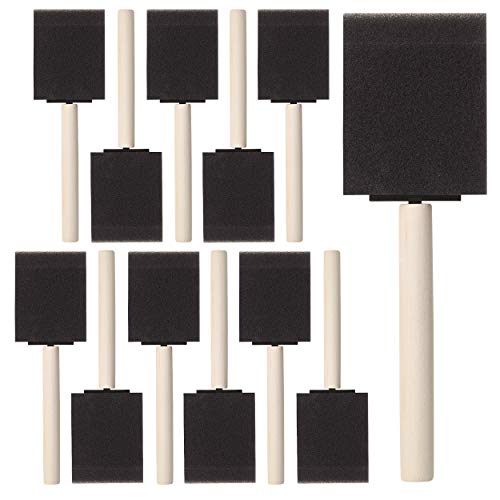
Foam brushes excel when the goal is a thin, uniform layer of adhesive across a flat surface. When gluing a stiffener to the back of a lace shawl for display or coating a needle-felted sculpture, foam provides a controlled spread that bristles often lack.
The soft, absorbent nature of the foam holds a decent amount of liquid glue without dripping, which helps prevent unwanted globs on your work. This is vital when working with fibers that easily show glue stains, such as white wool or delicate silks.
Be mindful that these brushes can begin to disintegrate if used with certain solvent-based glues. Always test the interaction between the foam and the adhesive on a scrap piece of fabric before applying it to the final project.
Chip Brushes: Best for Covering Larger Surfaces
Chip brushes are essentially inexpensive, disposable paint brushes with wooden handles and natural bristles. These are the go-to choice when applying liquid stiffeners or fabric glue to a large surface area, such as the entire interior of a structured felted basket.
These brushes provide a high volume of coverage quickly. If you are working on a large-scale installation or a massive bag that requires broad strokes, they allow for rapid application before the adhesive begins to set.
The primary tradeoff is bristle shedding; cheap natural fibers often leave behind stray hairs. Always pull at the bristles before use to remove loose ones, and keep a pair of tweezers nearby to quickly pluck any that find their way onto your project.
Micro Applicators: Ultimate Precision for Details
Micro applicators consist of a tiny, lint-free fiber tip on a long, thin plastic handle. They are the surgical tools of the adhesive world, indispensable for fine-detail work like gluing tiny rhinestones onto a garment or fixing a snag with a drop of fray-check.
These tools allow for such localized application that you can place glue on a single stitch without touching the surrounding area. When you are working on complex colorwork or intarsia, precision is the difference between a professional finish and a messy disaster.
Because they have almost no absorbency, they do not waste expensive or highly specialized adhesives. They are the most efficient option for small, high-stakes tasks where excess glue would be impossible to remove once cured.
Silicone Spreaders: A Reusable-Disposable Pick
Silicone spreaders feature a flat, flexible blade that moves glue across a surface without the risk of fiber-catching bristles. While they are technically reusable, their low cost and ease of cleaning often land them in the “use and discard” category for messy projects.
They are superior for spreading thick, viscous glues across seams or patches. Because the silicone is non-porous, dried glue usually peels right off the spreader, making them a cleaner, more sustainable choice for high-volume work.
Use these when working with slippery, synthetic yarns where bristle brushes might slide and leave streaks. The flat edge forces the adhesive into the nooks of the stitch structure, ensuring a secure bond.
Budget Art Brushes: A Surprisingly Versatile Choice
Inexpensive synthetic-hair art brushes—the kind sold in multi-packs for painting—are excellent for delicate, controlled adhesive work. They provide a much smoother application than chip brushes and offer more control than foam options.
The finer, synthetic bristles hold their shape well even when saturated with adhesive, making them perfect for applying fabric glue along edges or seams. They offer a refined application that is crucial when your work will be handled frequently or judged for its finish.
Because these are often made with synthetic nylon or polyester, they are generally resistant to most common adhesives. Keep a stash of different sizes on hand to match the scale of the area being bonded.
Choosing the Right Brush for Your Adhesive Type
Matching your brush to the viscosity of your glue is a foundational skill in professional finishing. Thick, paste-like adhesives require the rigid resistance of an acid brush or the flat surface of a silicone spreader.
Thin, watery glues—like fabric stiffeners or fray-prevention liquids—are better suited to fine synthetic brushes or micro-applicators. Using a thick, thirsty foam brush with a watery glue will lead to puddling and uneven saturation.
Always consider the drying time of your glue. If an adhesive sets in seconds, you need an applicator that allows for fast, broad coverage; if it has a long open time, take your time with a brush that offers high precision.
Bristle Matters: Natural vs. Synthetic vs. Foam
Natural bristles are best for solvent-based adhesives and heavy-duty tasks but are prone to shedding. Synthetic bristles are versatile, durable, and offer a more consistent finish, making them the standard for most crafting applications.
Foam applicators provide the smoothest finish but lack the mechanical strength to push glue into dense, tightly knit fabrics. If you are gluing onto bulky, lofty yarns, a stiff-bristled brush will outperform foam every time.
Match the bristle type to the material you are working on as well. If you are worried about fibers migrating, stay away from low-quality natural brushes that shed, and stick to high-quality synthetics instead.
Tips for Cleaner, More Controlled Application
The secret to a clean finish is the “less is more” approach. Never dip the entire brush head into the glue; apply a small amount to the tip and work it onto the fabric in light, thin layers.
Use a scrap piece of cardstock as a palette. Dip your applicator into the puddle on the cardstock rather than the glue bottle to prevent contaminating your main supply and to ensure you only pick up the amount needed.
If you are concerned about glue bleeding through to the right side of your knitting, place a piece of plastic wrap or wax paper between the layers. This creates a barrier that keeps your work crisp while the adhesive cures.
When to Toss vs. When to Clean Your Brushes
Disposable brushes are labeled as such for a reason, but that doesn’t mean they cannot be salvaged for a second or third use. If you are using a water-based adhesive, a quick rinse under warm water immediately after use can extend the life of a synthetic brush significantly.
However, once a brush becomes crusty, stiff, or loses its shape, it becomes a liability. Using a compromised brush leads to sloppy work, which inevitably requires more time to fix than it would have taken to simply reach for a fresh applicator.
When in doubt, toss it. The cost of a few cents for a new brush is always lower than the cost of ruined time and expensive yarn spent trying to salvage a project from a botched adhesive job.
Proper tool selection is just as essential as choosing the right needle size or yarn weight. By understanding the mechanical properties of these six applicators, you can ensure that the structural elements of your projects remain as beautiful and polished as the stitches themselves.