6 Best Lighting Stands For Stability Worth Investing In
Discover the 6 best lighting stands for stability that offer professional support for your gear. Read our expert guide to choose the right stand for your studio.
Knitting in poor light is more than just a nuisance; it is a fast track to eye strain and dropped stitches that can ruin an entire row of complex lace. When working with dark, low-contrast yarns like navy wool or black mohair, the difference between a high-quality lamp and a standard bulb is the difference between effortless progress and hours of frustration. Stable, adjustable lighting is a critical tool for every fiber artist, serving as a silent partner to your needles and hooks. Investing in a robust lighting stand ensures that every loop remains visible and every stitch remains perfectly placed, regardless of the time of day.
Brightech Litespan LED: Best Overall Crafter’s Lamp
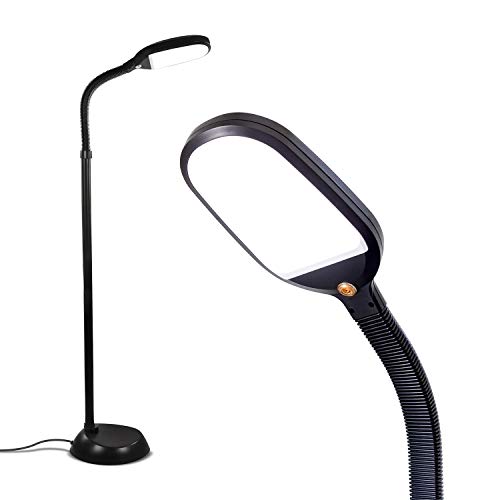

The Brightech Litespan LED excels by providing a clean, high-intensity beam that mimics natural daylight without the harshness of fluorescent alternatives. It is particularly effective for knitters working with fine-gauge projects where every stitch detail is vital.
Because the neck is highly flexible, it allows for precise positioning over a lap full of chunky sweaters or delicate baby garments. The weighted base ensures that even when extended over a wide area, the lamp remains upright and steady on carpet or hardwood.
While it lacks some of the advanced dimming features found in premium task lights, its simplicity is a strength. It provides consistent, flicker-free illumination that keeps eyes from tiring during late-night knitting sessions.
Daylight Company Lumi: Best for Intricate Colorwork

When tackling stranded colorwork or complex cables, color accuracy becomes the most important factor in a workspace. The Daylight Company Lumi is engineered to render colors exactly as they appear in natural light, preventing the common mistake of misidentifying closely related shades of blue or green.
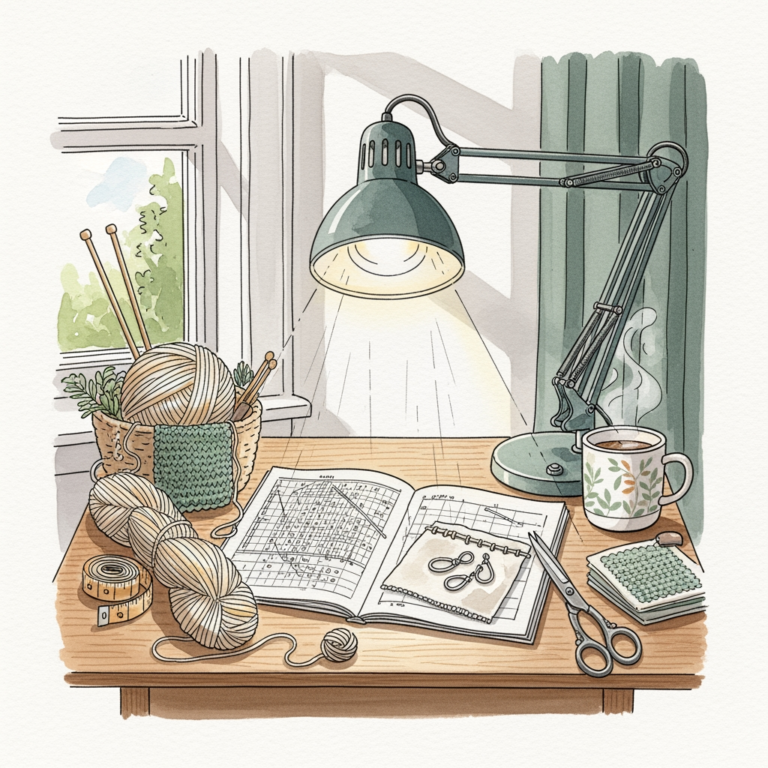
The wide, multi-jointed arm allows for a sweeping reach, making it perfect for those who shift positions frequently while knitting. Its broad light head illuminates a large surface area, which is essential when a pattern chart, a row counter, and a skein of yarn all share the same table space.
The primary tradeoff here is the footprint; this is a lamp designed for a dedicated craft area rather than a small corner. However, for those invested in high-end wools where color fidelity is non-negotiable, the Lumi is a foundational piece of equipment.
OttLite 2-in-1 Floor & Table Light: Most Versatile
Versatility is the hallmark of the OttLite 2-in-1, as it easily transitions from a tall floor lamp to a compact table-top light. This is an ideal solution for knitters who might alternate between a cozy armchair for evening socks and a dining table for blocking larger shawls.
The proprietary lighting technology is designed to reduce glare, which is especially beneficial when working with silk or highly mercerized cotton yarns that tend to reflect light. By softening the reflection, it makes reading complex charts far easier on the vision.
Consider this model if your craft space is multipurpose or if floor space is at a premium. The base is stable enough for standard use, though it may feel less substantial than dedicated heavy-duty floor lamps.
Verilux SmartLight: Top Pick for True Color Yarn

The Verilux SmartLight is favored for its “SmartLighting” technology, which allows the lamp to adjust its brightness and color temperature automatically. This ensures that whether one is working with off-white alpaca or high-contrast neon acrylic, the yarn’s true texture and hue are highlighted.
It is particularly useful for knitters who struggle with the “yellowing” effect of standard warm bulbs. By providing a crisp, neutral light, it helps reveal dropped stitches or snagged plies that would otherwise vanish into the fiber.
The interface is intuitive, meaning it won’t distract from the actual knitting process. It is a premium investment, but for those who spend hours each day at their needles, it is an essential piece of ergonomic equipment.
Neatfi XL Magnifier Lamp: Best for Fine Detail Work

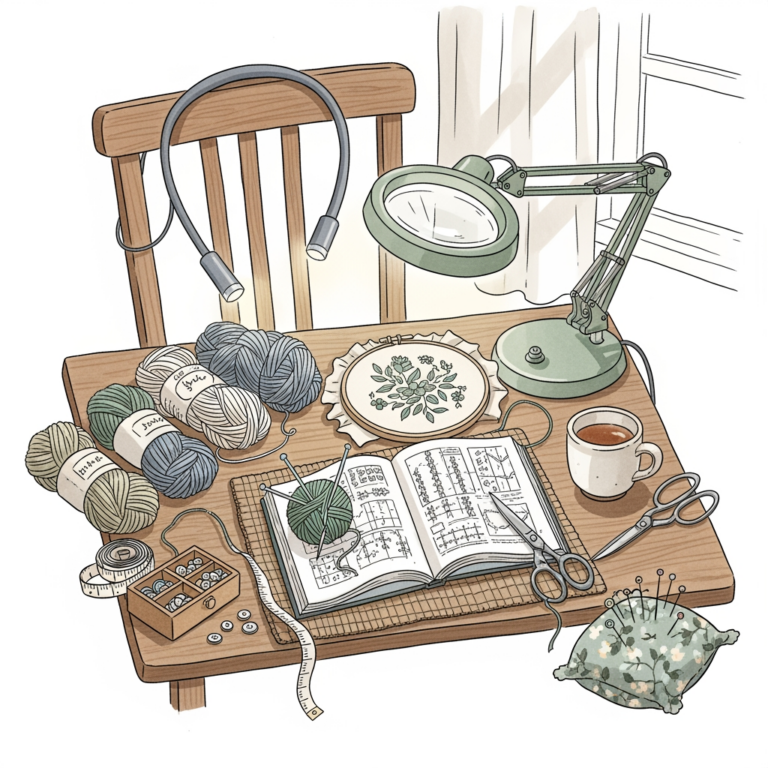
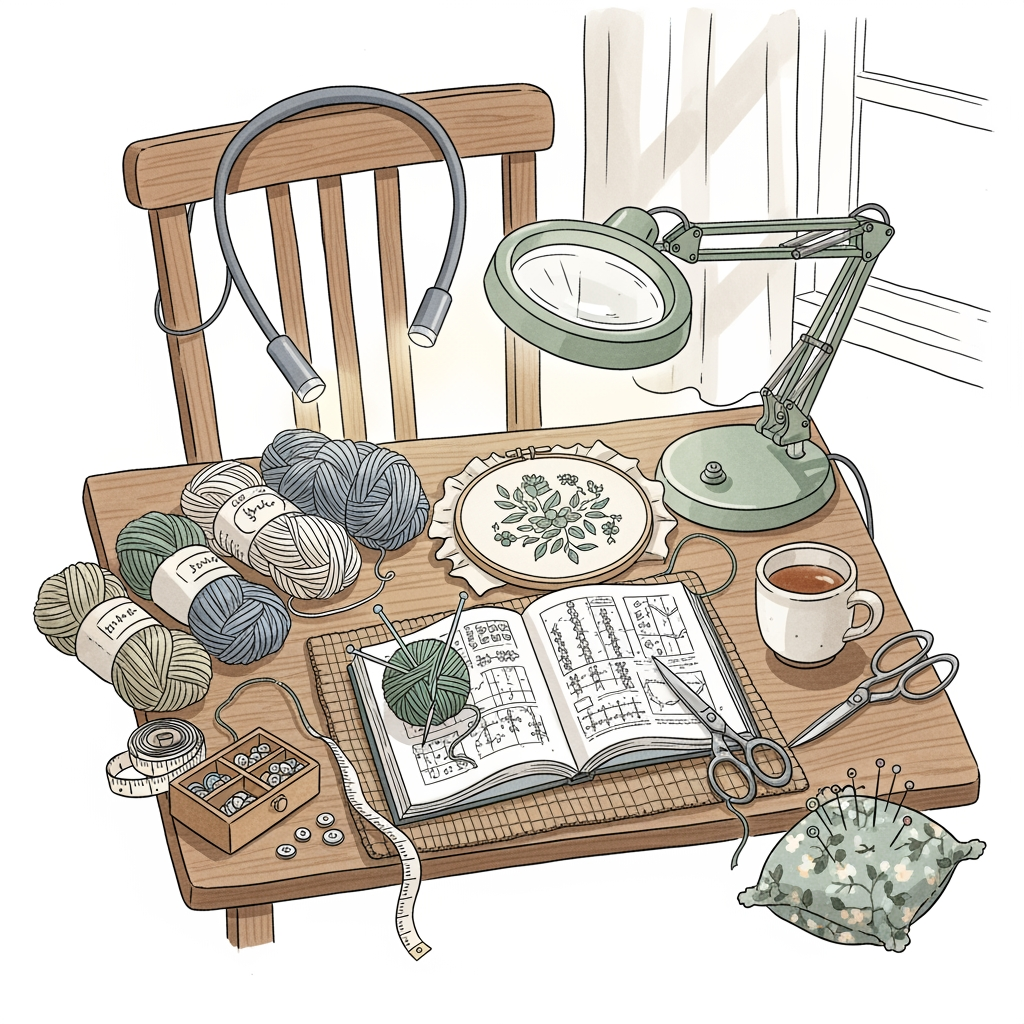
When working with lace weight yarns or correcting errors in a complex intarsia pattern, magnification is a game changer. The Neatfi XL combines a massive, clear lens with powerful LED lighting to bring every microscopic thread into sharp focus.
This lamp is specifically designed for those who find standard lighting insufficient for dark yarn or tiny needles. It eliminates the need to squint or hold work uncomfortably close to the face, which helps maintain proper posture during long sessions.
The tradeoff for such a heavy-duty lens is a heavier arm that requires a sturdy mounting surface. Ensure your side table or floor base can handle the weight, as this is a tool built for serious, focused detail work.
Brightech Sky Torchiere: Best for Ambient Lighting

Not every project requires a focused task beam; sometimes, a knitter simply needs an evenly lit room to prevent eye fatigue while working on repetitive stockinette. The Brightech Sky Torchiere provides excellent ambient light by directing the beam upward, bouncing it off the ceiling to fill the entire space.
It serves as a perfect supplement to a localized task lamp. When paired together, the two ensure there are no dark corners in the room, effectively reducing the contrast strain that occurs when looking back and forth from a dark project to a dark room.
It is simple, energy-efficient, and incredibly stable due to its wide base. If the goal is overall comfort rather than microscopic precision, this is the most effective solution for a cozy knitting nook.
How to Choose a Light for Your Crafting Space
Selecting the right light requires an honest assessment of both the project and the space. If the knitting area is a permanent fixture, a heavy-duty floor lamp is often the best choice for stability.
Consider the following factors before buying: * Adjustability: Can the neck pivot enough to reach the needles without casting shadows? * Base Weight: Is the base heavy enough to prevent tipping if bumped? * Dimming Capabilities: Can the light intensity be adjusted for different times of day? * Footprint: Will the base interfere with feet or other furniture?
Remember that the goal is to make the yarn visible without making the workspace feel clinical. Choose a lamp that complements the existing room while providing the necessary technical support for your hands.
Understanding Color Temperature (Kelvin) for Yarn
The Kelvin (K) rating determines whether a light appears warm (yellowish) or cool (bluish). For knitting, a range of 4000K to 5000K is considered the “sweet spot” because it approximates midday sun.
- Under 3000K: Appears very yellow, which can cause dark blue and black yarns to look identical.
- 4000K–5000K: Neutral, clear, and excellent for identifying subtle color changes in hand-dyed yarns.
- Above 6000K: Can feel clinical or harsh, potentially causing eye fatigue over long periods.
Always check the Kelvin rating on the box, as “bright” does not always mean “color-accurate.” A neutral, daylight-balanced bulb is the best way to ensure the work looks exactly as intended once it leaves the studio.
Positioning Your Lamp for Shadow-Free Knitting
Shadows are the primary enemy of efficient knitting. A common mistake is placing the lamp directly behind the head, which casts a shadow over the hands and the needle tips, forcing the eyes to work twice as hard.
Ideally, the light source should come from the side or slightly in front of the knitter, angled downward to hit the point where the yarn meets the needle. If right-handed, placing the light on the left side (or vice versa for left-handed knitters) ensures the hands do not block the light flow.
Take a moment to adjust the lamp height every time you change chairs or seating positions. Proper alignment reduces the need for “feeling” the stitches, allowing you to rely on sight and muscle memory in equal measure.
What to Look for in a Stable Lamp Base
A stable lamp base is the foundation of a frustration-free workspace. Avoid lightweight plastic bases that move every time you adjust the lamp’s arm; instead, look for weighted metal bases that have a low center of gravity.
If the lamp is a clamp-style model, ensure the clamp has a wide, rubberized surface area to prevent damage to expensive wooden tabletops. For floor lamps, the base should have a large enough diameter that it cannot be easily tipped by a pet, a stray ball of yarn, or a wandering foot.
Ultimately, the best stand is the one that stays exactly where you put it. Don’t underestimate the impact of a sturdy base on the overall rhythm and flow of your knitting.
Investing in a high-quality lighting stand is an essential step toward preserving your eyesight and increasing the enjoyment of every stitch. Whether you prioritize color accuracy for complex colorwork or stable ambient light for evening relaxation, these options provide the professional-grade support necessary for long-term fiber art success.