
6 Best Sheet Music Stands For Orchestral Pits
Looking for the best sheet music stands for orchestral pits? Explore our top 6 durable, high-performance picks to upgrade your setup. Read the full guide here.
The orchestral pit is a high-pressure environment where equipment failure is simply not an option. Much like choosing the perfect circular needle for a complex, 500-stitch-per-round lace project, selecting a music stand requires balancing long-term durability with the specific demands of the space. Musicians need reliable support that can withstand cramped quarters, constant adjustments, and the occasional frantic page turn. Finding the right gear ensures the focus remains entirely on the performance rather than managing temperamental equipment.
Manhasset 48 Symphony Stand: The Gold Standard


The Manhasset 48 is the ubiquitous workhorse of the orchestral world. Its legendary friction-tilt neck eliminates the need for annoying knobs, mirroring the reliability of a well-calibrated set of interchangeable needles.
The heavy-duty steel construction handles thick orchestral scores as easily as a bulky, worsted-weight cabled sweater handles a set of sturdy wooden needles. Its longevity is unmatched, provided the base is tightened securely to prevent wobbling during intense bowing passages.
While the fixed height adjustment can be stiff, it remains incredibly secure. Think of it as the ultimate set of non-slip bamboo needles; once set, it stays exactly where placed.
K&M 100/1 Stand: The Best for Heavy Use
The K&M 100/1 represents the pinnacle of German engineering, favored for its robust build quality. When dealing with heavy, leather-bound scores or multiple layers of sheet music, this stand offers a rigidity that cheaper alternatives lack.

The telescoping rods are precise and smooth, functioning with the fluid motion of a high-end yarn ball winder. It excels in environments where folding and unfolding occur daily, resisting the structural fatigue that often plagues lesser models.
For the musician who values mechanical perfection, this is the gold standard. It holds weight firmly without sagging, ensuring your music stays at eye level even through the most aggressive crescendos.
D&A Hyperion Music Stand: Most Stable Design
The D&A Hyperion features a unique tripod base that provides exceptional balance. It utilizes a proprietary gear system that feels as reliable as a well-tensioned loom, preventing any unexpected drops during a concert.
This stand is designed to occupy a small footprint while offering maximum resistance to accidental bumps. If the pit environment is tight and prone to jostling, the Hyperion provides peace of mind that a top-heavy score won’t topple the entire setup.
The locking mechanisms are intuitive and fast. It is a fantastic choice for players who prioritize stability above all else, ensuring the music remains stationary even in high-traffic zones.
Peak Music Stands SMS-20: Best Value Option
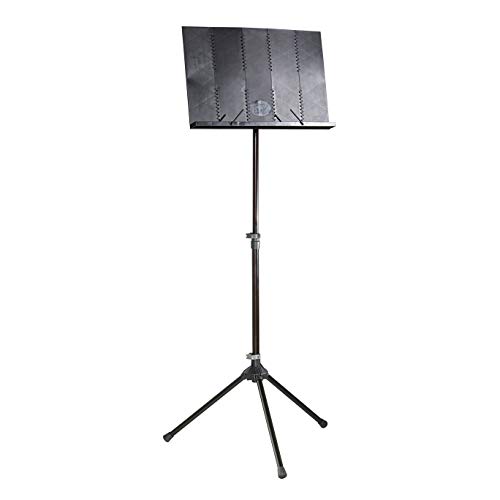
The Peak SMS-20 balances affordability with surprising structural integrity. It functions similarly to a mid-range needle set; it does not have the bells and whistles of professional-grade gear, but it performs consistently for everyday tasks.
The desk is wider than many budget stands, accommodating side-by-side pages with ease. This is vital for complex works where flipping pages frequently could break the flow, much like misplacing a stitch marker in a complex cable repeat.
While the plastic tension knobs require occasional monitoring, the overall frame is surprisingly resilient. It represents a pragmatic choice for the student or part-time musician who demands quality without an exorbitant price tag.
On-Stage SM7211B Pro: Best Budget Performer
The On-Stage SM7211B Pro is a sturdy entry point that refuses to compromise on core functionality. It utilizes a classic design that is easy to repair and maintain, much like a traditional wooden crochet hook that lasts for decades with simple care.
The adjustable desk angle is reliable and holds heavy music books without slipping. It is a workhorse that understands the necessity of “set it and forget it” utility, allowing for complete immersion in the music.
Keep in mind that it is heavier than some folding models. However, that mass is exactly what keeps it firmly planted on the floor, providing a secure foundation for any performance.
Nilton Magic Stand: Easiest Pro-Grade Setup
The Nilton Magic Stand redefines portability without sacrificing professional performance. It uses a clever, nested folding system that allows it to collapse into an incredibly slim profile, ideal for musicians who travel frequently between venues.
The setup time is virtually instantaneous, functioning with the speed of a quick-cast-on technique. For the orchestral player who moves between rehearsals, this stand provides the professional desk surface they need without the bulk of a heavy, non-collapsible symphony stand.
It is a specialized tool that excels in versatility. While it may not possess the sheer mass of a stationary symphony stand, its convenience is a significant advantage for the nomadic professional.
How to Choose a Stand for the Orchestral Pit
Selecting a stand for the pit is akin to selecting the right fiber for a project. You must weigh the density of the environment, the weight of the material being used, and the frequency of use against your own mobility needs.
Consider the following factors: * Total Height: Ensure it accommodates your playing posture comfortably. * Weight Capacity: Will it support a heavy, multi-movement score? * Storage Footprint: Does it need to fold down small for travel? * Base Stability: Is the floor uneven or prone to vibrations?
Always prioritize long-term utility over short-term savings. An unreliable stand is a distraction that no amount of talent can fully overcome during a performance.
Stability vs. Portability: What Matters Most?
There is an inherent tradeoff between a heavy, stable base and a lightweight, portable frame. Just as a fine lace yarn requires a different needle than a heavy wool roving, your stand choice must match the environment.
Stability is non-negotiable for stationary, long-term pit residences. Heavy, solid-based stands prevent accidents and ensure the desk surface remains perfectly steady under the weight of thick sheet music.
Portability is prioritized by freelance musicians who need to be “gig-ready” at a moment’s notice. If the tradeoff results in a slightly less rigid desk, ensure the stand has a high-quality tension lock to compensate for the reduction in weight.
Must-Have Accessories for Your Music Stand
Accessories can significantly improve your setup. A dedicated stand light is vital in the dim lighting of a pit, much like a neck light is essential for knitting dark yarn in a poorly lit room.
Consider these additions: * Stand Light: Choose LED for a cool, long-lasting glow. * Pencil Shelf: Keeps tools handy without cluttering the music. * Page Clips: Essential for outdoor gigs or drafty pits to keep sheets secure. * Protective Padding: Prevents the metal desk from damaging sensitive instruments.
These small additions enhance efficiency and safety. They are the “notions” of the orchestral world, ensuring everything you need is organized and accessible.
Solid vs. Vented Desks: Which Is Right?
The debate between solid and vented desks comes down to weight and airflow. A solid desk provides a clean, professional aesthetic and doubles as a wind-shield if playing outdoors.
A vented desk, however, is significantly lighter and less susceptible to gusts. In a climate-controlled orchestral pit, the choice is largely aesthetic and personal, similar to choosing between stainless steel or wooden needles for their tactile feedback.
Solid desks are generally better at holding small items like tuners or pencils without them sliding through gaps. Vented desks offer a modern look and reduced weight, making them easier to maneuver in tight corners.
The orchestral pit demands reliable equipment that serves the music first. By balancing the specific needs of your repertoire, the constraints of your workspace, and your own logistical requirements, you can find a stand that supports your performance just as faithfully as the right tools support your craft. Choose wisely, keep your gear maintained, and ensure every note—and every stitch—is backed by the stability it deserves.
