6 Best Crimping Beads For Professional Jewelry Finishes
Elevate your jewelry designs with our expert guide to the 6 best crimping beads. Shop our top picks today to achieve secure, professional finishes every time.
Achieving a professional finish on jewelry often feels as critical as mastering a complex lace chart or ensuring consistent tension in stranded colorwork. Much like selecting the correct needle material for slippery silk versus grippy wool, choosing the right crimp bead dictates the structural integrity and aesthetic longevity of a piece. A poorly secured bead can unravel a design just as easily as a dropped stitch ruins a sweater. This guide breaks down the essential crimping components to help ensure jewelry remains as secure and polished as a perfectly blocked shawl.
Beadalon Crimp Tubes: Best for Versatility


Beadalon crimp tubes are the industry standard for a reason, offering the same reliability as a trusted set of stainless steel needles. These tubes are designed to be compressed firmly against stringing wire, providing a stable anchor point for clasps and pendants.
Their versatility lies in the variety of diameters available, which is essential when working with different weights of jewelry wire. Just as one would not use a bulky worsted-weight needle for delicate lacework, matching the tube size to the wire diameter is vital for a clean, secure lock.
If the tube is too large, the wire will slip inside; if it is too small, the wire will become crowded and weak. Always check the manufacturer’s sizing chart to ensure the tube diameter accommodates the thickness of the jewelry wire plus an extra margin for the return pass.
Sterling Silver Crimp Beads: Best for Fine Jewelry
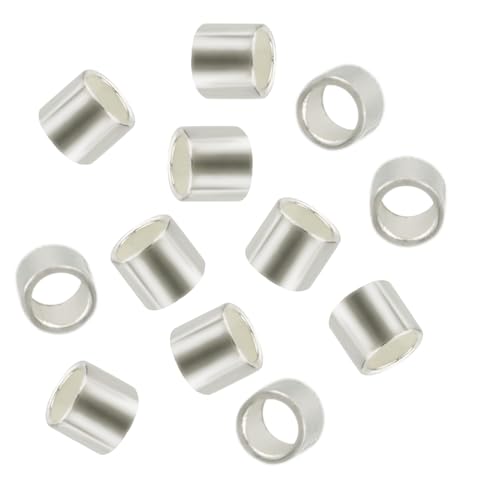
Sterling silver crimp beads provide an elevated finish that mirrors the quality of high-end, hand-dyed luxury yarns. These are the go-to choice for pieces incorporating precious gemstones or silver findings, as they maintain color consistency throughout the design.
Using precious metals requires a gentle hand, much like handling delicate mohair or single-ply wool. Sterling silver is softer than base metals, meaning it can be prone to cracking if over-compressed or squeezed with uneven pressure.
Invest in high-quality silver crimps to avoid the tarnishing that plagues cheaper, plated alternatives. For long-term jewelry care, warn recipients that these will require the same polishing routine as fine heirloom silver pieces.
Gold-Filled Crimp Beads: A Luxurious Finish
Gold-filled crimp beads offer the aesthetic of solid gold without the prohibitive cost, making them ideal for professional-grade costume jewelry. They consist of a thick layer of gold mechanically bonded to a brass core, providing excellent durability and wear resistance.
This durability is similar to choosing a high-twist, multi-ply yarn that can withstand constant friction and handling. Because the gold layer is substantial, these beads are far more resistant to flaking than gold-plated options, which can wear down quickly under daily use.
When working with these, ensure the tools used are smooth-jawed to prevent marring the surface of the gold. A scratched finish can make even the most intricate design look amateur, much like visible joins in a finished garment.
Soft Flex Extreme Crimp Tubes: Best for Security

Soft Flex Extreme crimp tubes are crafted from heavy-walled, seamless metal, providing an extra level of protection for heavy or expensive pieces. The internal diameter is exceptionally precise, which prevents the wire from shifting after the crimp has been compressed.
Think of these as the structural reinforcements for a heavy cable-knit sweater or a load-bearing seam. When the design involves heavy beads or requires high tension, these tubes offer a significantly higher breaking strength than standard, thin-walled crimps.
While they require a slightly firmer squeeze, they are nearly impossible to crush accidentally. For designs intended to last for years of daily wear, the peace of mind offered by these heavy-duty tubes is well worth the investment.
Twist Crimp Beads: A Decorative, Secure Choice
Twist crimp beads combine functionality with a unique, textured aesthetic. These beads feature a spiral or faceted design that disguises the crimp as part of the decorative element, removing the need for a secondary crimp cover.
This is a clever design solution for minimalist jewelry, similar to choosing a decorative cast-on that serves both a functional and visual purpose. The twisting action created during compression also helps grip the wire more effectively than a smooth surface.
Be aware that because of their shape, these require a specific technique to ensure they are crimped in the correct orientation. Practice on a scrap piece of wire until the motion becomes intuitive, much like learning to hold a new type of crochet hook.
Magic Finding Crimp: Best for a Seamless Look
Magic Finding crimps are engineered to hide the unsightly tail of the jewelry wire, providing a sleek, professional appearance that looks like a seamless loop. They effectively collapse the crimp into a neat, rounded bead that blends into the rest of the stringing material.
For jewelry artists who value a clean, minimalist silhouette, these are indispensable. They mimic the effect of a perfectly grafted Kitchener stitch—where the seam disappears entirely into the fabric.
While they require a slight adjustment to the crimping technique, the visual payoff is immense. Use these when the closure of the necklace or bracelet is meant to be a design feature rather than a hidden utility.
How to Choose the Right Crimp Bead for Your Wire
- Diameter matching: Always select a tube with an internal diameter roughly double the thickness of the wire.
- Weight requirements: Heavier, multi-strand wire requires robust, thick-walled crimp tubes to prevent slippage.
- Material compatibility: Match the metal of the crimp to the findings to ensure the piece ages gracefully without galvanic corrosion.
- Flexibility: Thinner, softer wires may require a smaller, more malleable crimp bead to ensure a tight lock without damaging the wire strands.
Crimp Beads vs. Crimp Tubes: Which Is Better?
Crimp beads are spherical and tend to look more like part of the design, whereas crimp tubes are cylindrical and offer more surface area for a secure lock. Tubes are generally preferred for professional applications because they can be easily folded into a uniform, secure shape.
Think of the difference between a simple knot and a secure, woven-in end. Beads are often easier to squash, but they can sometimes collapse irregularly, leaving sharp edges. Tubes provide a consistent, predictable result that is easier to replicate across multiple projects.
For a secure finish that stands up to the rigors of wear, prioritize crimp tubes. They offer the structural stability required for professional-grade work.
Essential Tools for Perfect Jewelry Crimping
- Chain-nose pliers: Useful for initial placement and holding, but avoid using them to finalize the crimp.
- Crimp pliers: These are the most critical tool; they feature a two-step notch system to fold and then compress the metal into a smooth shape.
- Wire cutters: Always keep a pair of sharp, high-quality side cutters on hand to ensure the wire ends are trimmed flush.
- Magnification: Much like using a magnifying lamp for fine-gauge knitting, seeing the crimp clearly prevents errors in the final lock.
Common Crimping Mistakes and How to Avoid Them
The most frequent error is over-crimping, which weakens the metal and can cut through the jewelry wire itself. Think of this like over-tensioning a stitch, which stretches the fiber and ruins the gauge of the fabric.
Another mistake is failing to test the crimp before finishing the piece. Always give the wire a firm tug; if it slips, the crimp is not secure and must be replaced.
Finally, avoid twisting the crimp during compression. Keeping the wire strands parallel inside the tube ensures that the crimping pressure is distributed evenly, resulting in a bond that is as strong as the wire itself.
Mastering the mechanics of crimping is an essential step in transitioning from casual jewelry assembly to crafting pieces with genuine, long-term durability. By selecting high-quality materials and practicing the correct compression techniques, you ensure that every strand and bead stays perfectly in place. Just as a well-finished garment brings joy through its reliability and craft, a properly crimped piece of jewelry offers the wearer confidence and beauty that lasts for years.