6 Best Sewing Lighting Lamps For Eye Strain
Stop struggling with poor visibility. Discover the 6 best sewing lighting lamps for eye strain and brighten your workspace today. Read our expert guide now.
Straining to read dark-colored yarn or struggling to identify a dropped stitch under dim living room lighting can ruin even the most enjoyable knitting session. Consistent, high-quality illumination is just as vital as choosing the right needle material or yarn weight for a project’s success. Proper lighting reduces ocular fatigue, prevents headaches, and allows for the precision required to execute complex lace or delicate cabling. This guide explores the best lighting solutions to ensure every stitch is worked with absolute clarity.
Brightech Litespan LED: Best Overall Floor Lamp
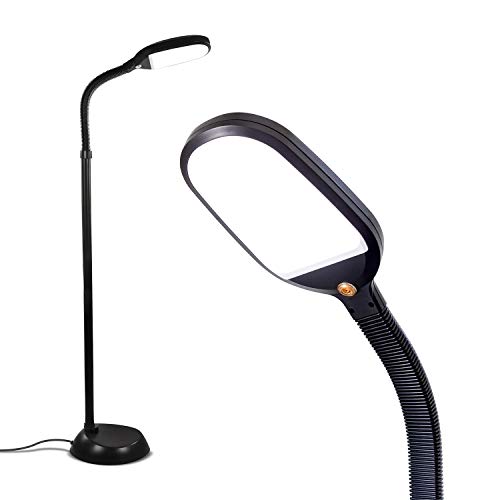

The Brightech Litespan serves as a reliable workhorse for crafters who need a stable, adjustable light source that doesn’t dominate a room. Its flexible neck allows for precise positioning over a project bag or the lap, ensuring light hits the needles directly without creating harsh shadows.
This lamp shines when working with dark, high-twist wools where stitch definition is easily lost in low light. The flicker-free LED technology minimizes the “strobe effect” that often contributes to eye strain during late-night knitting marathons.
While it lacks the heavy-duty magnification of more specialized tools, its color-correct light is perfect for assessing yarn color accuracy during complex stranded colorwork. It stands as a balanced choice for those who want a simple, effective floor lamp without unnecessary bells and whistles.
Neatfi XL 2,200 Lumens: Best for Detail Work
When working with intricate patterns or fine-gauge lace on 2.00mm needles, standard lighting often falls short. The Neatfi XL provides an expansive, high-lumen output that bathes the entire knitting area in a broad, consistent glow, effectively eliminating the dark spots that cause eye fatigue.
The sheer power of this lamp is its primary advantage for those tackling dark, mohair-blend yarns, which are notoriously difficult to see. Because the lamp head is wide, it covers a significant workspace, making it ideal for managing multiple charts, patterns, and notions simultaneously.
It is a substantial piece of equipment that requires desk space, making it better for a dedicated crafting station than a mobile setup. However, the trade-off for its size is an unparalleled ability to see every single fiber and stitch structure with professional-grade clarity.
OttLite 2-in-1 LED: Best Lamp with Magnifier

The OttLite 2-in-1 is designed for those moments when identifying a yarn over or a complex cable crossing feels like a squinting contest. The integrated magnifier acts as a secondary set of eyes, providing the extra boost needed to troubleshoot mistakes in fine-weight yarns.
This is an essential tool for fixing dropped stitches or verifying gauge consistency when switching between different needle materials. The magnification quality is sharp enough to reveal hidden issues in a project’s tension without distortion, provided the user positions it correctly.
Keep in mind that the magnifier has a limited “sweet spot” for focus. It works best for short bursts of corrective work rather than as a primary light for long-duration knitting, as constant magnification can sometimes cause dizziness for those sensitive to focal changes.
Glocusent LED Neck Light: Best Portable Option

The Glocusent LED neck light offers a brilliant solution for knitters who prefer to move between the couch, a knitting group, or a travel seat. Because it rests comfortably around the neck, the light source stays perfectly aligned with the needles regardless of shifting body position.
This lamp is particularly effective for knitters who struggle with overhead lights casting shadows from their own hands. By aiming the beams directly at the needle tips, it ensures that even the thinnest alpaca or silk-blend yarns remain visible.
While it lacks the power of a full-sized desk lamp, its portability is unmatched. It is the ideal companion for car rides or waiting rooms, where traditional floor lamps are simply not an option.
BenQ e-Reading LED: Best Premium Desk Lamp

The BenQ e-Reading lamp utilizes a unique curved light head that provides a significantly wider reach than standard straight-bar designs. This coverage is helpful for knitters who spread out large, heavy blankets or complex garment pieces that span across their entire lap.
The light quality is exceptionally soft, designed specifically to reduce glare on surfaces. This is a massive benefit if you are referencing a printed paper pattern, as it prevents the annoying “bounce back” of light that often makes text difficult to read while stitching.
Though the price point is steep, the build quality and ergonomics represent a long-term investment in vision health. It is the premier choice for the serious maker who spends hours every day engaged in fiber arts and demands a high-tech solution.
Daylight Duo-Lamp: Most Versatile Light Source
The Daylight Duo-Lamp lives up to its name by offering two separate light heads that can be positioned independently. This feature is a game-changer for someone simultaneously working on a large piece and keeping a reference chart open on a side table.
By angling the two heads differently, a crafter can eliminate shadows from both sides of their work. This versatility allows for a “surround” lighting effect, which is perfect for complex techniques like intarsia or intricate cable designs where shadow management is critical.
The lamp is easy to adjust, though it does require a bit of desk space to fully extend both arms. For the knitter who constantly juggles multiple tasks, this unit provides the most flexible, custom-tailored lighting environment available.
How to Choose the Right Crafting Lamp for You
Selecting a lamp is fundamentally about matching the light to your specific project needs and physical workspace. Before purchasing, consider the weight of your yarn and the complexity of your stitches; darker yarns and smaller needles almost always demand higher lumen counts.
Pay attention to the physical footprint of the base. If your knitting area is a high-traffic zone shared with pets or family, a stable floor lamp with a wide base is safer and less likely to be knocked over during a quick row count.
Think about how often you move your projects. If you are a “travel-and-knit” type of maker, prioritize lightweight, battery-operated, or wearable options over heavy, wall-plug desk lamps that tether you to one location.
Lumens, Kelvin, and CRI: What Do They Mean?
Understanding these three technical terms is the fastest way to stop guessing about which bulb will actually help your eyes. Lumens measure the brightness; for knitting, look for at least 600–1,000 lumens to ensure the yarn is fully illuminated.
Kelvin determines the color temperature of the light. A range between 4000K and 5000K mimics daylight, which is essential for accurate color matching—vital when choosing buttons or identifying subtle shifts in yarn dye lots.
CRI (Color Rendering Index) measures how accurately a light reveals true colors. Always aim for a CRI of 90 or higher, as this ensures that the “true blue” of your yarn isn’t distorted into a dull gray, allowing you to see the real saturation of your fibers.
Floor, Desk, or Neck Light: Which Is for You?
The choice between lamp styles depends on your physical setup and knitting habits. Floor lamps are the best for total area coverage, allowing you to light up your lap and the surrounding area without cluttering your workspace.
Desk lamps are ideal for those who sit at a dedicated table to knit or who need to keep charts and patterns close at hand. They provide the most focused, consistent beam of light for precision work like fixing errors or weaving in ends.
Neck lights are the niche choice for the mobile crafter. They provide the ultimate targeted illumination for the needles, but they are generally less powerful and serve as a secondary light source rather than a full-room replacement.
FAQs About Sewing and Knitting Craft Lights
Is daylight bulb really necessary for knitting? Yes, because standard warm-toned household bulbs can obscure the details of darker or highly textured yarns, making it harder to spot mistakes.
Do I need a magnifying lamp if I have good vision? Even with 20/20 vision, magnification can reduce the mental and physical effort of “decoding” stitches in complex lace or fine-gauge projects, delaying the onset of eye strain.
What is the best way to clean my lamp? Always turn off and unplug the lamp first. Use a soft, lint-free cloth to gently dust the head and arm; avoid harsh chemicals that could damage the finish or the LED housing.
Investing in high-quality lighting is one of the most effective ways to extend your crafting longevity and improve the quality of your finished items. By selecting a lamp that balances brightness, color accuracy, and your specific knitting environment, you will find that the physical strain of stitching disappears, allowing you to focus entirely on the joy of the craft. Happy knitting.