6 Best Storage Racks For Yarn Cones For Your Studio
Organize your studio with our top 6 yarn cone racks. Discover durable, space-saving solutions designed to keep your threads accessible and tangle-free daily.
Storing yarn cones requires a delicate balance between accessibility and long-term fiber protection. As your stash grows from a few skeins to a professional-grade collection of cones, the way you house your fiber directly impacts your knitting rhythm. Proper storage prevents tangling, keeps your tension consistent, and protects delicate fibers from environmental damage. Here are the best solutions to keep your studio organized and your yarn ready for the needles.
IKEA SKÅDIS Pegboard: The Versatile Studio Choice
The SKÅDIS pegboard is a game-changer for those of us working in smaller studios where every square inch of wall space counts. By utilizing vertical surfaces, you keep your most frequently used cones at eye level, preventing that frantic search for the right shade of fingering weight during a complex colorwork project.


The real beauty here lies in the modular hooks and elastic cords. You can customize the spacing to fit different cone sizes, from small lace-weight bobbins to large industrial cones of wool.
However, be mindful that pegboards are best for smaller or lighter cones. If you are storing heavy, multi-pound cones of cotton or linen, the weight might cause the board to bow or the hooks to shift over time.
Honey-Can-Do Rolling Cart for Mobile Yarn Storage
When you are working on a massive project like a stranded colorwork blanket, you need your yarn to follow you from the desk to the sofa. A rolling cart allows you to move your entire current "palette" without having to lug heavy bins across the room.
These carts are particularly useful because they offer tiered storage. You can dedicate the bottom shelf to heavy bulk cones and the top shelf to your active project cones, keeping them within arm’s reach while you knit.
The trade-off is dust. Because these carts are open-air, they are not ideal for long-term storage of fine fibers like cashmere or angora, which can attract debris. Use these for your "in-rotation" stash only.
Wall-Mounted Industrial Pipe Racks for Yarn Cones

If you have a dedicated studio space, industrial pipe racks offer a sturdy, aesthetic, and highly functional way to display your yarn. The pipes act as individual spindles, allowing the yarn to feed off the cone smoothly without the cone tipping over.
This is the gold standard for high-volume knitters who use yarn winders or cone-fed knitting machines. By mounting these at a slight upward angle, you ensure that the cone stays securely on the "spindle" while you pull the yarn.

This method requires a bit of DIY skill and wall space. You must ensure the pipes are spaced far enough apart so that the cones don’t rub against each other, which can cause friction and pilling on delicate, loosely spun yarns.
Whitmor Supreme Tiered Shelving for Bulk Storage

When your stash reaches the point of needing an industrial solution, wire shelving is the most practical choice. The open wire design allows for maximum airflow, which is critical for natural fibers that need to "breathe" to avoid musty odors.
These shelves are incredibly strong and can hold the weight of dozens of yarn cones without sagging. I recommend placing cones on these shelves in clear, breathable bins if you want to keep them dust-free while maintaining visibility.
Avoid placing these shelves in direct sunlight. UV rays can cause significant fading in natural-dyed yarns and can even weaken the structural integrity of certain synthetic fibers over long periods.
DIY Wooden Spool Rack for Easy Cone Organization

A custom-built wooden rack with dowels is the most elegant way to store smaller cones. By spacing the dowels correctly, you can create a "library" of your yarn, making it easy to grab exactly the color you need for a quick gauge swatch.
This is a fantastic project for a maker who wants to see their entire collection at a glance. It turns your yarn stash into functional art, which can be deeply inspiring when you are feeling unmotivated to pick up your needles.
The downside is the labor involved in building it and the lack of flexibility. Once the dowels are drilled, you are locked into that specific spacing, which might not accommodate the oversized cones you buy in the future.
ClosetMaid Wire Shelving Units for Airflow Access
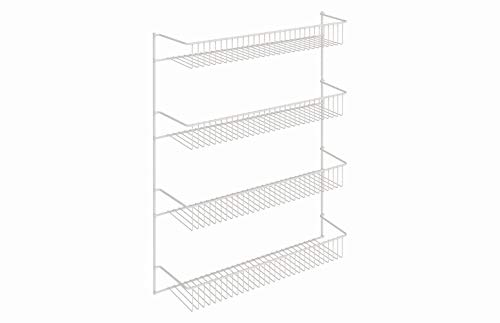
ClosetMaid systems are excellent because they are modular and can be installed inside a closet or directly onto a wall. The wire construction is the key feature here; it prevents the "dead air" pockets that often lead to mold or mildew growth in humid climates.
If you live in an area with high humidity, this is your best defense. The airflow keeps the humidity levels around your fiber consistent, which helps maintain the fiber’s natural elasticity and "bounce."
Make sure to use shelf liners if your cones are small enough to fall through the wire gaps. A simple piece of heavy cardstock or thin plywood can prevent your precious yarn from tumbling to the floor.
How to Maximize Vertical Space for Yarn Cones
Vertical storage is the secret to a professional-looking studio. By stacking your storage solutions—whether it’s wall-mounted racks or tall shelving units—you free up your floor space for your actual knitting chair and lighting.
Always prioritize the "reach zone." Place your most used yarns (like your go-to neutrals or sock yarns) at chest height, and keep the less frequently used specialty fibers on the highest or lowest shelves.
Remember that heavier cones should always be stored low to maintain the center of gravity. You don’t want a heavy cone of wool falling from a high shelf and potentially damaging your needles or your floor.
Why Proper Air Circulation Saves Your Fiber Stash
Fiber is organic material, and it reacts to its environment. If you store your cones in airtight plastic bags for years, you risk trapping moisture, which can lead to a musty smell or even rot in protein fibers like wool or alpaca.
Air circulation prevents the buildup of moisture and keeps the fibers feeling fresh. Even if you aren’t knitting with a specific cone for a few months, it still needs to breathe.
If you are concerned about dust, use breathable cotton bags or lightweight muslin covers instead of plastic. This provides a barrier against dust and light while still allowing the yarn to regulate its own moisture content.
Organizing Cones by Weight, Fiber, and Color
The most effective way to organize is to group by fiber content first, then by weight, and finally by color. This mirrors the way we actually think about our projects: "I need a fingering weight wool for this sweater."
- Fiber: Keep your proteins (wool, alpaca, silk) separate from your plant fibers (cotton, linen, bamboo).
- Weight: Group by WPI (Wraps Per Inch) to ensure you can quickly compare potential substitutes.
- Color: Arrange in a gradient to make it easier to spot the perfect shade for colorwork projects.
Labeling your shelves with these categories will save you hours of searching. When you know exactly where your worsted-weight wool is, you can spend more time knitting and less time digging through boxes.
Essential Tips for Preventing Moth Infestations
Moths are the silent enemy of every serious yarn collector. They are attracted to dark, undisturbed areas with high protein content, making your yarn stash a prime target.
To prevent an infestation, keep your storage area clean and vacuumed. If you are storing wool or silk for long periods, consider adding cedar blocks or lavender sachets to your shelves; the scent acts as a natural deterrent.
Check your cones regularly. If you see tiny webs or small holes in the yarn, isolate that cone immediately and freeze it for 48 hours to kill any potential larvae.
Investing in the right storage is just as important as investing in high-quality needles or luxury fiber. By choosing a system that prioritizes airflow, accessibility, and weight distribution, you ensure that your yarn remains in pristine condition for years to come. Take the time to set up your studio thoughtfully, and your future self will thank you every time you reach for the perfect cone. Happy knitting, and may your stash always be organized and ready for your next masterpiece.