7 Best Tapestry Needles For Assembly Worth Owning
Choosing the right tapestry needle is vital for clean assembly. We review the top seven durable, snag-free options to ensure your projects look professional.
Finishing a project is where the true craftsmanship of a garment is revealed, yet so many knitters treat assembly as an afterthought. Using the wrong needle can split your carefully spun yarn or leave bulky, visible knots that ruin the drape of your work. Having the right set of tapestry needles in your kit transforms the tedious task of weaving in ends into a satisfying, professional finish. This guide breaks down the essential tools that belong in every serious knitter’s notions bag.
Clover Chibi Bent Tip Tapestry Needles: Best Overall


There is a reason these needles are a staple in every local yarn shop’s checkout line. The bent tip allows you to slide under stitches with surgical precision, effectively "hooking" the yarn without piercing the fibers of your finished fabric.
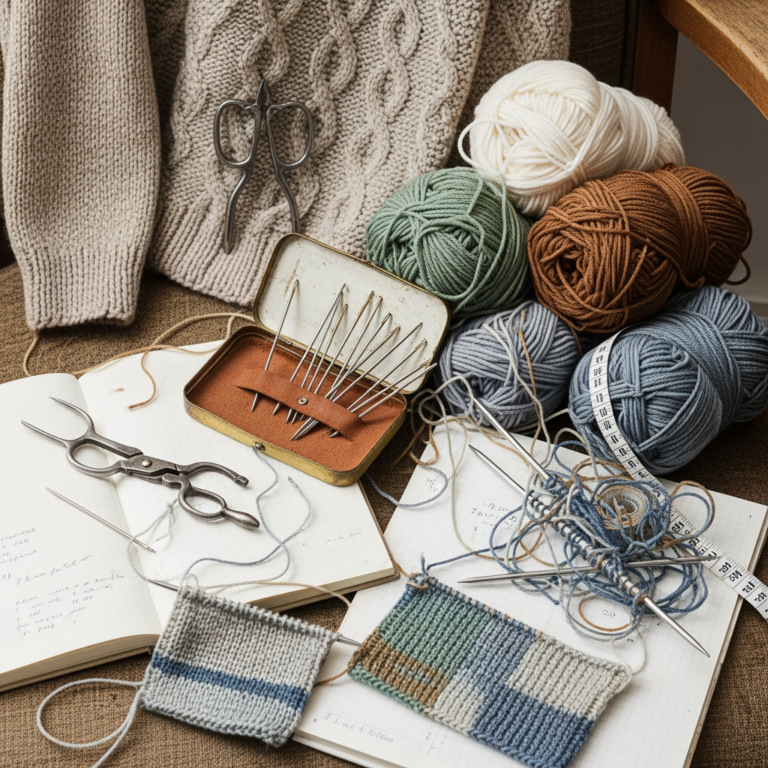
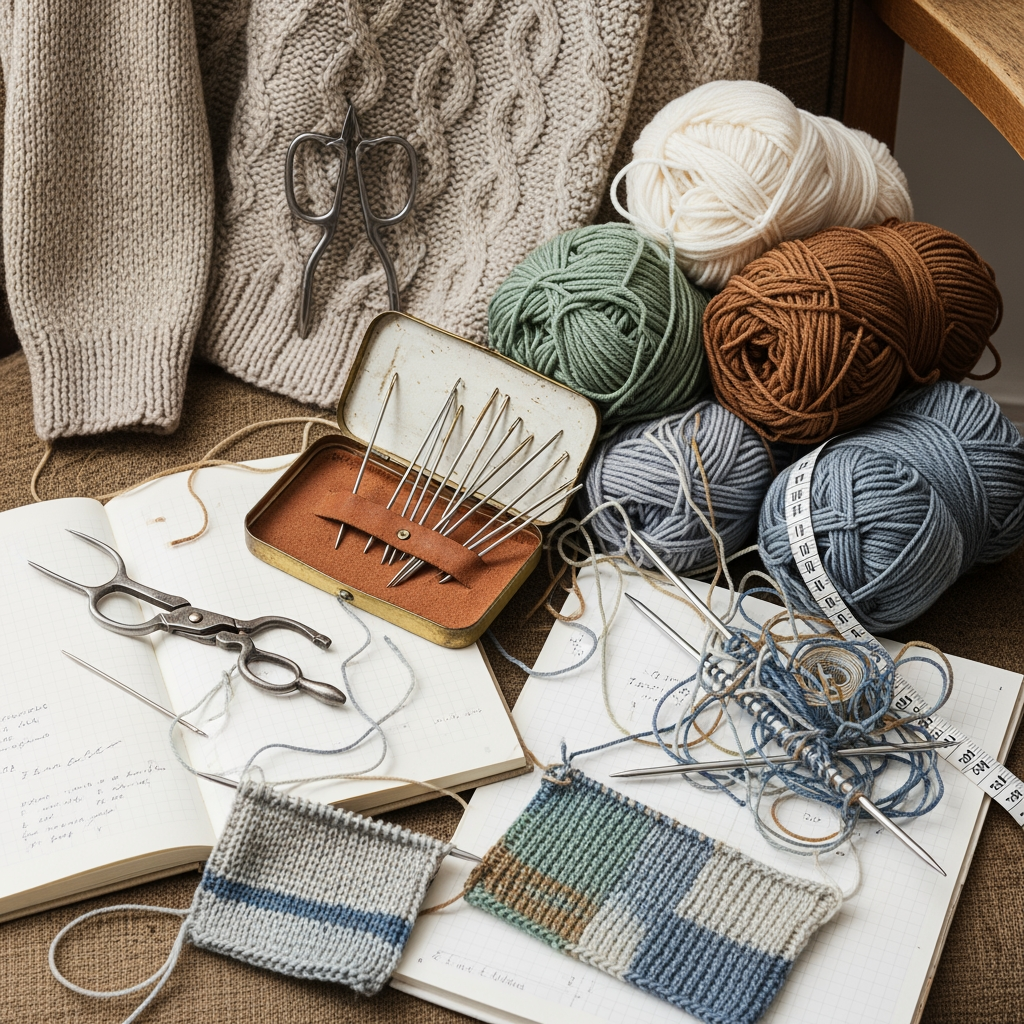
The included Chibi case is the real hero here, as it keeps your needles from migrating to the bottom of your project bag. It is a simple, effective solution to the age-old problem of losing your finishing tools right when you need them most.
These needles are ideal for knitters who struggle with snagging. The slightly rounded tip glides through dense, tightly knit cables or intricate colorwork without causing unwanted distortion.
Bohin Nickel-Plated Tapestry Needles: Best Durability

If you are a heavy-duty knitter who works primarily with rustic, high-twist wools, you need a needle that won’t bend under pressure. Bohin’s nickel-plated steel needles offer a level of rigidity that plastic or aluminum alternatives simply cannot match.
The nickel plating creates a slick surface that slides through friction-heavy fibers like mohair or sticky alpaca with ease. Because they are so smooth, they won’t pull at your stitches as you weave your ends through the back of the work.
Be aware that these are straight-tipped, which requires a bit more dexterity when working on the reverse side of a fabric. However, their longevity makes them a sound investment for a lifetime of finishing.
Cocoknits Steel Tapestry Needles: Best for Precision
Cocoknits has mastered the art of the functional tool, and their steel needles are no exception. These are designed with a slightly flattened, blunt tip that is perfect for sliding into the tightest of stitches.
Because they are made of steel, they are remarkably thin relative to their strength. This makes them the go-to choice for fine-gauge projects where you need to hide ends without adding significant bulk to the fabric.
They are particularly effective for duplicate stitch or grafting, where you need to mimic the path of the original yarn perfectly. If you are a perfectionist about the interior of your garments, these are the needles for you.
Dritz Yarn Darner Needles: Best for Bulky Projects
When you are working with super bulky, roving-style yarns, a standard tapestry needle often feels puny and inadequate. Dritz yarn darners provide the larger eye and thicker shaft necessary to accommodate heavy-weight fibers without fraying them.

These needles are longer than standard tapestry needles, which helps when you need to weave an end through a long stretch of fabric to ensure it stays secure. The extra length provides better leverage when pulling thick yarn through dense stitches.
Keep in mind that these are strictly for heavy-weight projects. Using them on delicate lace or fingering weight yarn will leave permanent, unsightly holes in your knitting.
Tulip Hiroshima Tapestry Needles: Best for Comfort
Tulip needles are renowned for their impeccable manufacturing process, which results in a needle that feels almost frictionless in the hand. The eye is polished so smoothly that it never catches or shreds your yarn, even when using delicate silk or bamboo blends.

For knitters who suffer from hand fatigue or arthritis, the ergonomic feel of these needles is a significant advantage. They glide through the fabric with minimal resistance, meaning you don’t have to grip them as tightly to get the job done.
They are an investment piece, but the difference in quality is immediately apparent. If you spend hours finishing complex sweaters, your hands will thank you for the upgrade.
Susan Bates Finishing Needles: Best Budget Choice
You don’t need to spend a fortune to get a functional tool that gets the job done. Susan Bates needles are the classic, reliable option that every knitter has likely used at some point in their journey.
These needles are typically made of flexible, lightweight plastic or nylon. While they aren’t as robust as steel, they are incredibly gentle on delicate fibers and won’t rust or oxidize over time.
They are excellent for beginners who are still learning how to weave in ends without pulling too hard. The slight flexibility of the material acts as a buffer, preventing you from accidentally distorting your tension.
Knitter’s Pride Wool Needles: Best for Large Yarns
Knitter’s Pride offers a great middle-ground for those who find metal needles too slick and plastic needles too flimsy. Their wool needles are designed specifically for the thicker yarns used in winter accessories and heavy garments.
The eye is exceptionally large, making these a favorite for knitters who struggle with threading needles. You won’t need to struggle with a threader or squint under a lamp just to get your yarn through the eye.
They are sturdy enough to handle heavy wools but have a blunt tip that remains safe for your fabric. They are a reliable workhorse for your everyday knitting projects.
How to Select the Right Needle Size for Your Yarn
Choosing the right needle size is about balancing the thickness of the yarn with the density of your fabric. If the needle is too thick, it will stretch the stitches and create visible holes; if it is too thin, it will be impossible to thread.
- Fingering/Sock Weight: Use a thin, size 24 or 26 tapestry needle.
- Worsted/DK Weight: Use a medium-gauge, size 18 to 22 needle.
- Bulky/Super Bulky: Use a large-gauge yarn darner or a dedicated wool needle.
Always test your needle by pushing it through a scrap piece of your project fabric first. If you feel resistance or see the stitches opening up, go down a size.
Why Bent Tip Needles Improve Your Finishing Work
Bent tip needles are a game-changer because they allow you to pick up loops on the back of your work without piercing the actual yarn strands. By sliding under the "legs" of the stitch, you weave the end into the structure of the fabric invisibly.
This technique is essential for preventing the "bunching" that occurs when you weave in ends too tightly. The bend in the needle acts as a natural guide, keeping the needle parallel to the fabric surface.
Once you get used to the angle, you will find that you can weave in ends much faster. It eliminates the need to constantly flip your work back and forth to see where the needle is poking through.
Essential Tips for Securing Ends in Delicate Fiber
Securing ends in delicate fibers like silk, mohair, or high-twist merino requires a gentle touch. Never pull your yarn tight, as this will cause the fabric to pucker and ruin the drape of your garment.
Instead, weave your ends in a duplicate stitch pattern, following the path of the existing yarn. This distributes the tension evenly and prevents the end from working its way out over time.
Finally, remember that blocking is your best friend for hiding ends. A good soak and block will often cause the fibers to bloom and "lock" the woven-in end into place, making it virtually impossible to find.
Investing in quality tapestry needles is one of the most underrated ways to elevate your knitting from "homemade" to "handmade." While it may seem like a small detail, using the correct tool for the weight and fiber of your yarn ensures your hard work stays secure for years to come. Take the time to build a small collection of these essentials, and you will find that finishing becomes a meditative part of the process rather than a chore. Happy knitting, and may your ends always be perfectly tucked away.