7 Best Project Notebooks For Pattern Notes To Try
Discover the 7 best project notebooks for pattern notes. This guide highlights top picks to help crafters organize designs, track progress, and stay creative.
Keeping a dedicated project notebook is the secret weapon that separates a casual hobbyist from a confident master of the craft. Whether you are tracking complex cable charts or simply noting your gauge swatch results, the right paper acts as an extension of your creative process. These seven notebooks offer the best balance of durability, paper quality, and layout for the fiber artist’s unique needs. Investing in a reliable place to document your work ensures that your hard-won lessons are never lost to the bottom of a project bag.
Leuchtturm1917 A5: The Best Overall Choice
The Leuchtturm1917 A5 is the gold standard for knitters who want a balance of structure and freedom. Its numbered pages and table of contents are perfect for indexing multiple projects, especially if you are working on a capsule wardrobe or a series of matching accessories.
The paper weight handles most pens without bleed-through, which is vital when you are sketching out schematic measurements or color-work motifs. Because the binding lays flat, you can easily reference your notes while your hands are busy with circular needles.
However, the paper can be slightly toothy, which might catch if you are using a very fine-tipped technical pen. If you prefer a smooth, slick surface for rapid note-taking, you may find the texture a bit distracting. Ultimately, it remains the most reliable "home base" for a long-term knitting journal.
Moleskine Classic: Ideal for Compact Notes
If you prefer a notebook that slips easily into a small project bag alongside a pair of sock needles, the Moleskine Classic is your best companion. Its slim profile means it won’t add unnecessary bulk, making it perfect for knitters who take their work to the park or on the train.


The iconic elastic closure is surprisingly functional for keeping loose swatches or printed pattern pages tucked safely inside. It is a no-nonsense tool that focuses on portability over elaborate features.
The trade-off here is the paper quality, which is thinner than many competitors. If you use heavy fountain pens or markers to color-code your charts, you will likely deal with ghosting on the reverse side. For the minimalist knitter who uses a standard ballpoint, this is a classic for a reason.

Hobonichi Techo: Perfect for Daily Knitting
The Hobonichi Techo is a cult favorite for a reason: it offers a structured daily page that is perfect for tracking rows completed or daily knitting time. If you are participating in a "100 days of knitting" challenge, this layout provides the necessary discipline to keep you on track.
The Tomoe River paper is incredibly thin but deceptively strong, handling ink beautifully without adding weight. You can cram an entire year of project notes into a surprisingly small footprint.
Be aware that the grid layout is quite small, which can be challenging if you have large handwriting or need to sketch intricate lace patterns. It requires a bit of patience to adapt to the scale, but for data-oriented knitters, it is unmatched.
Midori MD Notebook: Best for Ink Enthusiasts
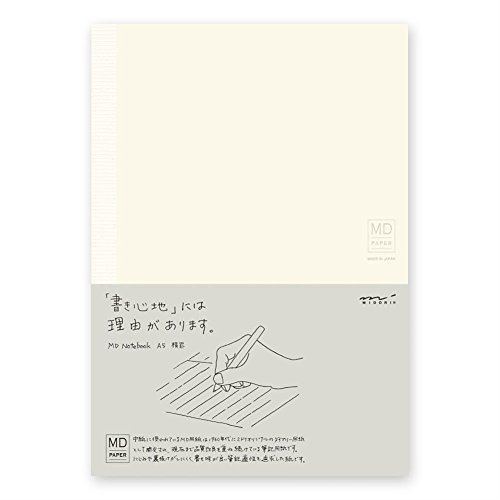
The Midori MD is a dream for those who use high-quality fountain pens to document their yarn stash or fiber notes. The paper is specifically designed to prevent feathering, meaning your ink stays crisp even when you are writing out complex instructions.
Its minimalist design lacks distracting lines or grids, giving you a blank canvas to draw out schematics for sweaters or vests. There is something deeply satisfying about writing on paper that feels this luxurious while you are planning your next heirloom project.
Because it is so minimalist, it offers zero built-in organization. If you aren’t the type to create your own table of contents or page numbers, you might find it difficult to keep track of your projects over time.
Rhodia Goalbook: Great for Project Tracking

The Rhodia Goalbook is essentially a pre-formatted project manager for your knitting life. With dedicated sections for monthly and yearly planning, it is excellent for tracking deadlines for gifts or custom commissions.
The paper is exceptionally smooth, which makes writing out row-by-row instructions feel effortless. It also includes dot-grid pages, which are ideal for sketching out colorwork charts or measuring gauge swatches to scale.

The main drawback is the size; it is slightly larger than a standard A5, which might be a tight fit in smaller project bags. If you need a comprehensive system that tracks your time, your yarn inventory, and your pattern notes in one place, this is the most efficient choice.
Field Notes: Best for On-the-Go Knitting
Field Notes are the ultimate "disposable" notebook for the knitter who is always starting a new project on a whim. Their small size means you can keep one in your notions pouch to jot down needle sizes and yarn dye lots the moment you buy a new skein.
They are rugged enough to survive being tossed around in a tote bag full of metal needles and scissors. You won’t feel precious about them, which encourages you to write down the messy, real-time details of your knitting process.
Because they are stapled rather than bound, they don’t lay flat as easily as a hardcover journal. They are best used as a temporary record for a single project rather than a permanent library of your knitting history.
Rite in the Rain: Best for Outdoor Knitting
If you are a knitter who enjoys working on a porch or at a campsite, Rite in the Rain is a literal lifesaver. The waterproof paper ensures that your notes won’t turn into a pulp if you get caught in a sudden drizzle or spill your tea while focusing on a difficult cable cross.
The paper has a unique, slightly plastic-like feel that requires a specific pen or pencil to write on effectively. It is a specialized tool, but it is the only one that will survive the elements.
Don’t expect the same aesthetic experience as a high-end stationery notebook. This is a functional, tactical piece of gear designed to protect your hard-earned pattern modifications from the environment.
Why You Should Keep a Dedicated Knitting Journal
A knitting journal transforms your craft from a series of isolated projects into a learning journey. By documenting your gauge, your modifications, and your frustrations, you create a personal database that makes future projects significantly easier.
- Pattern adjustments: Record where you added length or changed a neckline.
- Yarn performance: Note how a specific fiber bloomed after blocking or if it pilled after a month of wear.
- Needle preferences: Keep track of which needle materials worked best for specific yarn weights.
Over time, this journal becomes a reference book that is more valuable than any commercially published pattern collection. You will stop guessing about your fit and start knitting with the confidence of a professional.
Essential Elements to Log for Every New Project
Every project entry should be a snapshot of your process. Start with the basics: the pattern name, the designer, and the date you cast on.
- Yarn details: Brand, colorway, dye lot, and fiber content.
- Gauge: Your pre-wash and post-wash gauge measurements.
- Needle size: The exact size used to achieve your gauge.
- Modifications: Any changes to the pattern, such as adding waist shaping or adjusting sleeve length.
Including a small snippet of the yarn—taped to the page—can be incredibly helpful for future color matching. This simple act turns your notebook into a physical archive of your stash and your skill progression.
Tips for Organizing Your Knitting Pattern Notes
Organization is key to making your journal usable long-term. Start by numbering your pages and creating a table of contents at the front of the book, listing projects by name or category.
Use color-coded tabs to mark sections for "In Progress," "Finished," and "Swatches." If you are working on a complex project, dedicate a two-page spread to that single pattern, using the left side for notes and the right side for a hand-drawn chart.
Don’t strive for perfection; a messy, ink-stained notebook is a sign of a knitter who is actually doing the work. The most important thing is that your notes are accessible and honest, providing the roadmap you need for your next cast-on.
Choosing the right notebook is a personal process that should reflect your unique knitting style. Whether you need the ruggedness of a waterproof journal or the elegance of high-quality ink-friendly paper, the goal is to create a space that supports your creativity. Start documenting your process today, and you will soon find that your knitting becomes more intentional and rewarding. Happy knitting, and may your gauge always be consistent.