6 Best Magnetic Storage Trays For Leather Hardware
Organize your workshop with our top 6 picks for magnetic storage trays for leather hardware. Shop our expert recommendations to keep your workspace tidy today.
Losing a stray rivet or a tiny screw when attaching leather handles to a hand-knit bag is a quick way to derail a project. Leather hardware, like d-rings and snaps, demands a secure workspace to keep small, metallic components from vanishing into the depths of a yarn basket. Magnetic storage trays provide a simple, effective solution for keeping these essential pieces within reach during the construction phase. Selecting the right tray transforms a chaotic assembly process into a streamlined experience, allowing the focus to remain on the craft rather than searching for lost hardware.


Cocoknits Maker’s Keep: The Most Versatile

The Maker’s Keep features a unique design that combines a magnetic surface with a wearable slap-bracelet format. This tool excels for makers who frequently move between a workspace and a sewing machine, ensuring that needle cases or small hardware pieces remain physically attached to the person.
The magnetic surface is strong enough to hold onto steel snips and small leather rivets, providing a reliable home for hardware during complex bag construction. Because it stays on the wrist, it prevents the common issue of knocking a tray off a table during a particularly intricate assembly step.
However, the smaller surface area limits how much hardware it can hold at once. Use this if the project involves frequent movement, but choose a larger stationary tray for tasks requiring high volumes of hardware, such as installing multiple sets of snaps or rivets on a structured tote.
Ziraki Magnetic Parts Bowl: Best Budget Option
Simple and industrial, the Ziraki Magnetic Parts Bowl is a staple for those who prioritize function over aesthetics. These bowls are typically made of heavy-duty stainless steel with a rubberized base that prevents them from sliding on smooth surfaces.
The high-rim design ensures that metal hardware, such as Chicago screws and leather studs, stays contained even if the bowl is bumped. It offers significant volume, which is ideal when tackling larger projects that require keeping a variety of sizes of hardware organized and accessible.
While it lacks the specialized features of dedicated craft tools, its durability is unmatched for the price point. If the main goal is simply to prevent hardware from scattering across the floor, this is the most cost-effective and rugged solution available.
Clover Magnetic Pin Caddy: The Classic Choice

The Clover Magnetic Pin Caddy is a familiar sight on many craft tables, offering a balanced approach to hardware management. Its rounded, ergonomic shape makes it easy to pick up individual pieces of hardware, as the edges of the tray allow the user to slide items up the wall for an easier grip.
The magnet inside is calibrated specifically for needles and small fasteners, creating a fan-like distribution of items that makes it easy to select the exact rivet or screw needed. This organization helps maintain a clean workspace, particularly when working with delicate leather finishes that might scratch if hardware is piled haphazardly.
This tray is best suited for small-scale leather hardware rather than heavy-duty buckles or larger metal findings. For intricate projects involving fine detailing, the ease of access provided by this caddy design is a significant advantage over deep, vertical containers.
Fons & Porter Large Tray: For Big Projects
When a project calls for extensive hardware, such as a leather-bottomed backpack with numerous studs and clasps, a small caddy often falls short. The Fons & Porter Large Tray provides a wide, flat magnetic surface that allows for the separation of different hardware types, preventing them from clumping together.
Large surface areas are particularly helpful for organizing hardware by size or function during the layout phase of bag making. It is easier to visualize the spacing of rivets when the hardware is spread out rather than buried in a deep bowl.
Consider the trade-off of space when selecting this item. While it offers superior organization, it requires a significant footprint on the work table, which can be challenging in smaller knitting studios or crowded craft rooms.
Dritz Magnetic Pin Case: Secure & Portable
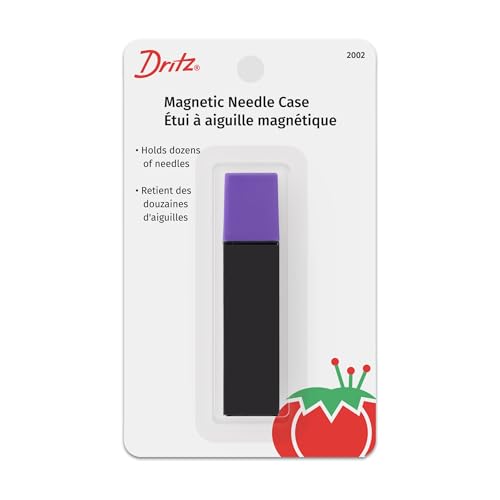
The Dritz Magnetic Pin Case features a snap-lid design, making it an excellent choice for those who travel with their projects. It secures hardware inside a protective shell, ensuring that nothing is lost when moving between a home workspace and a craft guild meeting.
This tool is ideal for knitters who prepare kits of hardware for specific projects, allowing them to store all required rivets, screws, and clasps in one place. The magnetic bottom keeps the contents from rattling around during transit, which protects the finish of the metal hardware from unwanted nicks and scratches.
While it is less convenient for constant use while sitting at a desk, the portability is a major asset for mobile makers. Keep this item tucked in a project bag to ensure all hardware stays accounted for until the moment of installation.
Grifhold Magnetic Wrist Band: Hands-Free Pick
The Grifhold Magnetic Wrist Band is designed for precision work where the hands need to be free to manipulate both the leather and the installation tool simultaneously. It provides a secure magnetic platform that stays firmly on the forearm, keeping hardware oriented towards the work area.
This tool is particularly useful when installing grommets or rivets, where holding a leather piece in one hand and a mallet in the other requires a high level of coordination. By keeping the hardware on the wrist, the need to reach for a bowl is eliminated, reducing the risk of dropping tiny pieces during the alignment process.
It is a specialized tool that performs one task exceptionally well, but it is not intended for storing large quantities of components. Use this for the final assembly phase when speed and precision are required to prevent marring the leather.
How to Pick the Right Tray for Your Hardware
Selecting a tray depends largely on the scale of the leather hardware and the physical environment of the workspace. If the workspace is compact, prioritize trays that offer depth, such as the Ziraki bowl, to prevent hardware from crowding the table.
For those who prioritize mobility, a wearable option like the Maker’s Keep or a portable case like the Dritz model is essential. Consider the physical size of the hardware; larger, heavier pieces require a stronger, more stable base, while delicate findings benefit from the organized layout of a shallow caddy.
Ultimately, evaluate the workflow of the project. If the assembly process involves frequent tool changes and movement, a wearable magnetic option will significantly improve efficiency and minimize frustration.
Understanding Magnet Strength for Metal Hardware
Magnet strength is a critical factor, as hardware made from different metals will react differently to magnetic surfaces. Ferrous metals, like iron and steel, respond readily to magnets, while non-ferrous metals like brass, copper, or high-quality aluminum do not.
Test your hardware with a small magnet before committing to a storage system. If the hardware is non-magnetic, it will not stick, regardless of the strength of the tray. In such cases, a non-magnetic divided tray or a silicone mat is a better alternative to ensure items do not slide around.
Beware of magnets that are too weak, as they allow hardware to slide off if the tray is tilted or bumped. A strong, reliable magnet ensures that even if a tray is accidentally brushed, the hardware remains firmly in place.
Beyond Pins: Organizing Rivets, Snaps & More
Magnetic trays are not just for pins; they are perfect for managing the components required for leatherwork. Chicago screws, rivets, snap caps, and d-ring bases can all be organized by size on a magnetic surface to speed up assembly.
Use different trays to separate components by size, which is vital when a project requires multiple rivet lengths. This practice prevents the common mistake of installing the wrong size screw, which can lead to damaged hardware or weak connections in the final bag construction.
Labeling the trays or placing them on a color-coded mat can further clarify the assembly process. Keep hardware that is ready for installation separate from used or damaged pieces to maintain a high-quality finished product.
FAQ: Will Magnets Damage My Leather Tools?
A common concern involves whether magnets can negatively affect the tools used in fiber arts. Generally, standard neodymium or ceramic magnets found in these trays will not harm your knitting needles, hole punches, or setting tools.
However, avoid storing high-precision electronic devices, such as digital stitch counters or battery-operated scales, directly on or near high-strength magnetic trays. While simple mechanical metal tools are safe, electromagnetic interference can affect sensitive digital components.
Keep magnets away from credit cards, pacemakers, and other sensitive items to prevent data loss or interference. By keeping magnets confined to the dedicated hardware tray, the risk to other knitting tools remains negligible.
Selecting the right magnetic storage tray is an investment in project efficiency and peace of mind. By keeping hardware organized and secure, these tools allow the maker to focus entirely on the precision required for beautiful leather and knit combinations. Choosing the correct storage system today ensures that the next project remains smooth, structured, and entirely stress-free.