6 Best Drying Nets For Gentle Airflow Worth Having
Discover the 6 best drying nets for gentle airflow to protect your delicate laundry and herbs. Upgrade your drying routine and shop our top picks today.
Proper garment care is the silent partner to every successful knitting project. After hours of meticulous stitching and careful tension management, the drying process determines whether a sweater maintains its shape or loses its structural integrity. Selecting the right drying net ensures that delicate fibers receive the consistent, unimpeded airflow required to set stitches correctly without the risk of mildew or stretching. Investing in a quality drying surface is just as vital as choosing the right needles for a project’s specific gauge.
OXO Good Grips Dryer: Best Stackable System


The OXO Good Grips Dryer stands out for its robust frame and thoughtful design, making it a reliable workhorse for those managing multiple projects. Its stackable nature is particularly advantageous when floor space is at a premium, allowing for the simultaneous blocking of a sweater and several smaller accessories like hats or mitts.
The mesh fabric is tensioned specifically to prevent sagging, which is crucial when blocking heavy wools that hold significant water weight. Because the frame locks securely, it remains stable even when loaded with dense, multi-ply garments that might cause flimsier alternatives to bow.
Consider this system if frequent project rotation is the norm. While the footprint is larger than pop-up options, the durability of the structure ensures that heavy garments dry evenly without pulling at the seams.
HOMZ Sweater Drying Rack: Top Budget-Friendly Pick

For those starting their journey into garment knitting, the HOMZ Sweater Drying Rack provides a straightforward solution without unnecessary bells and whistles. It features a simple, flat design that allows for maximum surface area, ideal for standard-sized pullovers and cardigans.
The affordability of this rack does not sacrifice the core function of uniform airflow. It is particularly effective for those knitting with lighter, breathable fibers like cotton or linen, which require consistent air circulation to prevent uneven drying and musty odors.
While it lacks the sophisticated stacking mechanisms of premium models, it is perfectly adequate for the occasional blocker. Just ensure it is placed on a level surface, as the lack of a rigid vertical frame means it can be susceptible to minor shifting if bumped.
Korbond Hanging Dryer: Best for Small Spaces
Living in an apartment or a home with limited horizontal surface area makes the Korbond Hanging Dryer an essential tool. By utilizing vertical space, this dryer bypasses the need for large tables or floor space, allowing garments to dry in a closet or shower stall.
The hanging mechanism ensures that airflow is unobstructed from all angles, including underneath the garment. This is a significant benefit for items with intricate cable patterns or heavy textures, as it prevents the damp, heavy center of the fabric from staying wet longer than the edges.
Be mindful, however, that hanging dryers require careful, even placement of the garment to ensure the center of gravity remains balanced. Always center the weight of the item to prevent the rack from tilting, which could inadvertently distort the shape of the knit.
Honey-Can-Do Sweater Dryer: Most Versatile Option

The Honey-Can-Do Sweater Dryer earns its reputation through pure, functional versatility. It is designed to handle a wide variety of garment shapes and sizes, from delicate lace shawls to oversized, chunky-knit sweaters.
The mesh is fine enough to support even the most delicate lace, preventing delicate fibers from snagging or slipping through. The frame is flexible yet resilient, providing a good balance between ease of storage and the necessary rigidity to support a damp garment.
This model serves well as an “all-rounder” for a household with varying types of knitting projects. If the project queue fluctuates between fine-gauge socks and heavy, rustic wool sweaters, this dryer adapts easily to the different weight requirements of each.
Whitmor Pop-Up Dryer: Excellent for Travel
The Whitmor Pop-Up Dryer is a brilliant solution for knitters who frequently travel to workshops or retreats. Its ability to fold down into a compact, flat disc makes it easy to tuck into a project bag or suitcase, ensuring that garment care doesn’t stop just because one is away from home.
Despite its portability, it remains remarkably stable once popped open. It provides a generous surface area, and because it is low to the ground, it is easy to monitor the progress of a blocking garment without needing to reach across a high surface.
Do note that because the structure is lightweight, it is best suited for medium-weight garments. When blocking extremely heavy sweaters, ensure the weight is distributed evenly across the center to avoid any unwanted tipping of the lightweight frame.
Dritz Sweater Dryer: Best For Blocking Large Items

The Dritz Sweater Dryer is a staple in many long-term knitting studios, specifically favored for its large surface area and no-nonsense construction. It is designed to accommodate full-sized sweaters, including long-sleeved garments that require extra space to lay flat without folding sleeves over the body.
The mesh is particularly durable, resisting the wear and tear that comes from years of blocking wool sweaters with high lanolin content or heavy alpaca. The wide frame minimizes the “cradling” effect that can happen with smaller, less rigid dryers, ensuring that the garment stays truly flat.
When selecting this for a collection, prioritize it for larger, more complex garments. The generous sizing means one can block a large sweater without worrying about edges dangling off the side, which is a common cause of uneven drying and shape distortion.
Stackable vs. Hanging: Which Dryer Is for You?
Choosing between a stackable and a hanging dryer comes down to spatial constraints and the volume of the knitting rotation. Stackable units are superior for those who knit large quantities of garments or accessories simultaneously, as they create a “drying tower” that maximizes efficiency.
Hanging dryers are the clear winners for those with minimal floor space, such as those working in shared living environments. However, they require a bit more finesse when arranging the garment, as they are less forgiving of off-center weight distribution.
Evaluate the specific location where the drying will take place before purchasing. If a permanent, dedicated space exists, a stackable system is often more efficient; if space must be reclaimed immediately after use, a hanging or pop-up model is more practical.
The Right Way to Prep Your Knits for Drying
Preparation is as important as the dryer itself. Before placing a garment on the rack, gently remove excess moisture by rolling the item in a clean, dry towel and applying light, even pressure. Never wring or twist the fabric, as this compromises the elasticity of the yarn and can permanently stretch the stitch structure.
Once the bulk of the water is removed, reshape the garment on the rack, smoothing out any creases or unintentional bunching. Pay close attention to cuffs, collars, and hems; ensuring these are aligned correctly before drying sets the final silhouette of the piece.
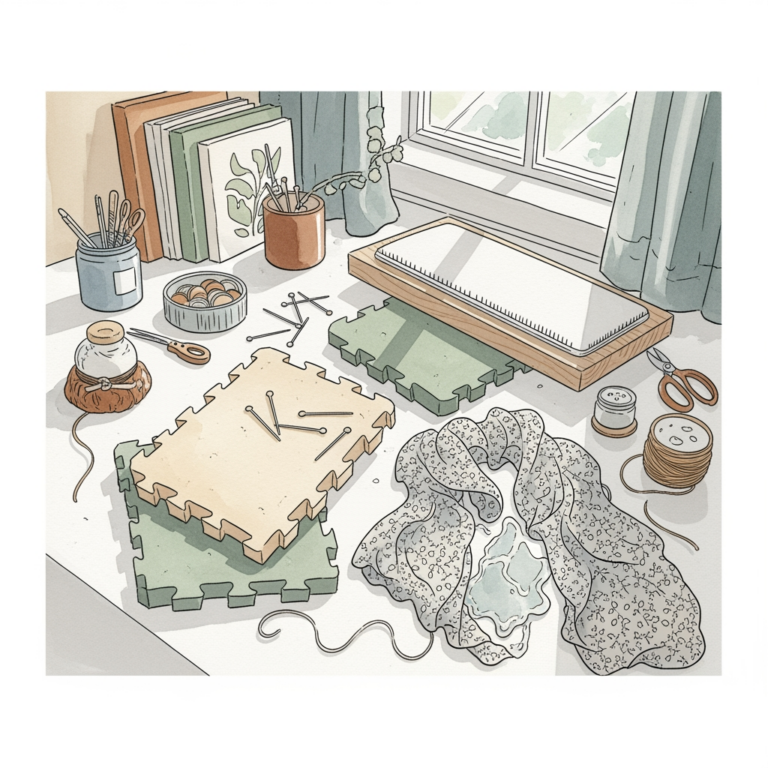
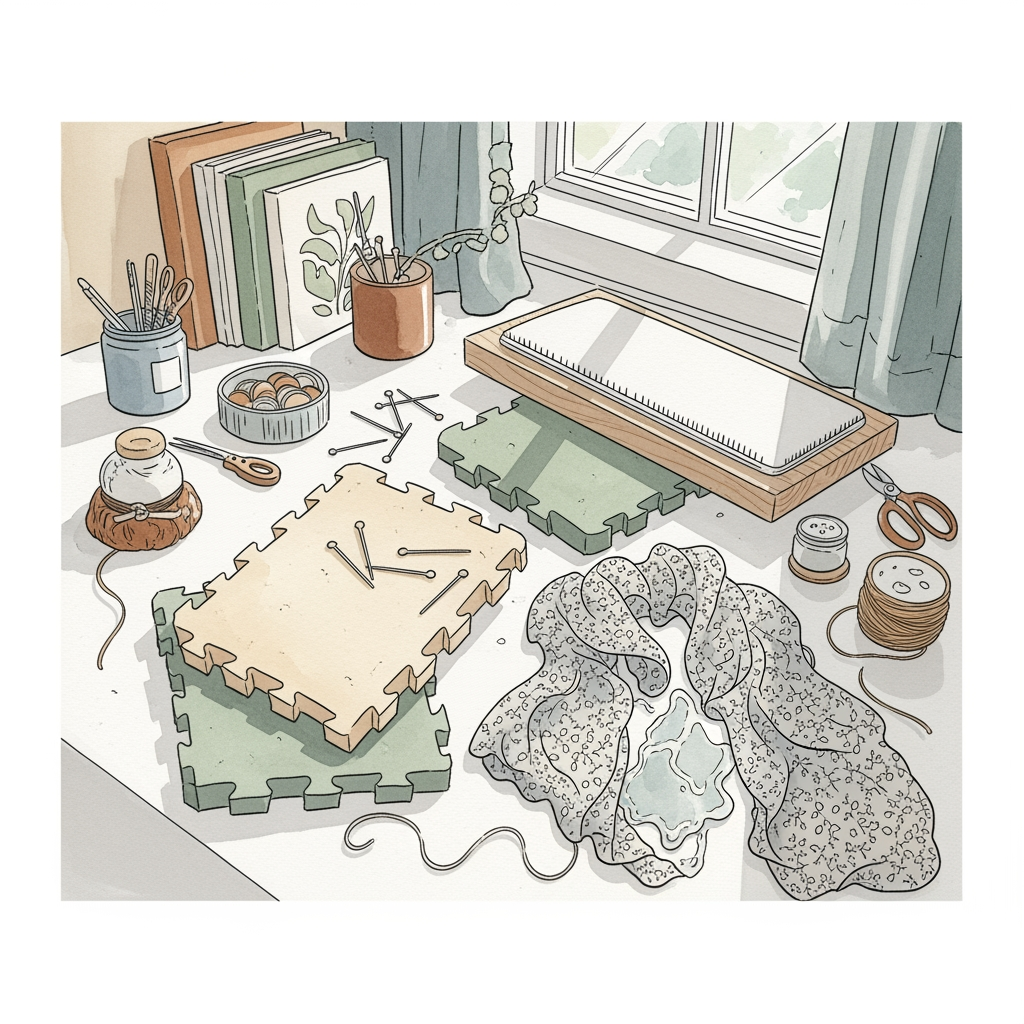
Using a drying net also provides an opportunity to “pin” if the pattern requires precise measurements. Always use stainless steel rust-proof pins to secure the edges of a garment to the mesh, which is particularly vital for blocking lace or ensuring perfect symmetry in colorwork garments.
Why Fiber Type Matters for Air-Drying Times
The drying time of a project is dictated largely by the fiber composition, which determines how much water the yarn holds. Animal fibers like wool and alpaca are hygroscopic, meaning they absorb and hold significant amounts of water before feeling wet to the touch.
- Wool/Alpaca: These fibers hold significant moisture and require excellent, all-around airflow to prevent the center from staying damp, which can lead to odors or fiber damage.
- Cotton/Linen: These fibers are heavy when wet but tend to dry faster if exposed to good circulation; however, they are prone to stretching, so flat, horizontal drying is non-negotiable.
- Synthetics/Acrylics: These have very low moisture absorption and generally dry quite quickly, though they still require a flat surface to maintain their tension-balanced gauge.
Always account for these differences when scheduling a block. A heavy, hand-spun wool sweater may take twice as long to dry as a cotton top, and placing them in a low-airflow area will only exacerbate the issue.
Avoid Stretching: Supporting Your Wet Garments
The greatest risk to a finished garment is the weight of the water causing the fabric to elongate while it is at its most malleable. A wet knitted item will grow significantly under its own weight, which is why a high-quality drying net must support the garment’s entire footprint without sagging.
If the rack begins to sag, the center of the garment is effectively being pulled downwards. This leads to dropped shoulders, elongated torsos, and a loss of the intentional fit developed during the knitting process.
Always ensure the rack is on a completely flat, stable surface. A slight incline in a tabletop or a sagging floorboard can cause the moisture to pool in one area, leading to uneven drying and potential stretching in the direction of the pooling water.
A well-chosen drying net is an essential investment that protects the integrity of every stitch, ensuring that garments transition from the needles to the wardrobe with their intended shape perfectly preserved. By matching the dryer type to the specific needs of the fiber and the space available, the risk of damage is minimized while the longevity of the piece is greatly enhanced.