7 Best Blocking Mats For Steam Setting To Use
Achieve perfect lace and garments with these 7 top-rated blocking mats. Discover heat-resistant, durable options ideal for precision steam setting projects.
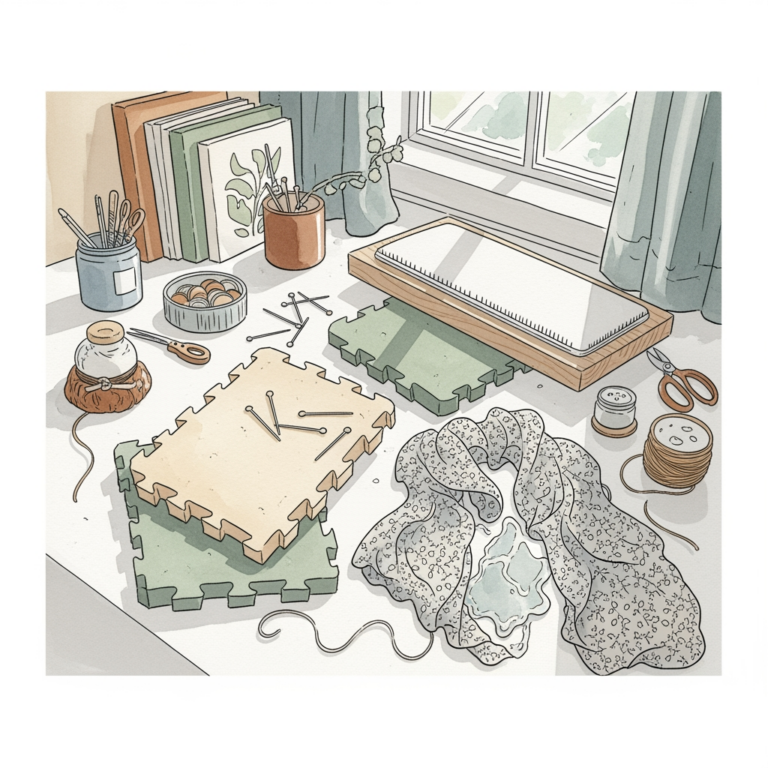
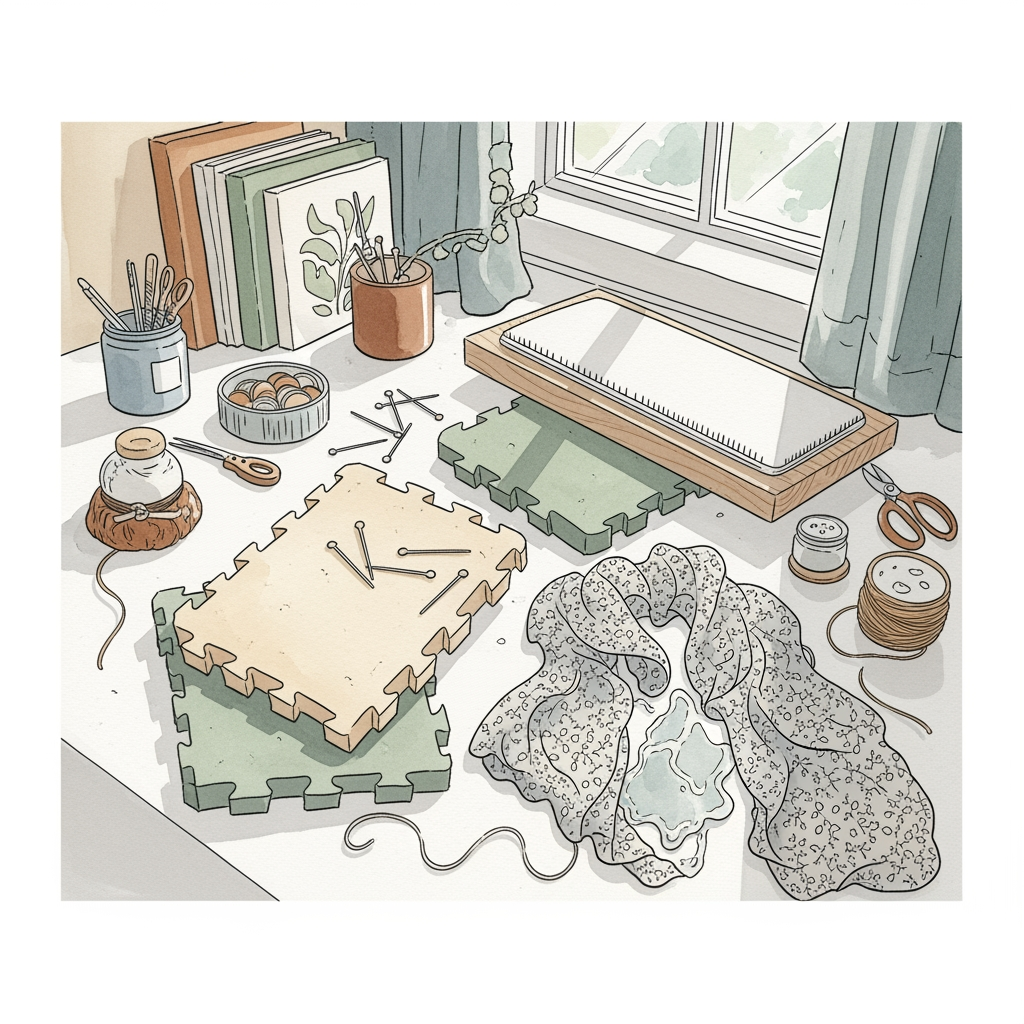
Blocking is the final, transformative step that turns a collection of stitches into a professional-grade garment. When using steam, the quality of your surface determines whether your lace opens beautifully or your fabric warps under heat. Choosing the right mat prevents the frustration of uneven edges and melted foam. Here are the best tools to ensure your hard work gets the finish it deserves.
Knitter’s Pride Lace Blocking Mats: Best Overall
These mats are the industry standard for a reason, striking a perfect balance between density and ease of use. They are thick enough to hold T-pins securely without the pins popping out, which is a common headache with flimsier alternatives.
The grid pattern printed on the surface is a lifesaver for achieving perfect symmetry. If you are blocking a complex triangular shawl, having those visual markers ensures your wingspan is balanced on both sides.
Bottom line: If you want a reliable, long-lasting surface that handles steam well, this is the gold standard. It’s an investment that pays for itself over years of blocking sweaters and shawls.
Mindful Collection Blocking Mats: Best for Detail


These mats carry the same high quality as the Knitter’s Pride line but with a more refined aesthetic. The subtle coloring is less distracting when you are trying to focus on the intricate geometry of a lace motif.
Because the material is exceptionally dense, these mats resist the "pitting" that happens when you repeatedly pin into the same spots. This is crucial for lace knitters who need to stretch their work aggressively to open up the yarn overs.
Bottom line: Choose these if you are a precision-obsessed knitter. They provide the cleanest visual workspace for high-stakes projects like bridal shawls.
Clover Blocking Mats: Best for Steam Stability
Clover has mastered the chemistry of heat-resistant foam. When you hold a steamer over these mats, they don’t emit that unpleasant chemical odor often associated with cheaper, low-grade plastics.
The texture is slightly grippier than other mats, which helps keep your fabric in place before you even pin it down. This is particularly helpful when working with slippery fibers like silk or bamboo blends that tend to migrate across smooth surfaces.
Bottom line: If you are sensitive to fumes or work with delicate, slide-prone yarns, Clover offers the most stable experience. You can steam with confidence knowing the mat won’t react negatively to the heat.
Exhart Interlocking Foam Tiles: Best for Value

If you are blocking a massive project like a full-sized afghan, you need a lot of surface area. Buying specialized knitting mats in large quantities can get prohibitively expensive very quickly.
These interlocking tiles offer a massive footprint for a fraction of the cost of boutique brands. While they aren’t as dense as premium mats, they are perfectly adequate for standard wool projects that don’t require extreme tension.
Bottom line: These are the smart choice for budget-conscious makers working on large-scale items. Just be aware that you may need to replace them sooner if you use very thick T-pins.
Boye Blocking Board Set: Best Budget Option

The Boye set is a classic for a reason, providing a straightforward, no-nonsense solution for the occasional blocker. It’s compact, making it ideal for knitters living in smaller apartments or those who don’t have a dedicated craft room.
It doesn’t offer the massive coverage of a full floor mat, but it is excellent for blocking individual sweater panels or socks. You can easily tuck it away in a drawer when your project is finished.
Bottom line: This is a perfect starter kit for a beginner who isn’t ready to commit to a massive, permanent blocking station. It gets the job done without breaking the bank.
Teytoy Extra Thick Mats: Best for Heavy Steam

Steam blocking requires a mat that won’t allow heat to transfer through to your floor or table. These extra-thick tiles create a significant thermal barrier, protecting your furniture from moisture and heat damage.
The added depth also allows you to pin your work at an angle, which is a pro-level trick for creating more tension in your fabric. If you are blocking heavy, dense wools that need a lot of force to shape, this thickness is a game-changer.
Bottom line: For the knitter who uses a high-powered steamer, the extra thickness is a vital safety feature. It protects your home surfaces while providing a sturdy anchor for your pins.
KnitIQ Blocking Mats: Best for Large Projects
KnitIQ mats are designed specifically for the modern knitter who tackles large, complex garments. The interlocking system is remarkably tight, meaning you won’t have gaps between tiles where your fabric might snag.
They also come with a very clear, accurate grid that is printed to last. When you are blocking a sweater to specific measurements, having a grid that doesn’t rub off after two uses is essential.
Bottom line: This is the ultimate choice for garment knitters. The durability and the precision of the grid make it worth the premium price tag.
Why Heat Resistance Matters for Steam Blocking
Steam is essentially hot moisture, and it can easily melt low-quality foam if the mat isn’t designed for it. When a mat starts to degrade from heat, it can release chemicals that might linger in your fiber.
Furthermore, a mat that isn’t heat-resistant will warp, creating an uneven surface. If your surface is wavy, your knitted fabric will dry in a wavy shape, defeating the entire purpose of the blocking process.
Bottom line: Always prioritize heat resistance over price. A melted mat isn’t just a ruined tool; it’s a potential risk to your finished project.
How to Safely Steam Block Delicate Fiber Types
When working with animal fibers like alpaca or mohair, never let the steamer head touch the fabric directly. Hold the steamer a few inches away and let the steam do the work of relaxing the fibers.
For synthetic blends, be extra cautious, as these fibers can "kill" (lose their elasticity permanently) if they get too hot. Always test a small swatch first to see how the yarn reacts to your specific steamer’s output.
Bottom line: Patience is your best tool. Use the steam to encourage the fibers to relax, rather than forcing them into submission with direct, intense heat.
Essential Tips for Preventing Mat Deformation
Never leave your mats in direct sunlight or near a radiator, as the foam can expand and lose its shape. Storing them flat is the best way to ensure they remain true to their original dimensions over time.
When pinning, try to distribute the tension evenly across the mat. If you constantly pin only in the center, you will eventually create a permanent depression that makes future blocking difficult.
Bottom line: Treat your mats like the precision tools they are. Proper storage and balanced pinning habits will keep your blocking surface flat and accurate for years.
Investing in the right blocking mat changes your relationship with the finishing process from a chore into a rewarding ritual. By choosing a surface that suits your specific projects, you ensure that every stitch you labored over is showcased in its best light. Take your time, pin with care, and enjoy the transformation of your knitted fabric. Happy blocking!