6 Best Self Healing Mats For Apron Pattern Layout
Find the 6 best self healing mats for apron pattern layout to ensure precise cuts and protect your workspace. Shop our top picks and upgrade your sewing kit today.
Precision in sewing an apron requires as much care as calculating the stitch count for a complex cable pattern. When laying out fabric patterns, the surface beneath the textile dictates the accuracy of every cut. A reliable self-healing mat ensures that rotary cutters glide smoothly without snagging, protecting both the tool and the cutting table. Choosing the right foundation is the first step toward a professional finish on any handmade garment.
OLFA Double-Sided Rotary Mat: The Gold Standard


OLFA remains the industry benchmark for a reason. These mats feature a unique self-healing microporous surface that consistently closes up after a rotary blade passes through, significantly extending the life of both the mat and the blade.
For makers who move between different apron styles—perhaps shifting from heavy canvas to lightweight quilting cotton—the double-sided design offers versatility. One side typically features high-contrast grid lines for precise alignment, while the reverse provides a plain, non-glare surface ideal for freehand cutting or measuring long lengths of bias binding.
Durability is the primary benefit here. While other mats might develop deep grooves that catch the tip of a rotary cutter, this material maintains a smooth texture over years of heavy use.
Fiskars Self Healing Cutting Mat: Best Budget Pick

Fiskars offers an accessible entry point without sacrificing the essential functionality required for garment construction. These mats are thin, lightweight, and highly portable, making them ideal for those who clear their dining room tables to set up a sewing station.
The self-healing properties are reliable for standard fabric weights. However, users should note that the surface is slightly softer than premium options, meaning it may show wear faster if high-pressure cutting is a regular habit.
When working with delicate fabrics like linen or silk, the grid accuracy is sufficient for standard pattern alignment. It serves as an excellent foundational tool for someone just starting to branch out from knitting into sewing their own aprons.
Dahle Vantage Self-Healing Mat: Pro’s Choice
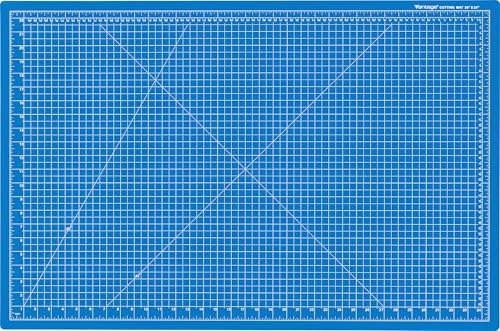
The Dahle Vantage distinguishes itself through a multi-layered construction that resists warping, a common frustration when mats are stored improperly or exposed to fluctuating temperatures. Its rigidity provides a stable, flat surface that mimics the feel of a professional worktable.
This mat is particularly well-suited for makers who utilize heavy-duty fabrics. If an apron pattern calls for thick denim or multiple layers of waxed canvas, the density of the Dahle mat ensures the blade does not bottom out and lose sharpness prematurely.
The surface finish is matte rather than glossy, which is a significant advantage for reducing eye strain during long sessions of pattern layout. It is a true investment piece for a permanent, dedicated sewing studio.
Arteza Self Healing Cutting Mat: Best for Color

Arteza focuses on visibility, often incorporating bright, clear grid markings that stand out against various fabric colors. If dark navy or black fabric makes it difficult to see standard grid lines, these mats offer a distinct contrast advantage.
Beyond the aesthetics, the performance is solid for general hobbyist use. The thickness is consistent, and the “self-healing” claim holds up well under moderate pressure from standard rotary cutters.
These mats are often sold in bundles, providing excellent value for someone setting up a complete sewing room. They marry functionality with a cleaner, more vibrant workspace aesthetic.
US Art Supply Large Self Healing Mat: For Big Projects

Large-scale apron patterns—such as those featuring full-coverage skirts or deep pockets—require a substantial surface area to avoid constant shifting of the fabric. US Art Supply provides expansive options that minimize the need to reposition fabric pieces.
Having a large, uninterrupted surface prevents the fabric from hanging off the edge of the table, which can distort the grain line. When the grain is off, the finished apron will not drape correctly or hold its shape over time.
While these mats are heavy, the tradeoff is a workspace that accommodates full pattern pieces in a single layout. For those with the table space to support it, the efficiency gain is immediate.
Worklion A1 Cutting Mat: The All-Rounder

Worklion caters to the high-volume maker who needs a balance of durability and size at an approachable price point. The A1 size is massive, covering nearly the entire surface of a standard kitchen table.
The surface is engineered to be slightly grippier than other brands. This is a subtle but helpful feature when working with slick synthetic fabrics or lightweight cottons that tend to slide during the marking process.
It is a sensible, “workhorse” choice. It handles standard daily use well and provides a professional-grade footprint for complex apron assembly.
How to Choose the Right Mat Size for Your Projects
Always measure your workspace first. A mat that hangs over the edge of a table is prone to warping, which ruins the flatness required for accurate cutting.
Consider the largest pattern piece in your apron collection. If the apron features a wide, gathered skirt, ensure the mat is wide enough to accommodate the full width of that piece without folding it, as folded fabric leads to uneven cutting.
- Small (A3/A2): Best for cutting binding, pockets, or small applique.
- Large (A1/Extra Large): Necessary for full bodice and skirt layouts.
- Table-Wide: Ideal for cutting yardage directly from the bolt.
Caring For Your Mat: Tips to Extend Its Life
Rotate the cutting area frequently to avoid overusing the same grid lines. If you always cut in the center, you will create a permanent trench that forces your rotary cutter off-course during future projects.
Keep the mat away from direct heat sources and sunlight. Heat causes the plastic compounds in the mat to expand and contract, which results in permanent bubbling and warping that no amount of weighing down can fix.
Use a damp cloth to clean the surface of fabric lint and thread debris periodically. A buildup of fibers can cause your rotary blade to skip, leading to jagged edges on your fabric.
Rotary Cutter vs. Scissors: Which is Best for Aprons?
Rotary cutters are superior for straight lines and long, sweeping curves common in apron construction. They allow the fabric to remain flat against the mat, which ensures the grain line stays true and prevents the “chewed” edge often seen with dull scissors.
Scissors remain the better choice for tight, intricate interior corners or when working with fabric that is prone to shifting, like sheer or high-slip synthetics. In these cases, the control of the scissor blade is an asset.
Most expert makers utilize both. Use the rotary cutter for the bulk of the pattern layout to ensure speed and accuracy, and keep a sharp pair of fabric shears nearby for finishing cuts and detail work.
Storing Your Cutting Mat: The Do’s and Don’ts
Never fold your cutting mat. The center fold will create a permanent crease that prevents the mat from lying flat, effectively ruining it for precise pattern alignment.
Store it flat under a bed, behind a bookshelf, or hanging from a dedicated hook if the surface is sturdy enough. If you must lean it against a wall, ensure it is supported along its entire length to prevent bowing.
Avoid stacking heavy objects on top of the mat for extended periods. Even if the item seems light, a focused pressure point can cause a permanent indentation in the self-healing material.
Selecting the right self-healing mat is a fundamental investment in the longevity and quality of your sewing practice. By matching the size and density of the mat to the demands of your specific apron projects, you ensure that every cut is precise and every piece comes together with professional ease. Choose the surface that supports your workflow, and you will find that the construction process becomes significantly more fluid and satisfying.