
6 Best Leather Working Tools For Custom Book Covers
Elevate your craft with these 6 essential leather working tools for custom book covers. Discover the must-have gear for your next project and start binding today.
Creating custom leather book covers offers a tactile satisfaction much like mastering a complex lace pattern or perfecting the tension of a colorwork sweater. Leather, like natural fibers such as wool or alpaca, requires specific tools to manipulate its thickness, grain, and durability. Whether housing a cherished journal or a hand-bound collection of knitting patterns, the right equipment ensures a professional finish that ages beautifully. This guide highlights the essential tools for transforming raw hides into functional, bespoke covers.
Olfa Rotary Cutter: For Precision Straight Cuts


Precision in leatherwork is as vital as maintaining a consistent gauge across a row of knitting. A rotary cutter excels here, providing clean, straight lines that scissors simply cannot replicate on thicker material.
When cutting heavy-weight veg-tan leather, a sharp blade prevents the jagged edges that occur with repeated snips. Just as dull needles cause dropped stitches or uneven tension in a silk blend, a dull blade will drag and deform the leather grain.
- Always utilize a self-healing mat to protect the blade.
- Apply firm, consistent pressure in a single motion.
- Replace blades frequently to avoid surface tearing.
Bottom line: If accuracy is the priority for rectangular cover flaps, a rotary cutter is an indispensable investment.
Tandy Leather Pro Stitching Groover: Best Value
A stitching groover carves a narrow channel into the leather, allowing the thread to sit flush with the surface. This prevents the abrasive wear of rubbing against tables or bags, much like protecting the delicate plies of a luxury yarn from friction.
This tool is exceptionally beginner-friendly and affordable. By recessing the stitch, the final project looks cleaner and remains structurally sound for years of heavy use.
While high-end alternatives exist, the entry-level groover performs the primary function perfectly. It provides the same professional-grade depth as more expensive models, making it the best value for makers just starting their book-binding journey.
Seiwa Diamond Stitching Chisels: Pro-Level
Stitching chisels pierce clean, angled holes through the leather, creating the iconic “slanted” stitch seen in high-end leather goods. They act much like a set of high-quality stainless steel needles; they glide through the material without snagging.
Unlike round punches, diamond chisels allow the thread to lie flat and uniform. This creates a balanced look that mimics the consistency of machine-stitched seams while maintaining the soul of hand-craftsmanship.
- Select a smaller spacing, such as 3mm or 4mm, for a delicate, refined book cover.
- Always use a poly-board or wooden mallet to prevent dulling the chisel tips.
- Practice on scrap pieces to ensure alignment before working on a final piece.
Choose these when the aesthetic of the stitch is as important as the strength of the hold.
Basic Round Drive Punch Set: For Versatility
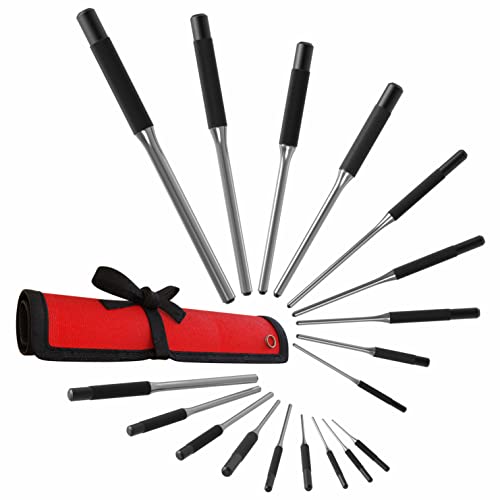
Every maker needs a way to create clean circular holes, whether for cord ties or button fasteners on a notebook. A set of round drive punches is the most versatile solution for this common task.
These punches function differently than stitching chisels by removing a small plug of leather entirely. Much like choosing the right needle size for a specific yarn weight, selecting the correct punch diameter is essential to prevent unsightly gaps or forced tension.
Investing in a standard set allows for various closure styles. From wrap-around leather cords to intricate button-and-loop systems, these tools provide the mechanical flexibility needed for custom designs.
Weaver Master Tools Edge Beveler: Smooth Bevels

An edge beveler rounds off the sharp corners of a cut edge, creating a comfortable, soft transition. This is the difference between a rough, store-bought edge and a refined, heirloom-quality finish.
When the edge of a book cover is sharp, it tends to fray and collect dust over time. Beveling, followed by a light burnish, seals the fibers of the leather, much like blocking a finished garment to set its final, professional shape.
- Keep the beveler sharp to avoid “chewing” the leather.
- Work in smooth, steady strokes to maintain an even angle.
- Match the beveler size to the thickness of your leather for the cleanest result.
A well-beveled edge feels soft to the touch and adds a level of refinement that elevates the entire project.
Teflon Bone Folder: The Non-Marking Essential
A bone folder is the primary tool for creasing leather and burnishing edges to a glass-like sheen. Teflon is the preferred material because it does not leave dark, shiny streaks or oil marks on lighter-toned leathers.
For knitters, the bone folder is equivalent to the specialized blocking wire; it is the tool that gives the final project its structure and crisp lines. Use it to flatten pockets or to crisp the spine folds of a leather cover.
Unlike wood or bone versions, Teflon never absorbs oils or chemicals that could transfer to the project. It is a one-time purchase that remains smooth and scratch-free for decades of studio use.
How to Choose Your First Set of Leather Tools
Beginners often feel pressured to buy extensive kits, but this is rarely necessary. Start with the core essentials: a sharp cutting tool, a single stitching chisel set, and a reliable burnishing tool.
Consider the thickness of the leather you intend to use. If working with thin, supple leather, smaller chisels are better; for thick, saddle-grade hides, you need sturdier, wider-spaced punches.
Prioritize quality over quantity. One high-quality edge beveler will outlast three cheap versions that arrive dull and prone to rust. Focus on building a kit that grows alongside your project complexity.
Cutting Mat vs. Poundo Board: What You Need
A cutting mat is designed specifically for blades, keeping them sharp and preventing the cutter from slipping. It is essential for the initial cutting phase of your leather project.
A poundo board, however, is a soft, dense plastic surface designed to absorb the impact of punches and chisels. Using a chisel on a standard cutting mat will destroy the mat and quickly dull your tools.
- Use a cutting mat for your rotary cutter and knife work.
- Switch to a poundo board when using hammers, mallets, or chisels.
- Keep both surfaces clean to prevent debris from marring the grain of your leather.
Think of it as having different needles for different yarn weights—the right tool for the right task protects both your material and your investment.
Essential Safety Tips for Handling Sharp Tools
Leather tools are intentionally designed to be razor-sharp, requiring the same level of respect as high-carbon steel knitting needles or embroidery scissors. Always cut away from the body, keeping your non-cutting hand well clear of the blade’s path.
Never attempt to “catch” a falling tool. Much like letting a dropped needle fall to the floor to protect your feet, it is safer to let the tool hit the ground than to risk a deep cut by reaching out.
Maintain a tidy workspace. Clutter leads to accidental contact with blades, and in a craft where steady hands are paramount, prevention is the only reliable safety strategy.
Caring for Your Leather Tools for Longevity
Leather tools are precision instruments that require moisture control and maintenance to prevent oxidation. Wipe down steel tools with a light coat of sewing machine oil or wax after each session to prevent rust.
Store chisels and blades separately to avoid edge damage. If a chisel tip strikes another metal tool, it will lose its sharpness instantly.
Keep your blades honed. A sharpening stone is the most important companion to any leather tool. A sharp tool is inherently safer and more efficient than a dull one, ensuring that your custom book covers reflect the skill and care put into every stitch.
Building a library of custom book covers is a journey of refinement and patience. With these core tools and proper maintenance, your work will serve as a beautiful, durable testament to your craftsmanship.