6 Best Stackable Drawer Organizers For Small Wooden Pieces
Maximize your workspace with these 6 best stackable drawer organizers for small wooden pieces. Shop our top picks to declutter your storage and organize today.
Finding the perfect home for tiny wooden items—like ornate shawl pins, delicate cable needles, or specialized stitch markers—can be as challenging as finding the right tension for a complex lace pattern. Cluttered notions lead to lost tools, and nothing halts progress on a project faster than scouring the floor for a dropped wooden toggle. These organizational solutions transform a chaotic workspace into a streamlined station. Choose the right system, and your focus returns entirely to the rhythm of the needles.
Akro-Mils 26-Drawer: Best for Tiny Notions


The Akro-Mils 26-drawer cabinet is the gold standard for separating minuscule components. With dozens of small, clear bins, it allows for granular sorting of wooden stitch markers, point protectors, and needle gauges.
This unit excels when sorting items by size or material type, such as separating polished ebony needles from untreated birch accessories. Because the drawers are small, they prevent larger tools from burying smaller, fragile items, ensuring that thin crochet hooks or wooden tapestry needles stay accessible.
The downside is the depth; it is not meant for long DPNs (double-pointed needles) or circular cable sets. However, for a dedicated notions-only station, it remains an unparalleled asset for precision organization.
Deflecto Stackable Caddy: Most Versatile Pick
Versatility is the hallmark of the Deflecto Stackable Caddy system, which features modular trays that interlock vertically. For the knitter who keeps a mix of wooden tools and small supplies, this offers a customizable vertical footprint.
The trays are excellent for storing sets of interchangeable needle tips or wooden buttons that need to stay grouped by project. Since the containers are shallow, items do not get lost in the bottom, reducing the time spent sorting through piles.
Be aware that these units are not always airtight, so they are better suited for wood storage than for moisture-sensitive items like some fine alpaca or silk wool samples. They are best for the organized crafter who enjoys rearranging their layout based on current projects.
IRIS USA 6-Drawer Cart: Best Mobile Solution

Mobility is vital for those who frequently move from a dedicated craft room to the living room armchair. The IRIS USA 6-drawer cart features smooth-rolling casters that allow the entire collection of wooden tools to follow the project.
Deep drawers provide enough space for larger wooden tools like yarn bowls, nostepinnes, or bulky wooden swifts. This unit bridges the gap between small-notion storage and bulk accessory management, keeping bulky items safe from breakage.
The tradeoff here is the footprint, as it requires more floor space than wall-mounted organizers. If floor space is at a premium, ensure there is a clear corner for this unit to sit during long knitting sessions.
Sterilite 3-Drawer Unit: Top Budget-Friendly Buy
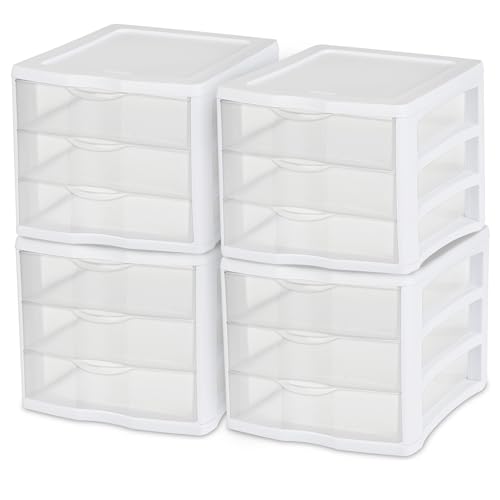
The Sterilite 3-drawer unit is a utilitarian staple that provides immediate organization without a high financial commitment. These lightweight plastic units are ideal for storing bulk collections of bamboo needles or large wooden knitting needles that don’t fit into smaller organizers.
While the plastic can feel slightly flexible under heavy weight, it is perfectly suited for wooden tools, which are generally lightweight. These units are easily stackable, allowing for a vertical storage solution that grows alongside an expanding tool collection.
It is a straightforward, no-nonsense choice for the pragmatic knitter. If you prioritize function over aesthetic appeal, this is the most efficient way to clear off your workbench.
mDesign Stackable Bins: Best for Clear Viewing
Clear visibility is the primary advantage of mDesign stackable bins. These containers are crafted from transparent plastic, allowing you to identify a specific set of wooden needles or a handful of stitch markers without opening a single lid.
They are particularly useful for keeping delicate wooden items visible and protected from dust. Because they can be unstacked easily, they function well for knitters who rotate their needle selection frequently based on gauge requirements for different fiber weights.
Remember that these bins do not contain interior dividers. Pair them with smaller silicone inserts or fabric pouches to keep tiny wooden pieces from sliding around during transport.
Really Useful Box Tower: Most Durable Organizer
When durability is the priority, the Really Useful Box Tower is the superior choice. These boxes are constructed from sturdy, impact-resistant plastic that stands up to the accidental bumps that occur in a busy home workshop.
They are exceptionally good at protecting expensive, hand-carved wooden tools from moisture and damage. The secure locking mechanism on each drawer ensures that even if the tower is knocked over, the contents remain safely inside.
These units occupy a larger footprint than simple drawer organizers, making them better for long-term storage than daily-use stations. If you own a collection of vintage wooden needles or hand-turned accessories, this is the safest environment for them.
Matching Drawer Size to Your Smallest Notions
The key to successful organization is matching the volume of the container to the physical size of the notion. Small wooden items like stitch markers are easily lost in large, cavernous bins, leading to a “dump-and-sort” ritual that wastes time.
For tiny notions, use systems with multiple small-compartment drawers. For larger tools like wooden needle gauges or crochet hooks, prioritize drawer length and depth.
- Micro-items (Stitch markers, point protectors): Use 1-2 inch deep drawers.
- Small tools (Needle gauges, cable needles): Use 3-5 inch deep drawers.
- Large tools (Swift, ball winder, needles): Use deep, wide-base bins or carts.
How to Effectively Label Your Organizer Drawers
Labels remove the cognitive load of searching through your tools. Even if the drawers are transparent, marking them by size or use helps when knitting with high-contrast fibers where specific needles are required for gauge accuracy.
Apply labels to the bottom of the drawer or the front frame to avoid blocking the view of the contents. Use clear, bold text and categorize by material (e.g., “Bamboo DPNs”) or function (e.g., “Cable Needles”).
Consistent labeling allows you to grab the 3.5mm needle you need without checking every drawer. It also helps others in the household understand that these drawers are strictly for specialized fiber tools.
Plastic vs. Wood: Which Organizer Material Is Best?
While it is tempting to match wooden tools with wooden storage, plastic organizers are generally superior for protecting delicate gear. Wood-on-wood storage can lead to snagging and friction, whereas smooth plastic creates a low-abrasion environment.
Furthermore, plastic is easier to clean and provides a moisture-resistant barrier. This is critical for maintaining the structural integrity of your wooden needles, as excessive humidity can cause untreated wood to warp or lose its natural oils.
Plastic is the more pragmatic choice for long-term, low-maintenance storage. Reserve wood storage boxes only for heirloom sets that you intend to display rather than use regularly.
Pro Tips for Stacking and Securing Your Units
Safety is paramount when stacking plastic drawer units, especially when they are filled with dense wooden tools. Use museum putty or non-slip adhesive pads between stackable units to prevent them from shifting if bumped.
Always place the heaviest, most frequently used items in the bottom drawer to keep the center of gravity low. This prevents the tower from becoming top-heavy and tipping over during a late-night knitting session.
Check the manufacturer’s weight rating before stacking high. A few extra minutes spent securing your towers will prevent a catastrophic spill that could bend or snap your precious wooden needles.
Whether you are organizing a small collection of essential needles or a massive library of specialty tools, these systems provide the structure needed to keep your focus on your craft. Choose the solution that best fits your space and your current inventory, and you will spend far less time hunting for tools and far more time with yarn in hand. Proper storage is not just about tidiness; it is about respecting the tools that help you bring your fiber projects to life. A well-organized studio is the hallmark of a confident, prepared knitter.