6 Best Magnification Headsets For Hand Sewing
Struggling with detail work? Discover the 6 best magnification headsets for hand sewing to improve your precision and comfort. Shop our top-rated picks today.
Intricate lace knitting and high-contrast colorwork require more than just steady hands; they demand absolute visual clarity. When working with fine-gauge lace or dark, low-twist yarns, eye strain often becomes the primary barrier to finishing a project. Magnification headsets provide the necessary focus to identify dropped stitches or correct cabling errors without constant squinting. Choosing the right tool ensures that long sessions of delicate work remain a joy rather than a source of physical fatigue.
Donegan OptiVISOR: The Professional’s Choice


The OptiVISOR is widely considered the gold standard for precision bench work, and for good reason. Its glass lenses offer a level of clarity that plastic alternatives simply cannot match, providing a distortion-free view that remains sharp from edge to edge.
For the knitter working with black laceweight mohair or identifying a split ply in a high-twist silk, this headset is an investment in longevity. The rigid, adjustable headband ensures the unit stays put during hours of complex chart reading.
However, be aware that glass lenses carry significant weight. If neck tension is already a concern during long knitting sessions, this sturdy headset might require frequent breaks to avoid strain.
YOCTOSUN Headband Magnifier: Best Budget Pick

The YOCTOSUN serves as an excellent entry point for knitters curious about magnification without the steep professional price tag. It utilizes interchangeable plastic lenses, which are surprisingly clear and lightweight for the cost.
This model is particularly helpful when testing the waters with different magnification strengths for varying yarn weights. It includes multiple lens plates that snap in and out easily, allowing for a quick shift from standard knitting to detailed embroidery or beadwork.
While the build quality is lighter than professional models, it is often more comfortable for beginners who aren’t used to wearing gear on their heads. The primary trade-off is lens durability, as these can scratch if handled without care.
Carson Pro MagniVisor Deluxe: Most Versatile

Versatility is the core strength of the Carson Pro, which offers a wide array of magnification options in a single package. Its adjustable nature allows it to fit over existing eyeglasses, a critical feature for those who require corrective lenses to see their patterns.
This headset is ideal for the maker who moves between knitting, sewing, and intricate needlepoint. It features an adjustable head strap that accommodates various head sizes, making it a reliable communal tool for a shared crafting space.
Be mindful that the weight distribution can feel front-heavy if the straps aren’t tightened correctly. Adjusting the fit properly is essential to prevent the unit from slipping down the nose while focusing on a tight swatch.
Brightech LightView Pro: Best with Integrated Light

Visibility is often compromised by the shadows cast by overhead lamps, especially when working with darker yarn fibers. The Brightech LightView Pro solves this by integrating high-intensity LED lighting directly onto the frame.
The light source follows the line of sight exactly, illuminating the precise point where the needle enters the stitch. This is a game-changer for working with navy blue or black yarns, where the stitches often disappear into a dark, uniform mass.
Because of the integrated electronics, the unit is heavier than standard passive magnifiers. Ensure that the battery pack is easily accessible, as frequent use will require regular charging cycles to maintain peak brightness.
Beileshi Head Mount Magnifier: Top Rechargeable Pick
The Beileshi headset removes the frustration of managing replaceable batteries during critical project phases. Its USB-rechargeable LED light system provides a consistent, bright glow that lasts through even the longest weekend knitting marathon.
The design is sleek and surprisingly ergonomic, balancing the battery weight well against the lens assembly. It is an excellent choice for knitters who value efficiency and want a tool that is ready to go as soon as the knitting bag is opened.
The trade-off here is the complexity of the internal electronics. Like any rechargeable device, the battery lifespan is finite, and the unit must be kept away from water and extreme temperatures to protect the internal circuits.
Clip-On Magnifiers: For Prescription Glass Wearers
For knitters who already rely on prescription eyewear, a full headband magnifier can feel redundant or overly cumbersome. Clip-on magnifiers offer a minimalist solution by attaching directly to the bridge of existing frames.
These allow for hands-free magnification that moves naturally with the wearer’s gaze. They are perfect for spot-checking tricky cabling or verifying that a decrease has been placed correctly without having to pause and remove glasses.
The downside is that they can add weight to the nose pads of glasses, potentially causing discomfort over time. Opt for the lightest possible clip-on version to ensure that existing eyewear remains comfortable for the duration of the project.
How to Choose the Right Magnification Strength
Choosing magnification is not about finding the “strongest” lens, but the one that provides the best working distance. Magnification is typically denoted by diopters or X-values, where higher numbers provide more zoom but a significantly shorter focal length.
For general knitting, a lower magnification (1.5x to 2x) is usually sufficient to reduce eye strain without forcing the knitter to hold their work too close to the face. Excessively high magnification will force the knitter into an unnatural, hunched posture.
- 1.5x – 2x: Ideal for general knitting and reading charts.
- 2.5x – 3x: Better for fine-gauge work, lace repairs, or pulling out dropped stitches.
- 3.5x and above: Usually reserved for extreme detail work or needlework, rarely needed for standard knitting.
Built-In Lights: Are They Worth the Extra Cost?
Integrated lights offer a significant advantage for fiber arts, where shadows are the natural enemy of precision. By illuminating the stitch directly, the knitter can see the yarn structure clearly, helping to identify potential issues before they become permanent mistakes.
However, built-in lights add weight, complexity, and cost to the headset. If a knitter already has a high-quality, adjustable floor lamp or a dedicated neck light, the benefit of the integrated headset light may be minimal.
Assess the current lighting situation before committing. If the primary workspace has plenty of indirect light, a standard, lighter-weight headband is usually the more comfortable choice for long-term wear.
Finding a Comfortable Fit for Long Sewing Sessions
Comfort is the ultimate predictor of whether a tool will be used consistently or left to gather dust on a shelf. A headset that pinches the temples or slips down the nose will destroy focus faster than any dropped stitch.
Look for models with soft, moisture-wicking padding along the brow line. The ability to adjust the angle of the visor independently of the headband is also crucial, as it allows the knitter to look up from the work without removing the entire apparatus.
If the unit feels heavy, check the strap tension. Many users make the mistake of wearing the strap too high or too loose, forcing the nose piece to take all the weight. Distributing the tension evenly around the circumference of the head is the key to all-day comfort.
Headsets vs. Lamps: Which Magnifier is for You?
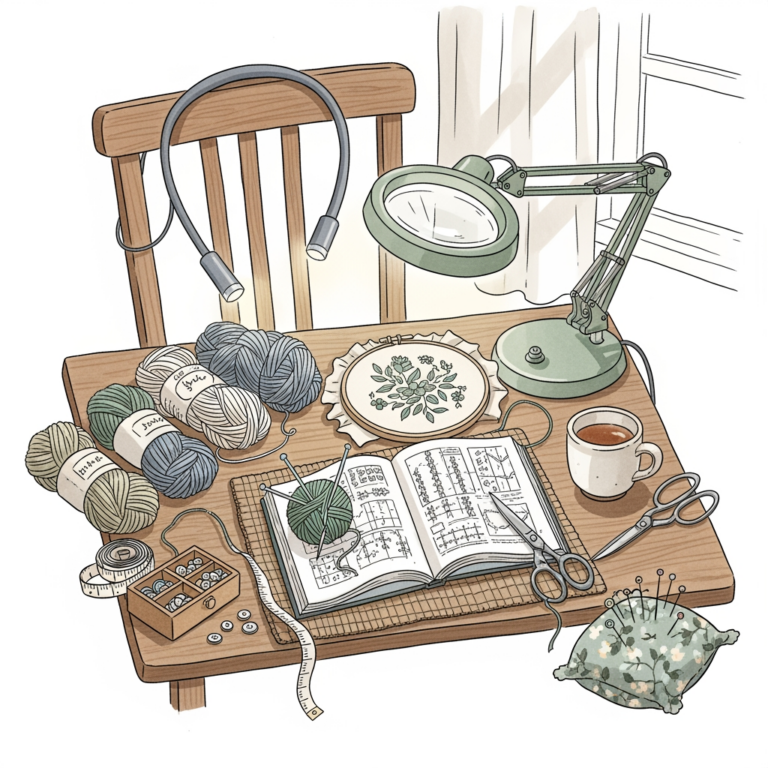
Magnifying lamps offer a wide field of view and don’t require anything to be worn, making them popular for seated, stationary work. They are excellent for long, uninterrupted stretches where the knitter remains in one position.
Headsets, by contrast, offer a more immersive, localized experience and move with the eyes. They are the clear winner for knitters who change positions frequently or those who travel with their projects and need a portable solution.
Ultimately, the choice depends on the project environment. If the knitting happens in a dedicated studio chair with a stable table nearby, a lamp is ideal; if the knitting happens on a sofa, in a car, or at a local knit night, a headset provides the necessary flexibility.
Choosing the right magnification tool transforms the way intricate projects are approached, effectively removing the physical barriers to precision and comfort. By matching the tool’s weight, lighting, and magnification strength to the specific needs of the project, any knitter can significantly improve their accuracy and reduce fatigue. Whether opting for a professional-grade headset or a simple clip-on, the ultimate goal is to keep the eyes fresh so that the focus remains entirely on the stitches.