7 Best Equipment Covers For Long Term Storage
Protect your investment with these 7 best equipment covers for long-term storage. Shop our top-rated, durable picks to keep your gear safe. Read the guide today.
Dust, pet hair, and fluctuating humidity are the silent enemies of high-end crafting equipment. Whether storing a workhorse sewing machine or a delicate spinning wheel, specialized protection is the difference between a tool that’s ready to work and one requiring a trip to the repair shop. Investing in a proper cover preserves the mechanical integrity of precision parts that are difficult to replace. Choosing the right shield now prevents long-term oxidation and dust accumulation that can degrade sensitive internal components.
Luxja Sewing Machine Cover: Best All-Rounder
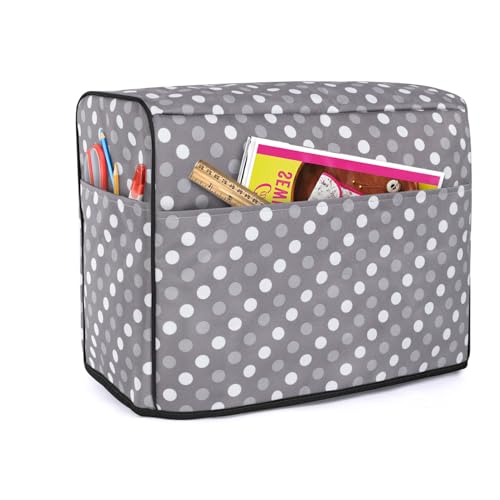

The Luxja cover earns its reputation as a reliable standard due to its versatile, padded construction. It strikes a balance between rigidity and flexibility, ensuring it remains upright while protecting against minor bumps.
For machines that live on a craft room desk, this cover provides essential protection against UV light fading and dust ingress. The side pockets are particularly useful for keeping the foot pedal or specialized presser feet attached to the machine, ensuring everything stays in one place.
- Padded walls minimize damage from accidental contact.
- Neutral aesthetics fit well in any workspace.
- Sturdy handles allow for easy lifting, even with heavier machines.
While it lacks the heavy-duty reinforced frame of industrial cases, it is an ideal middle ground for standard domestic sewing machines. It is the practical choice for a crafter who occasionally rearranges their studio or needs to clear bench space.
Teamoy Serger Dust Cover: For Your Overlocker

A serger’s exposed loopers and complex tension assembly are notoriously sensitive to debris. A dedicated serger cover must account for the unique, often bulky footprint of these machines compared to standard sewing units.
The Teamoy cover is designed specifically to drape over the distinct shape of an overlocker without snagging on the thread tree. Because serger blades and precision parts are prone to rusting if exposed to moisture, the breathable nature of this material is a significant advantage.
- Custom shaping prevents unnecessary stress on the thread stand.
- Durable polyester resists tearing during repeated use.
- Simple design makes it easy to slip on and off during frequent projects.
Avoid using a generic sewing machine cover for a serger, as the lack of proper sizing can lead to bent needles or misaligned thread guides. A specific fit protects the delicate mechanical alignment required for a perfect four-thread seam.
HOMEST Cricut Machine Cover: Protect Your Cutter

Digital cutting machines rely on highly sensitive optical sensors and gear-driven belts that can seize up if dust settles in the wrong places. Keeping a specialized machine like a Cricut clean is vital for maintaining consistent cut quality on delicate heat transfer vinyl or cardstock.
The HOMEST cover features a sleek, low-profile design that mirrors the footprint of modern digital cutters. It prevents the accumulation of lint, which is a major factor in sensor malfunctions that cause “misalignment” errors during complex jobs.
- Water-resistant lining adds a layer of safety against spills.
- Streamlined shape saves space on crowded work surfaces.
- Minimalist aesthetic hides the complexity of the machine from view.
If a machine is stored for long periods, consider placing a silica gel packet inside the cover to combat humidity. This simple addition prevents the oxidation of electronic contacts, which is the most common cause of failure in older, unused cutters.
Ashford Spinning Wheel Cover: For Serious Spinners

Spinning wheels represent a major investment in woodcraft and mechanical precision. Dust is not just a nuisance here; it can combine with residual bobbin oil to create a sludge that impacts the flyer’s balance and spinning speed.
An Ashford-style cover is often designed with heavier, more durable fabric to support the odd geometry of a treadle wheel. Whether the wheel is a classic upright or a castle-style model, the cover acts as a barrier against curious pets and household grit.
- Reinforced seams endure the pressure of odd-shaped frames.
- Breathable fabric prevents the wood from warping due to moisture buildup.
- Secure closures ensure the entire mechanism is fully enclosed.
Do not be tempted to use a plastic bag for long-term storage of a wooden wheel. Plastic traps condensation, which can lead to mold growth on wood fibers or cause delicate tension springs to rust. Use a fabric cover that allows for minimal airflow.
SINGER Universal Machine Tote: Cover and Carry
For the knitter or sewer who attends retreats or local guild meetings, a tote-style cover provides the best of both worlds. It acts as a protective shield during storage and a functional bag for transport.
These totes are usually built with thicker walls than a simple dust cover, providing better protection against the knocks of transit. The key is finding one with an internal strap system to anchor the machine firmly in place.
- Convertible design functions as both a storage case and a carrying bag.
- Reinforced base supports the weight of heavy, metal-bodied machines.
- Storage pockets keep needles, bobbins, and scissors organized.
The trade-off is the extra weight of the bag itself. If the primary goal is stationary storage, a lightweight dust cover is often more convenient; if mobility is required, the added bulk of a tote is a necessary compromise.
Yarwo Knitting Machine Cover: For Bulky Machines

Knitting machines are fragile, elongated beasts that occupy a significant amount of table space. They are particularly susceptible to bending of the needle bed, which can render the entire machine useless for complex stitch patterns.
The Yarwo cover is built to accommodate the specific, long, and narrow dimensions of flatbed knitting machines. It shields the needle bed and the carriage from the microscopic dust particles that can cause jamming in the intricate cam systems.
- Extended length tailored for knitting machine beds.
- Protective padding safeguards the delicate needle tips from impact.
- Easy access ensures the machine can be uncovered quickly for setup.
Never leave a knitting machine uncovered for long durations. Even a thin layer of dust can interfere with the smooth movement of the carriage, leading to dropped stitches and uneven tension. Covering the machine is the most effective form of preventative maintenance available.
Custom Etsy Canvas Cover: The Perfect Bespoke Fit
Sometimes, off-the-shelf options fail to fit vintage machines or equipment modified with custom bobbin winders. Bespoke canvas covers ordered from independent creators offer a precise solution tailored to an individual’s specific machine.
Canvas is a superior material for long-term storage because it is durable, holds its shape, and allows the equipment underneath to “breathe.” Unlike synthetic nylon, high-quality canvas will not degrade or become sticky after years of exposure to light and heat.
- Tailored dimensions ensure no loose fabric gets caught in moving parts.
- Customization options allow for the addition of extra pockets or unique closures.
- Heirloom quality materials often outlast the machine itself.
If a machine has non-standard attachments or a specialized ergonomic setup, a custom cover is worth the investment. It eliminates the frustration of forcing a machine into a cover that is slightly too small, which can cause damage to sensitive knobs and dials.
How to Measure Your Machine for a Perfect Fit
Accurate measurement is the difference between a protective cover and a fabric hazard. Always measure the machine in its final “stored” configuration, including any attached power cords or thread guides that cannot be removed.
Measure the height, width, and depth at the widest points. If the machine has an extended arm or a bulky motor casing, account for those protrusions by adding an extra inch to each dimension.
- Height: From the base to the highest point of the handle or thread tree.
- Width: The absolute widest point of the machine, including knobs.
- Depth: The distance from the front of the machine to the back, including any protruding plug-ins.
Never rely on the manufacturer’s box dimensions, as these often include packaging materials rather than the machine’s actual footprint. Always add a small “ease” allowance—usually 0.5 to 1 inch—to ensure the cover slips on without forcing a jam.
Prepping Your Gear for Long-Term Storage
Before putting a cover on for long-term storage, the equipment must be properly cleaned and serviced. Residual lint, oil, and debris can become corrosive over time, causing permanent damage to mechanical parts.
Use a soft brush to remove dust from the feed dogs, hook areas, and tension disks. Wipe down external surfaces with a clean, dry cloth to remove oils from fingers, which can attract dust and cause discoloration on plastic casings.
- Clean thoroughly: Remove all lint from the internal mechanics.
- Lubricate: Apply a single drop of sewing machine oil to recommended points to prevent rust.
- Disconnect: Always unplug the power and remove the foot pedal to prevent accidental activation.
If the machine will be stored in a basement or garage, include a desiccant pack inside the cover. This is a simple, effective step to manage humidity and keep the internal electronics dry and functional for years.
Fabric vs. Vinyl: Which Cover Material is Best?
The choice between fabric and vinyl hinges entirely on the storage environment and the frequency of use. Fabric covers are the industry favorite for a reason, as they offer the breathability necessary to prevent moisture buildup inside the case.
Vinyl covers provide superior protection against spills and heavy dust, making them ideal for workshops or areas with high foot traffic. However, vinyl can become brittle over time and may harbor trapped moisture, which is dangerous for sensitive internal computer boards.
- Fabric: Breathable, durable, and won’t scratch the finish of the machine.
- Vinyl: Waterproof and easy to wipe clean, but can trap humidity.
- Canvas: The premium choice for longevity and breathability.
If the machine is being stored in a climate-controlled room, stick with fabric or canvas. If the machine is kept in a damp area, use a fabric cover and prioritize frequent inspection, as no cover can fully substitute for a dry, stable environment.
Proper storage is the best investment for the longevity of any fiber arts tool. By selecting the right cover and preparing your machine correctly, you ensure your equipment remains in prime condition for the next decade of projects.