6 Sewing Machine Walking Feet For Thick Fabric Zipper Sewing
Struggling with bulky layers? Explore our top 6 sewing machine walking feet for thick fabric zipper sewing to achieve professional, skip-free results. Shop now.
Tackling thick, multi-layered fabrics like heavy wool coatings or waxed canvases requires more than just a sharp needle and patience. Standard sewing machine presser feet often struggle to feed these layers evenly, resulting in puckered seams or skipped stitches that can ruin a project. A walking foot acts as a secondary set of feed dogs, gripping the fabric from the top to ensure every layer moves at the same speed. Choosing the right tool for the job transforms the sewing experience, turning potential frustration into a smooth, professional finish.
YEQIN Even Feed Foot: Best Budget High-Shank


For those working with heavy wools or lined garment bags, the YEQIN Even Feed Foot offers a functional solution without a premium price tag. It provides the essential mechanical action required to keep multiple layers of fabric aligned as they move under the needle.
This foot is designed specifically for high-shank machines, which are common in more robust, semi-industrial setups. By providing consistent traction, it prevents the dreaded “shifting” that often occurs when stitching bulky, high-friction fibers like dense boiled wool.
While it lacks the sophisticated finish of brand-name counterparts, it excels in basic utility. It remains a reliable choice for makers who prioritize function over aesthetic branding when managing heavy projects.
Janome Even Feed Foot: Top Pick for Janome Users
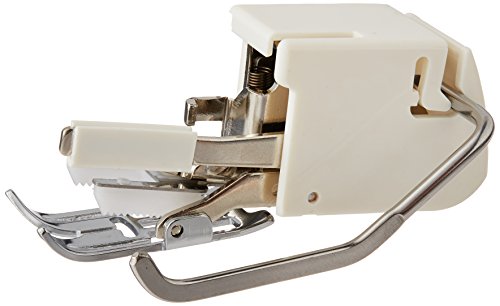
Janome users often find the best results by sticking to the brand’s proprietary walking foot. These feet are engineered with tight tolerances that match the feed dog height and stroke of Janome machinery perfectly.
The integration ensures that when stitching through thick interfacings or layered fabric bags, the feed is synchronized precisely. This minimizes the risk of the fabric stalling, which is a common issue when the presser foot pressure isn’t perfectly calibrated for the material’s thickness.
Opting for this foot is a form of insurance against mechanical mismatch. It provides the smooth, consistent stitch formation needed when working with delicate but thick fibers that cannot withstand the agitation of a generic foot.
Brother SA140 Foot: Ideal for Brother Machines

The Brother SA140 is a specialized accessory that brings professional-level even-feed performance to home sewing machines. It is specifically designed to handle the specific arc and motion of Brother’s feed dog systems.
If the goal is to stitch heavy-duty zippers into thick bag linings, this foot offers the necessary stability. It prevents the top layer from creeping forward, which is a frequent problem when working with heavy fabrics that have different surface textures.
Choosing this foot keeps the machine’s internal timing calibrated correctly. For those invested in the Brother ecosystem, this is the most secure path to achieving uniform stitch length across thick, multi-layered assemblies.
Madam Sew Walking Foot: Most Versatile All-In-One
Versatility defines the Madam Sew Walking Foot, especially for those who rotate between different machine brands or varied project types. It is designed to be highly adjustable, catering to a wide range of shank heights.
This foot is particularly useful for the fiber artist who transitions from quilting bulky, multi-layered wall hangings to sewing heavy canvas utility items. The inclusion of a quilting guide adds an extra layer of utility for projects requiring precise, repeated seam spacing.
The main advantage here is the reduction of tool clutter. Rather than buying machine-specific accessories, this single, robust foot covers most common sewing needs across varying fabric weights.
Distinctive Open Toe Foot: For Unbeatable Visibility
Visibility is a critical factor when sewing zippers into thick fabrics. The Distinctive Open Toe Foot clears the view of the needle drop point, allowing for precise placement when topstitching or attaching bulky hardware.
When working with heavy materials, seeing exactly where the needle pierces the fabric prevents accidental overlap or uneven seams. This is essential for zippers, where a fraction of a millimeter can change how the hardware sits against the fabric edge.
This foot is best suited for detail-oriented tasks where precision is favored over pure traction. It is an excellent secondary tool to keep on hand for the final, visible steps of a project.
Consew CW-335 Foot: The Industrial-Strength Choice
For those pushing their machine to the absolute limit with leather, heavy canvas, or thick upholstery fabrics, the Consew CW-335 provides genuine industrial-grade construction. It is built to handle the torque and resistance that would cause standard consumer feet to deflect.
This foot excels in heavy-duty applications where the fabric creates significant drag. Its design ensures that even the most stubborn, high-friction materials move smoothly past the presser foot without causing skipped stitches.
It is a specialized tool intended for the heavy lifter of the workshop. If the project involves thick industrial materials, this is the superior option for long-term durability and mechanical reliability.
High Shank vs. Low Shank: Find Your Machine’s Fit
The most common mistake in buying a walking foot is failing to verify shank height. The shank is the vertical metal bar that connects the presser foot to the machine’s presser bar.
A low-shank machine has about 0.5 inches of space from the screw hole to the bottom of the foot, while a high-shank machine has about 1 inch. Using the wrong type will prevent the foot from engaging correctly with the feed dogs, resulting in poor stitch quality.
Always consult the user manual or measure the shank before ordering. Matching the hardware correctly ensures the walking foot can move freely through its full range of motion without hitting the needle plate.
How to Install and Calibrate Your Walking Foot
Installing a walking foot requires more care than a standard presser foot. The most critical step is ensuring that the fork of the foot is positioned properly over the needle clamp screw.
As the needle bar moves up and down, this fork drives the walking mechanism, syncing it with the machine’s feed dogs. If the fork is not seated correctly, the foot will not “walk,” and the fabric will likely bunch underneath.
Test the movement by hand-turning the balance wheel before switching on the power. Verify that the foot rises and falls in tandem with the feed dogs to ensure perfect synchronization.
Tips for Sewing Zippers into Thick Fabrics
Sewing zippers into thick fabric requires managing the bulk that naturally accumulates near the zipper teeth. Use a heavy-duty needle, such as a size 100/16 or 110/18, to pierce through the multiple layers without deflection.
Reduce the presser foot pressure if the machine allows, as excessive pressure can flatten the fabric too much and lead to uneven feeding. Consider using a zipper-friendly walking foot to keep both sides of the zipper tape balanced as they pass under the needle.
Finally, always use a basting stitch or heavy-duty clips instead of pins when working with thick materials. Pins can distort heavy fabrics, leading to waves in the final seam that are difficult to steam out.
Open-Toe vs. Closed-Toe: Which Do You Need?
The choice between open-toe and closed-toe feet depends entirely on the project goal. An open-toe foot provides maximum visibility, which is essential for decorative work, zipper alignment, and precise corner turning.
A closed-toe foot, by contrast, offers greater stability and better fabric control. It covers more surface area, which helps in holding down thick, shifting materials like synthetic fleece or heavy wool during long, straight seams.
For most thick-fabric zipper projects, an open-toe foot is the preferred choice for the initial positioning. However, switching to a closed-toe foot for straight, long-distance seams can provide more consistent, balanced pressure throughout the length of the fabric.
Investing in a high-quality walking foot is the most effective way to eliminate the frustrations associated with sewing heavy materials. By choosing the right fit for your machine and understanding the nuances of how these feet interact with your fabric, you can achieve professional results on even the most challenging projects. Proper maintenance and correct calibration ensure these tools remain a reliable part of your craft for years to come.