6 Best Leather Buttons For Rustic Knitwear To Try
Elevate your handmade sweaters with these 6 best leather buttons for rustic knitwear. Explore our top curated picks and find the perfect finish for your project.
Selecting the perfect button for a hand-knitted garment is the final, decisive step that transforms a project from a pile of wool into a wearable heirloom. Leather buttons, in particular, offer a timeless, earthy weight that complements the texture of rustic yarns like Corriedale or Shetland wool. When chosen correctly, these fasteners balance the drape of the fabric with the structural necessity of a secure closure. This guide explores the best options available to ensure the finishing touch matches the quality of the knitting itself.


Jul Designs Leather Toggles: Best for Cardigans

Jul Designs toggles stand out for their sophisticated construction, often featuring high-quality leather loops that interact beautifully with oversized stitches. Because cardigans undergo significant stress across the button band, these toggles distribute tension more evenly than a single small button.
The toggles are particularly effective for heavy, aran-weight sweaters where a standard button might pull through a buttonhole. By utilizing a toggle system, the closure acts as a decorative bridge rather than a point-load stressor.
- Best for: Chunky, open-front cardigans or wrap-style sweaters.
- Tradeoff: Requires a wider, more intentional opening in the knit fabric compared to a standard buttonhole.
Katrinkles Faux Leather Buttons: Best Vegan Option
For knitters working with plant-based fibers like linen or cotton, matching the material integrity of the yarn is often a priority. Katrinkles provides a tactile, durable faux leather alternative that mimics the grain and warmth of the real thing without using animal products.
These buttons are laser-cut for precision, ensuring that every buttonhole is consistent in size—a common pain point with genuine leather, which can vary by hide. They maintain their shape and integrity through multiple washes, making them an excellent choice for everyday garments.
- Key Advantage: Exceptional consistency in sizing and color across batches.
- Practical Tip: Always double-check the thickness of the button to ensure it passes through the gauge of the buttonhole comfortably.
Dill Shank Buttons: Classic Rustic Round Style
Dill shank buttons define the traditional “countryside” aesthetic, offering a rounded, polished look that works well on everything from vests to toddler cardigans. The shank—the small loop on the back of the button—is the critical component here.
A shank provides the necessary clearance between the button and the fabric, allowing the buttonhole to sit neatly underneath without distorting the knit stitch. If the button sits too flush against the fabric, it will cause the buttonhole to pucker or “smile” when fastened.
- Why the shank matters: Prevents puckering and unnecessary tension on delicate yarn fibers.
- Recommendation: Use these on tighter, plied yarns where a smooth, professional finish is the desired outcome.
Arrow Mountain Etched Leather: For Custom Touches
Arrow Mountain buttons elevate a garment by incorporating subtle, laser-etched designs that add character to the finished piece. This is the ideal choice for a garment that requires a “maker’s mark” or a personalized detail that sets a handmade sweater apart from retail clothing.
Because the etching is permanent, these buttons serve as a branding element for advanced makers. However, consider the scale; a highly detailed etching can get lost on a tiny button, so opt for larger sizes on bulky-weight garments to ensure the design remains visible.
- Design tip: Pair these with solid-colored, stockinette-stitch fabric to let the etching act as the visual focal point.
SunMEI DIY Buttons: Best Bulk Buy for Crafters
When knitting a set of sweaters for a family or producing multiple garments for a boutique collection, purchasing high-quality buttons in bulk is a logistical necessity. SunMEI offers consistent quality at a price point that makes finishing large-scale projects financially sustainable.
While these may lack the artisanal, one-of-a-kind feel of hand-cut leather, they offer a uniform, reliable utility. They are highly durable and withstand the wear and tear of daily use, making them a smart choice for children’s knitwear that sees frequent laundering.
- Bottom line: Ideal for the “production” knitter who values consistency and cost-efficiency.
Eastex Oblong Toggles: Modern Rustic Aesthetic
Oblong toggles offer a streamlined, modern aesthetic that feels less traditional than round buttons and more architectural. They are particularly well-suited for garments with clean lines, such as minimalist cowls or simple, edge-to-edge jackets.
The elongated shape naturally follows the grain of a vertical button band, providing a sleek look that doesn’t overwhelm the texture of the knitting. Because they are longer, they occupy more space and provide a more secure closure for heavy, dense knits.
- Usage case: Use these on thicker, felted or highly textured fabrics where a round button might look out of place.
How to Choose the Right Size Leather Button
The size of your button should be determined by the size of the buttonhole and the weight of your yarn. A button that is too large will stretch out your buttonhole over time, permanently damaging the integrity of the button band.
Always measure the buttonhole before committing to a button. A good rule of thumb is that the button should be slightly wider than the buttonhole, allowing it to slide through with a small amount of resistance. If the button forces the buttonhole to stretch more than 20% of its resting size, the button is too large.
Attaching Buttons to Handknits Without Sagging
Buttons are heavy, and if they are sewn directly onto a single layer of knit fabric, the weight will inevitably cause the buttonhole or the band to sag. To mitigate this, always sew an internal stay button on the inside of the garment.
This stay button acts as an anchor, spreading the tension of the primary leather button across a larger area of the fabric. Use a sturdy, non-stretchy thread or a fine, high-twist yarn in a matching color to sew both the main button and the internal anchor simultaneously.
How to Care for and Clean Your Leather Buttons
Genuine leather requires different maintenance than the wool surrounding it. If the garment is hand-washable, it is best to remove leather buttons before washing to prevent the dyes from bleeding into the wool.
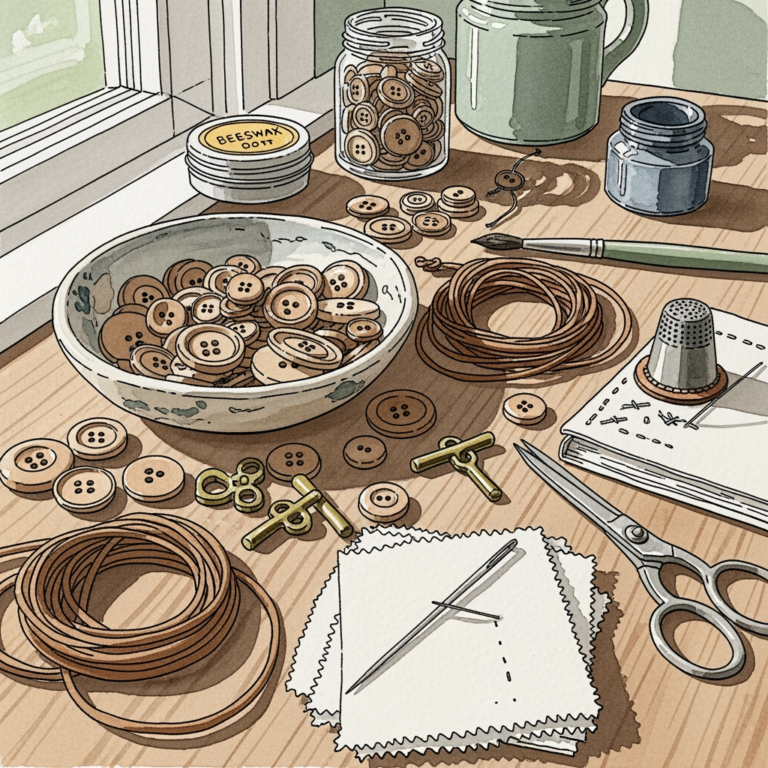
If removal is impossible, ensure the buttons are kept away from prolonged soaking and heavy agitation. Over time, leather may lose its luster; a small amount of leather conditioner or a tiny dab of beeswax can help restore the natural suppleness and protect the material from cracking.
Real vs. Faux Leather: Which Is Right for You?
The choice between real and faux leather often comes down to the intended life-cycle of the garment. Real leather offers superior longevity and develops a beautiful patina over time, but it may require specialized cleaning or removal during laundering.
Faux leather, conversely, is generally more resilient to water and cleaning agents. It is the pragmatic choice for items that will be machine-washed or subjected to rough use. Assess the care instructions of your chosen yarn before deciding; if the yarn is superwash wool meant for the washing machine, a faux leather button is almost always the more logical pairing.
Investing in high-quality leather buttons is an investment in the longevity and aesthetic impact of your hand-knitted work. By understanding the mechanical role buttons play—and how to properly secure them to your fabric—you ensure that the final result remains as functional as it is beautiful. Choose with intention, and your project will serve as a testament to your craft for years to come.