6 Best Spinning Foot Pedals For Comfort
Upgrade your cycling experience with these 6 best spinning foot pedals for comfort. Read our expert reviews and choose your perfect pair for a smoother ride today.
Spinning yarn for hours is a rhythmic, meditative process that can quickly turn frustrating if your equipment doesn’t cooperate with your body. When the motor of an electric spinner refuses to match the cadence of your drafting hands, it isn’t just an inconvenience; it is a hurdle to achieving a consistent, balanced yarn. Choosing the right foot pedal is the difference between effortless production and repetitive strain. These six pedals represent the top tier of comfort and control for the modern handspinner.
The Ashford E-Spinner Switch: A Solid Performer
The Ashford E-Spinner Switch pedal is designed for those who appreciate industrial reliability and a straightforward, no-nonsense interface. Its heavy-duty construction ensures it stays firmly planted on the floor, preventing the dreaded “pedal chase” that plagues lightweight plastic controllers.
This pedal excels in its simplicity. It utilizes a reliable push-button or rocker mechanism that provides a clear tactile click, letting you know exactly when the orifice has engaged or stopped. It is an excellent choice for spinners who focus on long-staple fibers like Bluefaced Leicester, where steady, predictable speed is more important than nuanced micro-adjustments.


While it lacks the sophisticated sensitivity of high-end variable pedals, it offers consistent performance that won’t distract from the fiber preparation process. If the spinning setup is stationary and requires a workhorse, this is a dependable choice.
Spinolution Echo Pedal: Best Wireless Freedom

Wireless technology has finally reached the spinning world, and the Spinolution Echo pedal leads the way for those who dislike being tethered to their equipment. By removing the physical cord, this pedal eliminates the mess of cables that often tangle around chair legs or footrests.
The freedom of movement allowed by a wireless pedal is a game-changer for ergonomics. It allows the spinner to adjust their posture or shift their position throughout a marathon session without worrying about snagging a cord. This is particularly useful for those who stand while spinning or who frequently switch between different seating arrangements.
However, wireless operation requires battery management. For those prone to forgetting to charge devices, the occasional battery swap or recharge is a small tradeoff for the clean, uncluttered workspace this pedal provides.
Kromski Foot Controller: Best Value for Money
Kromski consistently delivers equipment that balances high-quality woodworking with functional electronic components. The Kromski foot controller is no exception, offering a robust build and responsive feedback at a price point that remains accessible for hobbyists.
The pedal features a smooth, progressive response that allows the motor to ramp up speed gradually. This is critical for spinners working with fine, delicate fibers like angora or silk, where sudden surges in speed can lead to over-twisting or snapping the yarn.
It is a “plug-and-play” solution that integrates seamlessly with most standard e-spinner setups. It remains one of the best choices for those who want a reliable, professional-grade upgrade without the premium price tag associated with boutique equipment.
The Ergo-Pedal XL: Best for Long Spinning Sessions
An oversized pedal surface is the hallmark of the Ergo-Pedal XL, designed specifically to reduce fatigue during extended spinning marathons. The extra-large platform allows for the entire foot to rest comfortably, distributing pressure across the sole rather than concentrating it on the ball of the foot.
For those who suffer from ankle fatigue or stiffness, the wide surface allows for different foot positions throughout the day. You can shift your weight or move your foot up and down the pedal without losing control of the motor’s variable speed.
This pedal is an investment in long-term physical health for the serious fiber artist. While it takes up a larger footprint on the floor, the relief it provides to the lower limbs is well worth the extra space.
Light-Touch Control Pedal: Easiest on Your Feet
The Light-Touch Control pedal is designed for spinners who require minimal physical effort to modulate their machine’s speed. Unlike traditional pedals that require significant downward pressure, this model is incredibly sensitive, responding to the lightest tap of a toe.
This feature is particularly beneficial for makers who experience joint sensitivity or arthritis. By removing the need to push down firmly, the pedal preserves energy that is better spent on the delicate drafting and fiber alignment required for consistent spinning.
Because of its sensitivity, it may take a few sessions to get used to the nuance of the control. Once mastered, however, it offers the most fluid, “feather-light” experience for controlling the motor output.
Schacht Variable Speed Pedal: Ultimate Control
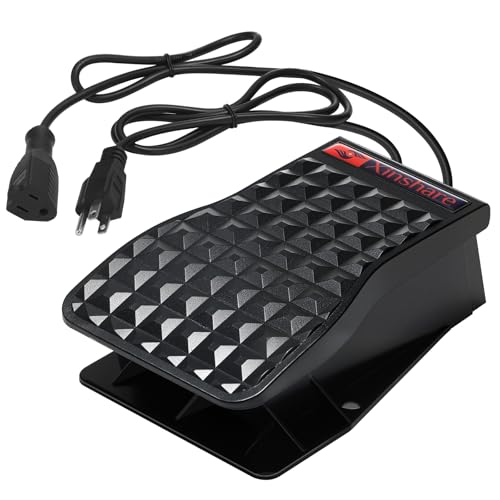
Schacht is renowned for precision engineering, and their variable speed pedal is designed for the perfectionist. This pedal provides a sophisticated range of motion, allowing for incredibly precise speed modulation that feels like driving a high-end vehicle.
The tactile feedback is excellent, giving the spinner intuitive control over the motor. It is ideal for art yarn spinners who frequently alternate between bulky, thick-and-thin textures and fine, high-twist singles in the same project.
While it is a higher investment, the longevity and precision of the hardware make it a staple in professional studios. It is the gold standard for those who demand total command over their equipment’s performance.
Pedal Features to Prioritize for Peak Comfort
When evaluating any foot pedal, look beyond the brand name and focus on the mechanics of the interface. The ideal pedal should offer progressive resistance, meaning the speed increases proportionally to the pressure applied, which is essential for maintaining a constant twist in the fiber.
- Weight: A heavy base prevents the pedal from sliding away.
- Surface Area: Larger pedals reduce foot fatigue over long periods.
- Cable Length: Ensure the cord is long enough for your specific seating arrangement.
- Responsiveness: Look for a pedal that engages smoothly without a “jerk” at the start.
Avoid pedals that feel “sticky” or have dead zones in their range of motion. If you have to push too hard to get the motor moving, you are likely to experience discomfort before a single bobbin is filled.
Ergonomic Tips for Pain-Free Spinning Sessions
Even the best pedal won’t save you if your workstation is poorly configured. Always ensure your chair is at a height that allows your feet to rest flat on the floor or the pedal surface without straining your knees.
Your knees should ideally be at a 90-degree angle or slightly lower to promote circulation. If you find yourself slouching toward the spinner, raise your chair or lower your equipment to keep your spine neutral and supported.
Take regular breaks to stretch your calves and ankles, even if you are in the middle of a high-twist woolen-spun project. Incorporating small movements, like rotating your ankles, can significantly reduce the impact of repetitive motion.
A Guide to Pedal and E-Spinner Compatibility
Compatibility is often the most overlooked aspect of upgrading a pedal. Before purchasing, verify whether your e-spinner uses a 1/4-inch jack, an XLR connector, or a proprietary plug.
Many e-spinners are designed to be “closed systems,” meaning they only function correctly with the manufacturer’s specific pedal. Attempting to force a third-party pedal onto a machine with different voltage requirements can damage the controller.
Always consult the user manual or contact the manufacturer to see if they offer an adapter. If a custom solution is required, seek out a professional technician rather than attempting a DIY wiring job that could pose a fire risk.
Is Upgrading Your Foot Pedal Really Worth It?
Upgrading your foot pedal is worth the expense if your current setup is limiting your creative flow or causing physical pain. If you find yourself constantly battling the speed of your motor, you are not spinning efficiently, and the resulting yarn may suffer from inconsistent twist and diameter.
For the hobbyist who spins sporadically, a standard, functional pedal is perfectly adequate. However, for those who spend hours each week processing raw fleece, a high-quality, ergonomic pedal is as essential as a comfortable chair or good lighting.
Investing in comfort allows you to focus entirely on the fiber arts—where the magic happens—rather than struggling with the tools meant to support that process. Treat your feet as well as you treat your hands, and your spinning will improve accordingly.
Finding the right foot pedal is a personal journey that depends on your specific physical needs and your unique spinning style. By prioritizing ergonomic design, tactile control, and technical compatibility, you can transform your studio into a space where creativity—not discomfort—is the primary focus.