6 Best Bead Spinners For Adding Beads To Lace
Speed up your jewelry projects with our guide to the 6 best bead spinners for adding beads to lace. Compare top models and choose the perfect tool for you today.
Adding beads to lace elevates a simple shawl into a luminous heirloom piece, but the process of pre-stringing can test even the most patient knitter. Bead spinners act as a bridge between tedious manual threading and a seamless, rhythmic knitting flow. Finding the right tool depends on your project volume, the size of your beads, and how much desk space is available in your knitting nook. These tools are not just about speed; they are about maintaining the consistency of your tension by removing the friction of manual work.
Darice Electric Bead Spinner: Best for Bulk Beading


The Darice Electric Bead Spinner is a workhorse designed for knitters who plan to incorporate hundreds of beads into a single lace project. Unlike manual alternatives, it maintains a consistent rotational speed, which is crucial when you need to load a large quantity of seed beads without fatigue.
This model is particularly effective when working with heavier lace-weight yarns or when preparing an entire “bead stash” for a complex pattern. Because it runs on batteries, it allows for a tether-free setup, meaning it can be moved anywhere in the home to match your preferred lighting or seating comfort.
However, the motor can sometimes be aggressive with extremely fragile, lightweight glass beads, which may scatter if the bowl is overloaded. Keep the bowl roughly half full to ensure the centrifugal force works efficiently. It is the ideal choice for those who value volume over delicate handling.
Beadalon Spin-N-Bead Junior: Best for Portability

For the knitter who frequently attends fiber retreats or works in smaller spaces, the Beadalon Spin-N-Bead Junior offers a compact, manual solution that fits easily into a project bag. It lacks the hum of a motor, which can be a welcome relief if you prefer a quiet, meditative environment while preparing your yarn.

Manual spinners like this one rely on your hand rhythm to create the necessary angle for beads to climb the needle. This provides a greater degree of control for those working with erratic bead shapes or vintage glass beads that might behave unpredictably in a high-speed electric unit.
The tradeoff is the requirement for a steady, rhythmic hand. If you struggle with repetitive motion strain, the effort required to spin manually may become tiring during long sessions. Use this tool if you value control and quiet over sheer speed.
The Beadsmith Spin & String Trio: Best Value Set
The Beadsmith Spin & String Trio stands out because it offers versatility in bowl size, allowing the user to switch between different bead types without cleaning out a single container. This is a significant advantage if a project requires a mix of 6/0, 8/0, and 11/0 beads simultaneously.
Most sets include specialized curved needles designed specifically for the mechanics of the spinner, which significantly reduces the time spent hunting for the “perfect” angle. The build is lightweight plastic, making it easy to store away when not in use.
While it lacks the durability of heavy-duty wooden models, the value proposition is hard to ignore for the casual lace knitter. It is an excellent entry-level choice for those who are just beginning to experiment with beaded lace designs.
Tikka T2 Wooden Bead Spinner: Best Heirloom Quality
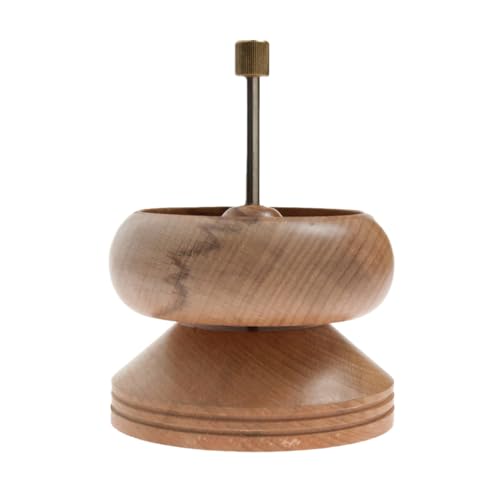
The Tikka T2 is designed for the knitter who treats their tools with the same reverence as their yarn. Constructed from wood, it provides a stable, weighted base that does not scoot or vibrate across a table, which is a common frustration with cheaper, lightweight plastic models.
Wooden spinners often have a smoother interior finish, which helps prevent seed beads from “sticking” due to static electricity. For those working with high-end silk or luxury lace yarns, this level of precision ensures that no frayed or sharp edges come into contact with your delicate materials.
The durability of the wood means this tool is likely to last for decades, provided it is kept in a dry environment. Choose this if you prefer tactile, quality tools that offer a stable and consistent experience every time.
Bead Smith Power Spinner: Fastest Electric Option

When time is of the essence—such as when finishing a last-minute gift—the Bead Smith Power Spinner provides the torque needed to get the job done rapidly. Its motor is calibrated for efficiency, making it the top choice for those who need to string thousands of beads across multiple lace repeats.
The variable speed settings are a standout feature here, allowing you to slow down for tricky, uneven beads and speed up for uniform glass seed beads. It bridges the gap between commercial jewelry production and hobbyist knitting, providing a professional-grade experience.
Be aware that high speeds can generate heat and friction; if you use delicate, coated, or metallic beads, you must watch for finish wear. Always test a small handful of beads at high speed before committing to a full session.
Tulip Beading Needle & Spinner: Best for Tiny Beads
Tiny beads, such as 15/0 glass seed beads, require a specialized approach because they often tumble over each other in standard-sized spinners. The Tulip system is engineered with geometry that favors these minute sizes, ensuring they catch on the needle point rather than just bouncing around the bowl.
The combination of the specific bowl shape and the brand’s high-quality needles creates a seamless transition from spinner to thread. For lace projects that require beads to be placed every stitch, this level of precision is non-negotiable.
While it may be a steeper investment than generic options, the reduction in frustration is worth the cost. If your project involves delicate lace and ultra-fine beads, this is the most reliable path to success.
Manual vs. Electric Spinners: Which is Right for You?
The choice between manual and electric spinners often comes down to the frequency and scale of your beaded projects. Electric spinners are superior for bulk, repetitive work, but they introduce mechanical variables like motor noise and potential vibration.
Manual spinners require physical engagement and offer a rhythmic, calming alternative to the “click-clack” of a machine. They are often more reliable in the long term because there are no electronic components to fail.
Consider the following when deciding: * Project Volume: Are you beading an entire border or just a few accent stitches? * Physical Comfort: Do you have issues with wrist or hand fatigue? * Environment: Do you need a silent tool to avoid disturbing others in your home?
Choosing the Right Bead Size for Your Lace Yarn
The golden rule of beaded lace is that the bead must move freely over the yarn without causing abrasion. For standard lace-weight (2-ply) yarn, size 8/0 beads are the industry standard for visibility and movement.
If you are working with fingering weight, you might opt for 6/0 beads, while fine cobweb yarn often necessitates 11/0 or 15/0 beads. Always pull a small sample of your yarn through a single bead before you begin your project to ensure there is no snagging.
If the bead feels like a tight fit, it will act like a blade against your yarn fibers. Always err on the side of a larger hole size to protect the integrity of your lace.
How to Pre-String Beads for Flawless Lace Edges
Before you start knitting, you must map out your pattern and calculate the exact number of beads required, plus a small buffer of 5-10 extra beads. Loading the spinner with your entire supply is efficient, but stringing them onto a smooth, non-stretchy sewing thread first allows you to then transfer them onto your knitting yarn.
Alternatively, use a dental floss threader to pull the yarn directly through the beads from the spinner. This method minimizes the stress placed on the yarn, preventing the “fuzzing” that occurs when yarn is threaded and unthreaded repeatedly.
Never store beads on the yarn for extended periods, as the weight can stretch the fibers and distort your tension. String only what you need for the immediate section of the lace.
Tips for Preventing Tangled Threads and Spills
Tangles happen most often when the thread being loaded has too much “memory” or twist. Use a high-quality cotton or polyester sewing thread for the initial stringing, as these have low stretch and minimal memory.
To prevent spills, keep your spinner on a non-slip mat or a silicone tray. If a spill does occur, a small magnetic wand is a lifesaver for picking up glass or metal beads from carpet or floor crevices.
Finally, keep your workspace clear of extraneous fibers, which can get caught in the spinner’s rotating mechanism. A clean, focused workspace is the best defense against a bead-filled disaster.
Bead spinners turn the most tedious part of beaded knitting into a streamlined, enjoyable process that respects the effort you put into your lace. By selecting the tool that matches your specific project needs—whether it is an electric workhorse for mass production or a precise manual tool for tiny beads—you ensure that your knitting time is spent creating, not just preparing. Embrace the rhythm of the spin, and watch your lace transform with the simple addition of light-catching beauty.