6 Best Practice Journals For Skill Tracking To Use
Boost your productivity with these 6 best practice journals for skill tracking. Choose the perfect tool to measure your progress and start improving today.
Every knitter knows the feeling of discovering a beautiful skein of hand-dyed wool, only to realize months later that the label is lost and the needle size remains a mystery. Keeping a project journal transforms these scattered details into a professional-grade archive of skill development. Whether tracking intricate lace repeats or simple stockinette, a reliable system prevents the frustration of inconsistent gauge and forgotten modifications. Mastering the art of documentation is as fundamental to knitting success as learning to purl or cable.
Laine’s My Knitting Notes: Best Overall Journal


This journal functions as a comprehensive repository for those who prioritize both aesthetics and structured data. It offers dedicated space for project details like yarn weight, needle size, and gauge, while providing ample room for sketch-style note-taking.
The layout caters to knitters who want a balance between guided prompts and creative freedom. It excels at housing swatches and patterns alongside technical notes, making it a favorite for those managing multiple, complex garment projects simultaneously.
The primary tradeoff is the physical weight and size; this is a permanent library item rather than a portable pocket-guide. Opt for this if the goal is to create a long-term, tactile history of knitting evolution rather than just a quick reference for on-the-go troubleshooting.
The Knitter’s Keep Project Book: Best Pre-Printed

For those who find blank pages intimidating, a pre-printed system removes the mental hurdle of formatting. This journal provides specific fields for yarn yardage, fiber content, and technical adjustments, ensuring no critical detail is left undocumented.
Using a guided template forces the recording of data that might otherwise be overlooked, such as row counts after blocking or final yarn weight used. These specifics are lifesavers when revisiting a pattern years later or attempting to recreate a successful modification.
Because the fields are fixed, flexibility is limited if a project requires a unique workflow. It remains an excellent choice for knitters who appreciate consistency and want to ensure their project history looks uniform on the bookshelf.
Ravelry Project Pages: Best Free Digital Tracker

Ravelry remains the industry standard for digital project tracking due to its deep integration with a global database of patterns and yarns. Every project page allows for instant linking to the pattern, which automatically pulls in technical specs and yardage requirements.
The power of this tool lies in its accessibility and searchability. A knitter can filter through hundreds of past projects by yarn weight, fiber type, or date, making it easy to identify which yarns pilled and which patterns fit well.
However, the lack of a physical tactile experience can be a drawback for those who prefer writing as a way to slow down and process a pattern. It is the most efficient choice for high-volume knitters who need to track inventory and progress across multiple platforms.
Leuchtturm1917 A5 Dotted: Best Customizable Notebook
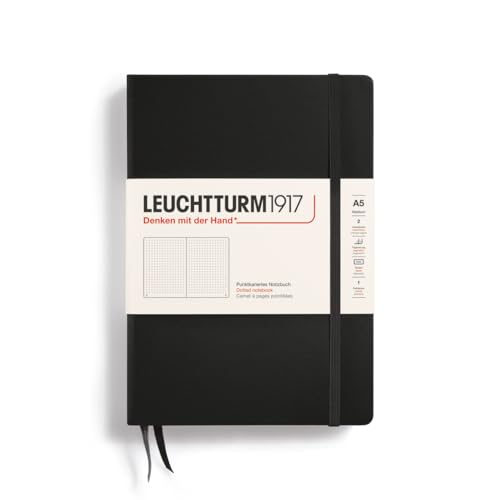
The Dotted A5 notebook offers the ultimate blank canvas for knitters who demand a bespoke tracking system. The dot grid is essential for drawing accurate charts, schematics, or tracking cables and lace repeats without the visual clutter of standard ruled lines.
Because there is no pre-set structure, the knitter must design every page, which requires a time investment. This is ideal for those who use color-coding, washi tape, or specific mathematical formulas to calculate ease and shaping.
If organization is a struggle, the lack of guidance might lead to abandoned journals. However, for those who thrive on structure, this provides the freedom to build a tracker that evolves perfectly alongside developing knitting skills.
KnitCompanion App: Best for Digital Pattern Tracking

KnitCompanion shifts the focus from journaling the history of a project to managing the active knitting process. It allows for advanced pattern manipulation, such as highlighting rows, setting up progress counters, and tracking multiple charts at once.
This is the definitive tool for complex projects like stranded colorwork or multi-sized garments. By digitalizing the pattern, it reduces the risk of errors often caused by manually transcribing rows or losing place on a crowded page.
The learning curve is steeper than a standard journal, and it requires a tablet or phone screen at the ready. Use this when the goal is to master intricate techniques rather than maintain a long-term craft record.
Twig & Horn Project Portfolio: Best Heirloom Option
High-quality materials like leather and heavy-duty paper distinguish this option as a long-term investment. It is designed to be a centerpiece in a knitting studio, meant to last through years of intense use and heavy project volume.
The build quality withstands the wear of being tossed into project bags, unlike lighter paper alternatives. Its layout is sophisticated and minimalist, focusing on the essential data that serious knitters need to track without unnecessary filler.
While the cost is higher than other options, it pays for itself in durability. Choose this if the intention is to build an archival collection of work that will remain legible and intact for decades.
What to Track in Your Knitting Journal for Success
Success in knitting relies on data consistency. Regardless of the journal, every entry should include the date, pattern name, yarn brand, colorway, and dye lot number to ensure matches can be found if more yarn is required.
Crucially, record the needle size and material—bamboo vs. metal—as these significantly impact tension. Always note the post-blocking gauge, as this is the most reliable metric for future project planning.
Finally, keep a running log of modifications. If the row count was increased for length or a neckline was narrowed, document exactly why and how.
Digital vs. Analog: Choosing Your Journaling Style
Digital tools provide speed and global connectivity, making them superior for inventory management and pattern discovery. They allow for instant updates and easy sharing, which is helpful when crowdsourcing help for a difficult technique.
Analog journals encourage a deeper connection to the craft. Writing by hand helps memorize pattern structure and forces a slower pace, which often reveals mistakes before they become deeply embedded in the fabric.
Many knitters find the “hybrid” method most effective. Use a digital app for active row tracking and a physical journal for recording the final, permanent “recipe” of the finished object.
Setting Up a Bullet Journal for Knitting Projects
Start by creating an index at the front of the notebook to catalog projects by category, such as “Socks,” “Sweaters,” or “Gifts.” This allows for quick referencing when planning a new cast-on.
Create dedicated pages for “Needle Inventory” and “Yarn Stash” to avoid duplicate purchases. Use a “Monthly Progress Log” to track hours spent knitting, which helps in understanding personal speed and project timelines.
Keep the setup simple to ensure long-term maintenance. Over-complicating a bullet journal often leads to burnout, so focus on the data that provides actual value during the knitting process.
How to Organize Yarn Swatches With Your Journal
Swatching is the most ignored yet vital step in knitting, and it deserves a home in the journal. Attach a small square of the finished, blocked fabric directly to the project page using double-sided tape or a clear pocket.
Beside the swatch, record the fiber content, whether it is superwash or rustic wool, and how it reacted to water and heat. This creates a physical library of textures and behaviors, acting as a personal reference guide for future yarn substitutions.
If the yarn is particularly delicate or prone to snagging, store the swatch in a glassine envelope. This preserves the sample and protects the rest of the journal pages from loose fibers.
Mastering the habit of documentation turns every project into a lesson, regardless of the outcome. Whether opting for the utility of an app or the archival beauty of a leather portfolio, the act of tracking is what distinguishes a hobbyist from a maker. Consistency is the goal; even the simplest system, maintained faithfully, will eventually provide the insights needed to reach the next level of knitting expertise.