6 Best Craft Bins For Scrap Paper Recycling To Organize
Tired of paper scraps cluttering your workspace? Discover our 6 best craft bins for scrap paper recycling to keep your supplies tidy. Shop our top picks today!
Every fiber artist knows the frustration of a cluttered workspace where precious scraps of paper—patterns, gauge swatch records, and yarn labels—become buried under skeins. Keeping these remnants organized is just as vital as maintaining a proper stash of notions or organizing circular needles by size. Without a dedicated system, valuable information is lost, and the flow of a project is easily disrupted. Selecting the right bin transforms a chaotic desk into a structured environment that supports the creative process.
Sterilite ClearView 3-Drawer: Best Stackable Unit


Clear storage is essential when dealing with miscellaneous chart notes or technical diagrams that need to be retrieved at a moment’s notice. The transparency of these drawers allows for quick visual scanning, preventing the need to dig through opaque containers while mid-row.
Stacking these units vertically saves precious floor space in smaller craft rooms. It provides a modular approach to organization, allowing for the addition of more drawers as a paper collection grows alongside an expanding yarn library.
- The Bottom Line: Choose this unit if the primary goal is high-visibility organization for varied scraps that need to be accessed frequently during complex colorwork projects.
mDesign Portable Craft Caddy: Best for Portability
For makers who move between the living room sofa and a dedicated crafting desk, a portable caddy is indispensable. These bins feature open tops that allow for quick access to graph paper or stitch dictionaries without the friction of pulling out a drawer.
Portability ensures that critical project notes stay with the work-in-progress. If a pattern change needs to be noted while knitting on the go, having the scrap paper and a pencil right in the caddy eliminates the risk of jotting down adjustments on a stray napkin.
- The Bottom Line: Opt for this portable caddy when the workspace is fluid and the need to transport materials between rooms is a daily reality.
IRIS USA 6-Case Scrapbook Cart: Best Large Volume
When a collection of charts, printed pattern templates, and swatching notes reaches massive proportions, a cart system becomes a necessity. The deep cases within this cart are perfect for keeping delicate paper records flat, preventing the bent edges that can obscure vital row-count instructions.
The rolling nature of the cart allows for easy cleaning underneath the storage area, which is vital for keeping dust—which can aggravate allergies during wool handling—from settling on paper goods. It acts as a stationary anchor for a high-volume craft room.
- The Bottom Line: Invest in this unit for long-term archival storage of large paper collections that do not require constant, daily movement.
Honey-Can-Do 3-Tier Rolling Cart: Best for Mobility
Rolling carts provide the ultimate flexibility for crafters who need to switch between sewing, knitting, and paper-crafting tasks. These shelves are deep enough to accommodate reams of printer paper or thick binders filled with archived patterns.
The metal construction offers superior durability compared to plastic, capable of holding heavy cardstock or weighted sketchbooks without bowing. It creates a mobile command center that rolls right up to a chair, keeping reference materials within arm’s reach.
- The Bottom Line: This is the ideal choice for those who need a heavy-duty, versatile station that can support both paper storage and heavier crafting tools.
Bigso Box of Sweden Paper Sorter: Most Stylish Pick
A beautiful workspace often inspires more intentional work, and these storage boxes provide an elevated aesthetic. Functionality is not sacrificed for style, as the open-front design allows for easy retrieval of papers without having to lift lids or pull out heavy trays.
These sorters are constructed from robust paperboard, offering a sophisticated look that fits seamlessly into shared living spaces. They are perfect for keeping a few essential project notes organized without turning the room into an industrial-looking storage locker.
- The Bottom Line: Choose this for aesthetic cohesion in a home where the crafting space is also a primary living area.
AmazonBasics Fabric Cubes: Best for Budget Shelving
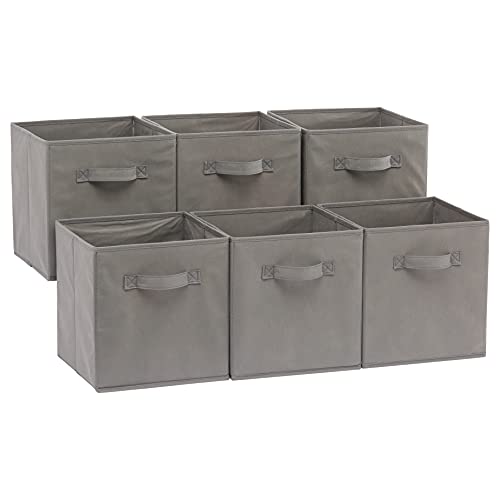
Fabric cubes offer a soft, low-cost solution for those just beginning to organize their scrap paper collection. They fit perfectly into standard cube-style shelving, providing a clean look that masks the clutter of loose, mismatched scraps.
Because these bins are fabric, they are lightweight and easy to pull off high shelves. They do not scratch delicate wood surfaces, making them a safe choice for antique desks or shared craft tables.
- The Bottom Line: These are the most budget-friendly option for beginners who need to contain clutter immediately without a significant financial commitment.
How to Choose a Bin for Your Specific Craft Space
Selecting the right bin starts with an assessment of the available footprint. Measure the area around the crafting chair first, as paper scraps are most useful when they are within reach, similar to how knitting needles are stored based on frequency of use.
Consider the weight of the items being stored. Heavy cardstock requires solid bases, while simple graph paper or thin pattern printouts can thrive in lighter, plastic-based systems.
- Key Considerations:
- Measure vertical and horizontal clearance.
- Prioritize open vs. closed storage based on dust sensitivity.
- Match the bin size to the paper dimensions used for patterns.
Sorting Scraps: By Color, Size, or Project Type?
The most effective sorting method mirrors the way a pattern is approached. Sorting by project type is generally the most practical for knitters, as it keeps all notes—from initial gauge math to final finishing instructions—in one localized area.
Alternatively, sorting by size works well for those who collect various paper scraps for future swatching or diagramming. Avoid the temptation to store items by color, as it rarely aids in the actual utility of technical notes or instructions.
- The Bottom Line: Sort by project workflow to minimize the time spent hunting for specific pattern data during a time-sensitive cast-on.
Plastic vs. Fabric vs. Wood: Which Bin Material Wins?
Material choice impacts both the longevity of the storage and the protection of the paper. Plastic is excellent for moisture resistance, which is vital if the workspace is located in a basement or near a kitchen, protecting paper from humidity that could warp fibers or smudge ink.
Fabric bins offer a breathable quality but are difficult to clean if something spills. Wood or paperboard options are durable and stable, though they tend to be heavier and less portable than their synthetic counterparts.
- The Bottom Line: Choose plastic for high-traffic or damp areas, and wood or fabric for refined, temperature-controlled craft rooms.
Maximizing Small Spaces With Vertical Paper Storage
In smaller rooms, horizontal surface space is at a premium and must be reserved for the project currently on the needles. Vertical storage, such as wall-mounted pockets or stacked bins, keeps paper scraps elevated and out of the way of yarn, needles, and scissors.
Utilizing the height of a room also forces a vertical filing system, which is inherently better for viewing document titles. By keeping paper “on display” in vertical racks or stacked drawers, the clutter is contained while keeping the information accessible.
- The Bottom Line: Prioritize upward expansion rather than outward spread to keep the floor clear for walking and the table clear for knitting.
Choosing the right bin is an investment in the efficiency and enjoyment of the craft. By balancing the specific needs of a workspace with the volume of the material, any knitter can create a system that fosters creativity rather than hindering it. Take the time to assess the current workflow, choose the material that suits the environment, and enjoy the peace of mind that comes with a well-organized creative space.