6 Best Gig Bags For Urban Commuting Worth Owning
Protect your instrument on the go with our top 6 picks for urban commuting. Explore durable, lightweight gig bags built for city life and find your perfect fit.
Commuting with a knitting project requires a delicate balance between portability and protection. A bag that works for a quick subway ride might fail during a long train trip or a rainy walk to the office. The perfect carrier shields delicate yarn from environmental hazards while keeping needles and notions organized for a spontaneous row or two. Choosing the right bag transforms a stressful transit experience into a productive, peaceful crafting session.
Della Q Maker’s Canvas Backpack: Best Overall


This backpack serves as a masterclass in functional design for the mobile knitter. It features dedicated yarn feeders that allow the yarn to remain inside the bag while the knitter works, effectively preventing tangles and yarn-rolling disasters on public transit. The canvas construction is rugged enough to withstand daily wear, yet sophisticated enough for professional settings.
The interior layout specifically targets the needs of complex projects. Multiple pockets accommodate circular needle cases, darning needles, and measuring tapes without burying them under skeins of yarn. Because the weight is distributed across both shoulders, it remains comfortable even when carrying heavy wool sweaters or multiple circular knitting projects.
However, the size can feel excessive if only working on a simple pair of socks. The bottom line remains that for the dedicated knitter who refuses to leave a sweater project at home, this is the most reliable companion available.
Tom Bihn Swift Tote: The Ultimate Commuter Tote
The Swift Tote bridges the gap between a high-end commuter bag and a dedicated project hauler. Its structure is remarkably upright, meaning it stays open and accessible when placed on a seat or lap. This accessibility is vital when switching between knitting and reading during a short commute.
The interior O-rings and attachment points allow for modular organization of project pouches. For a knitter, this means keeping stitch markers, point protectors, and scissors tethered and secure against the movement of a train or bus. The material is typically water-resistant, providing peace of mind when carrying luxury fibers like cashmere or hand-dyed merino that react poorly to damp conditions.
Consider the trade-off of the open-top design. While it offers immediate access to the work, it does not provide the total enclosure of a zippered bag. If the commute involves heavy rain or crowded, messy spaces, ensure the project is tucked inside a secondary project bag before placing it in the tote.
ArtBin Solutions Box Bag: Best Budget-Friendly Pick
Efficiency often beats luxury in the context of utility-driven knitting. The ArtBin Solutions Box Bag is essentially a rigid, portable workstation that protects delicate needle tips from bending or snapping while in transit. It provides a structured environment that prevents yarn from getting crushed beneath books or lunch containers.
Its clear plastic construction allows for a quick inventory of contents without needing to unzip or rummage through the bag. This is particularly useful for identifying which colorwork project is inside when juggling multiple works-in-progress. The simple zipper mechanism is durable, ensuring that small notions like tiny crochet hooks or stitch holders don’t migrate into the seams of the bag.
While it lacks the aesthetic appeal of artisanal leather, it wins on raw practicality. It is the ideal choice for those who value the protection of expensive tools over the look of the bag itself.
Muud Saturn XL Bag: Most Stylish Leather Option
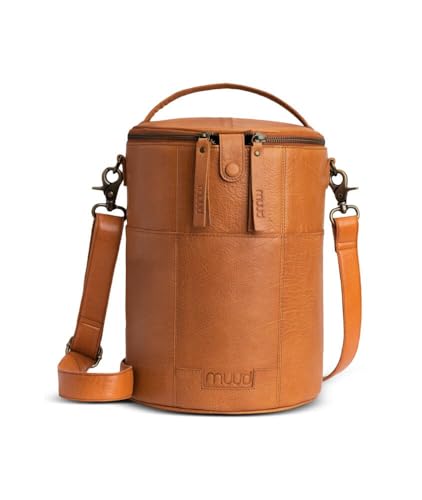
Leather bags offer a structural integrity that fabric bags often lack. The Muud Saturn XL stands out for its high-quality hide, which provides a natural, breathable environment for high-quality animal fibers like wool or alpaca. Unlike synthetic materials, leather ages gracefully and develops a patina that reflects the hours spent knitting.
The cylindrical design provides a surprising amount of vertical space for large-scale projects like blankets or oversized cardigans. The interior is lined with smooth, snag-free material, which is critical when working with delicate lace weight yarns or mohair blends that catch on even the smallest rough surface.
The downside is the maintenance required for the exterior. Because it is leather, it requires occasional conditioning and should be protected from harsh, direct sunlight. If the primary goal is a bag that transitions seamlessly from a cafe to a client meeting while holding a significant project, this is the premier choice.
Fjällräven Kånken Sling: For Projects On-The-Go
Sometimes the best commuter bag is the smallest one possible. The Kånken Sling is perfect for small-scale projects like socks, mittens, or baby hats. It forces the knitter to downsize their tool kit to only the essentials, which is a great exercise for those who tend to over-pack notions.
The durability of the material is legendary; it resists abrasion from metal buttons, zippers on coats, and rough transit seating. It is compact enough to fit inside a larger work bag, serving as a “knitting-only” inner compartment. When a commute is brief, the ability to grab a single, small bag containing a sock project is incredibly convenient.
Just remember that needle length is the limiting factor here. Ensure that your favorite circular needles are short enough to fit without bending the cables excessively, as storing them at sharp angles for long periods can cause permanent curling.
The Fringe Supply Co. Town Bag: For Big Projects

This bag is a favorite among those who prioritize internal capacity. The unique design allows it to expand significantly, making it ideal for carrying bulky yarn skeins or unfinished garments that need room to breathe. Its design is minimalist, focusing on the weight-to-durability ratio that is essential for long-distance commuters.
The canvas is heavy-duty and keeps the bag standing upright when placed on a subway floor. The lack of excessive hardware makes it lightweight, so the only weight being carried is the project itself. It is a workhorse bag that is built to handle the inevitable wear and tear of daily use.
However, the lack of many internal pockets means that smaller notions can get lost. Pairing this bag with a dedicated notions pouch is non-negotiable for those who don’t want to dig for their tapestry needles.
What to Look for in a Commuter Knitting Bag
The primary consideration is the protection of the yarn. Look for bags that are fully lined and feature smooth, snag-free closures. Any interior component—whether it be a zipper, a velcro strap, or a metal clasp—must be assessed for its ability to catch on a delicate fiber like silk or mohair.
Portability features are equally important. Look for bags with wide, padded straps if the commute involves significant walking. If the bag sits on a lap, check the depth; a bag that is too tall makes it difficult to see the stitches while working, while one that is too shallow won’t hold enough project.
Finally, consider the “closed-bag” factor. A bag that allows the knitting to continue through an opening without the project needing to be fully exposed is the gold standard for commuting. This minimizes the risk of dirt, debris, or spills damaging the garment mid-row.
Backpack vs. Tote: Which Is Best for Knitters?
Backpacks offer superior ergonomic support for long commutes. If you are carrying a heavy afghan project or several kilograms of wool, a backpack keeps the weight balanced on the spine. They are the clear winner for those who commute by bicycle or by foot.
Totes, conversely, offer superior access. A knitter on a train can reach into a tote and start working in seconds. The trade-off is the uneven weight distribution, which can lead to shoulder strain if the bag is heavily loaded for long durations.
Decide based on the duration of the commute and the physical demands of the project. If you are walking more than fifteen minutes, prioritize the backpack. If you are seated for the majority of the transit, the accessibility of the tote is invaluable.
Organizing Your Notions for Travel Knitting
Never rely on the bag’s pockets to organize loose notions. Utilize a dedicated, small zipper pouch for items like stitch markers, scissors, a crochet hook for dropped stitches, and a measuring tape. This “emergency kit” should be easy to move from bag to bag.
Labeling matters more than most realize. If you use interchangeable needles, ensure they are stored in a case that is clearly marked with sizes. Trying to identify a 3.5mm needle versus a 3.75mm needle in the dim light of a bus is a mistake that leads to inconsistent gauge and frustration.
Keep a separate small container for your current stitch markers. If you are working on a pattern that requires a specific sequence of markers, keep them on a single locking ring so they don’t scatter throughout the bag. A little bit of upfront organization keeps the transit knitting experience seamless.
Keeping Yarn Clean and Tangle-Free On The Go
Yarn is a magnet for dust and lint during a commute. Keep your skeins or balls inside a separate project bag or a breathable cotton drawstring bag before placing them in the main commuter bag. This creates a secondary layer of protection against the inevitable grime found on public transit surfaces.
For tangle prevention, utilize the “center-pull” method or a dedicated yarn bowl insert if the bag allows. If the yarn is prone to tangling, such as an unplied singles wool, keep it inside a sealed ziplock bag with a small hole for the yarn to exit. This keeps the yarn compact and contained, preventing it from unraveling if the bag gets jostled.
Finally, avoid carrying “loose” skeins. Always wind them into a center-pull cake before traveling. A cake of yarn is much more stable and less prone to collapsing into a tangled mess than a loose hank or a loosely wound ball.
Selecting the right bag for your commute is a matter of prioritizing your specific needs, whether that is ergonomic comfort or immediate access to your needles. By focusing on project protection, ease of organization, and the specific demands of your chosen craft, you can turn any commute into an extension of your studio. Evaluate your transit habits, your project volume, and your organizational style to find the perfect fit. Your knitting will be all the better for it.