
6 Best Buttonhole Gimp Cords For Professional Tailoring
Elevate your craftsmanship with our top 6 buttonhole gimp cords for professional tailoring. Read our expert guide now to choose the best materials for your work.
A crisp, raised buttonhole is the hallmark of a bespoke garment, separating homemade projects from true professional tailoring. The foundation of this structural detail lies in the gimp cord, a stabilizer that reinforces the buttonhole against the constant stress of opening and closing. Choosing the correct gimp ensures that the stitches remain uniform, preventing the fabric from distorting or fraying over time. This guide evaluates the industry-leading options to help makers select the support system their specific project demands.
Gütermann Gimp: The Professional Standard


Gütermann is the benchmark for consistent quality in the sewing and tailoring world. This gimp cord provides a perfect balance of stiffness and flexibility, allowing it to navigate the tight curves of a keyhole buttonhole without snapping or creating bulky lumps.
The synthetic composition ensures it remains stable through steam pressing and long-term wear. It acts as an internal skeleton, giving the buttonhole its signature raised, three-dimensional profile that high-end jackets demand.
For those working with structured wool or heavy coatings, this is the most reliable choice. Stick to Gütermann when predictability and structural integrity are the top priorities.
YLI Buttonhole Twist: Best for Color Selection
YLI has built a reputation on high-sheen, durable threads that stand up to the abrasion of button usage. While marketed as a twist, its weight and core stability make it an exceptional gimp for garments where the thread color must perfectly match the fashion fabric.
The wide color range allows for invisible integration into delicate fabrics where a contrasting gimp might show through the stitch density. It lays flat against the fabric surface during the initial placement, minimizing the risk of a “bubbled” appearance under the finished buttonhole stitches.
Choose this brand when aesthetic harmony is just as important as structural support. It is the ideal match for custom-dyed wools or bespoke silk-blend suitings.
Trebla Gimp Cord: The Ultimate Durable Choice
Trebla represents the heavy-duty segment of tailoring supplies. It is significantly more rigid than standard sewing threads, making it difficult to miss when covering it with buttonhole stitches.
This cord holds its shape aggressively. It is specifically suited for heavy tweeds, corduroys, or workwear where the buttonhole is subject to intense daily mechanical strain.
If the fabric is thick and prone to shifting, Trebla provides the necessary resistance to keep the buttonhole aperture perfectly open. Use this for outerwear or heavy-duty garments where longevity is the primary concern.
Coats & Clark Twist: Most Widely Available Gimp
Accessibility is a major advantage for makers who need to finish a project immediately. Coats & Clark provides a standard-weight twist that functions adequately as a gimp for light to medium-weight fabrics.
While it lacks the extreme rigidity of specialized tailoring cords, it performs well for general-purpose garment construction. It is easy to handle and behaves predictably under the needle.
Do not expect the same level of architectural lift provided by dedicated tailoring gimps. This is the best “grab and go” option for hobbyists or mid-weight projects found in local supply stores.
D’oro Silk Twist: Top Choice for Luxury Tailoring
Silk offers a unique friction profile that synthetic gimps cannot replicate. D’oro Silk Twist provides a soft, organic texture that sits beautifully under fine natural fibers like wool crepe or cashmere.
Because silk is a natural fiber, it “grips” the surrounding buttonhole stitches more effectively than slick polyester. This creates a more secure, locked-in stitch that resists shifting over time.
Luxury tailoring requires materials that age gracefully with the garment. Invest in silk twist when working with high-end, delicate natural fibers that deserve a premium structural foundation.
Mettler No. 30 Cotton: Best Versatile Gimp
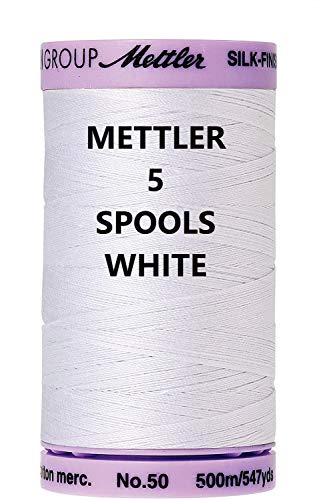
Mettler cotton offers a natural matte finish that blends seamlessly into cotton or linen garments. While technically a heavy thread rather than a dedicated cord, its high ply count provides sufficient bulk to function as a gimp.
It is particularly effective for summer tailoring, where synthetic gimps might feel too stiff or unnatural against lighter, breathable fabrics. It responds well to heavy steam pressing, which helps to “set” the buttonhole shape.
For makers who prefer natural fibers throughout their entire project, this avoids the mismatch of synthetic materials. Select Mettler No. 30 when aiming for a soft, authentic finish on natural-fiber tailored items.
How to Choose the Right Gimp Cord for Your Fabric
The weight of the gimp cord must be relative to the thickness of the fabric. A cord that is too thick will distort the garment’s surface, while a cord that is too thin will fail to provide the intended reinforcement.
- Light-to-medium weight: Use a finer silk or polyester twist.
- Medium-to-heavy weight: Opt for a standard synthetic gimp.
- Heavy-duty/Outerwear: Choose a rigid, high-diameter gimp cord.
Always perform a test swatch on the exact fabric of the garment. If the gimp causes puckering, the cord diameter is too large for the fabric density.
Securing Gimp for a Flawless Keyhole Buttonhole
The secret to a professional buttonhole is the tension applied to the gimp cord before stitching begins. The cord must be anchored firmly at the top of the keyhole to prevent it from pulling through the stitches during the finish.
Use a long-handled needle to loop the gimp through the fabric at the starting point, ensuring it is tacked securely. Keep the cord taut but not so tight that it bows the fabric, which creates ripples around the finished buttonhole.
Use a dedicated buttonhole foot to maintain consistent stitch width over the cord. Constant tension is the differentiator between a puckered buttonhole and a sharp, clean finish.
Gimp Alternatives: What to Use in a Real Pinch
If a dedicated gimp cord is unavailable, a strand of strong embroidery floss or even a doubled-up length of the garment’s own heavy-duty thread can suffice. However, avoid using standard sewing thread as it lacks the core strength to resist compression.
Ensure that any substitute is color-fast, especially if the garment will be dry-cleaned or washed. If the alternative material is too soft, consider waxing it with a bit of beeswax to add temporary rigidity.
This is a temporary solution for home sewing, but it lacks the permanence of purpose-made gimp. Always prioritize a dedicated product for formal garments or professional-grade tailoring.
Gimp vs. Topstitching Thread: Key Differences
Gimp cord is designed specifically for bulk and structural support, whereas topstitching thread is engineered for surface appearance and abrasion resistance. Topstitching thread is usually too soft to maintain the raised ridge required for a formal buttonhole.
If topstitching thread is forced to act as a gimp, it may flatten out once the button is passed through the hole. Gimp cords are manufactured to resist this compression and maintain their volume under pressure.
Never confuse a decorative topstitching weight for an internal support structure. Use gimp for structure and topstitching thread for finish; they are not interchangeable.
Mastering the use of gimp cord is a pivotal moment in any maker’s journey toward professional-level garment construction. By matching the cord’s weight and material properties to the fabric’s requirements, one ensures that every detail contributes to the long-term wearability and aesthetic success of the piece. Proper selection and careful tensioning are the final steps in elevating a project to its full potential.