6 Best Adjustable Dressmaker Dummies For Custom Fit Fitting
Find your perfect fit with our top 6 adjustable dressmaker dummies. Compare the best options for custom sewing projects and start creating your own designs today.
Achieving a professional finish on a hand-knitted garment often relies on more than just high-quality wool and perfect tension. A dressmaker’s dummy provides a three-dimensional canvas to evaluate drape, ease, and structural integrity before binding off. Without one, assessing how a heavy cabled sweater sits on the shoulders or how a bias-cut skirt hangs can become an exercise in guesswork. These six tools offer the precision needed to translate flat knitting patterns into garments that actually flatter the human form.
Dritz My Double Deluxe: Best for Most Sewists


This model serves as the standard entry point for those serious about garment construction. It features a robust system of adjustment dials that expand the bust, waist, and hips, allowing for a reasonable approximation of varied body shapes.
The primary advantage here is the inclusion of an adjustable back waist length, a feature often ignored by cheaper models. This is vital when knitting complex pieces like waist-shaping cardigans where the length of the torso dictates how the garment rests on the hips.
However, remember that these plastic-dial systems have finite increments. If your personal measurements fall exactly between two settings, the fit will never be truly precise. It is an ideal middle-ground tool for those who want structure without the cost of bespoke tailoring equipment.
Singer DF251 Form: Top Budget-Friendly Pick

Budget models often sacrifice durability for accessibility, but the Singer DF251 manages to retain the essentials for a hobbyist. It provides the standard adjustment dials found on more expensive units, making it sufficient for basic blocking and simple garment shaping.
The trade-off involves stability and the feel of the material. The stand is functional, but it lacks the heavy-duty weight required for working with dense, heavy wools that might cause the form to shift or wobble.
Consider this pick if the goal is to stabilize standard-weight sweaters or cotton tanks. If the primary focus is on heirloom-quality wool coats or heavily beaded garments, this lightweight plastic frame may struggle to hold the necessary structure.
PGM Pro 602 Dress Form: The Professional’s Choice
When precision becomes the priority, professional-grade forms like the PGM series become essential. These are typically pin-able foam forms rather than adjustable dial-based plastic shells.
The surface is covered in high-quality linen, allowing for the use of pins to mark seam lines, shoulder slopes, or dart placement. This is invaluable when working with delicate fibers like silk or lace, where every millimeter of tension matters during the assembly phase.
These forms are static, meaning they do not expand via dials. Choosing the right size requires an accurate understanding of current body measurements, but the trade-off is a rock-solid, non-yielding surface that mimics the firmness of a human body.
Uniquely You Form: Best for Custom Contours
The Uniquely You system approaches the problem of fit from a completely different angle. Instead of using mechanical dials, this form utilizes a foam base covered in a stretchy, pinning-friendly fabric that can be altered to match specific body contours.
This is the preferred choice for those whose measurements do not align with standard industry sizing. If a garment requires an unusual bust-to-waist ratio or a non-standard shoulder width, this form allows for manual padding and shaping to capture those specific curves.
It requires more setup time than a simple click-dial dummy, but the end result is a highly personalized surface. It is arguably the most accurate way to ensure a hand-knit garment fits without requiring constant, time-consuming try-ons.
Dritz Sew You Form: A Solid Beginner’s Pick
Simplicity is the guiding principle of the Dritz Sew You model. It is designed for those who are just beginning to transition from flat knitting to structured garment construction.
It features standard adjustment dials and a basic hem marker, making it highly effective for checking the hang of a simple raglan sweater or an A-line skirt. The construction is straightforward, and the setup is intuitive for someone who has never handled a dress form before.
Be aware that the torso length is generally fixed, meaning it may not perfectly mirror a long-waisted or petite frame. It is a reliable tool for learning the basics of garment proportion without the frustration of an overly complex setup.
Royal Half Body Form: The Ultimate Splurge
For the dedicated maker, the Royal half-body form represents an investment in long-term craft. These forms are engineered for durability, featuring heavy-duty stands and high-quality construction that withstands years of heavy use.
They are designed to mimic the weight and resistance of the human body, providing a stable platform for pinning, steaming, and shaping heavy garments. If the wardrobe consists primarily of dense, structured items, this form provides a level of support that cheaper, plastic-dial models simply cannot match.
While the price point is steep, the longevity of these professional-grade tools makes them a one-time purchase for the serious fiber artist. They bridge the gap between amateur hobbyist and professional tailor.
Taking Accurate Measurements for Your Dummy
Accurate measurements are the foundation of any well-fitted knit. Before adjusting a form, measure the fullest part of the bust, the natural waist, and the high hip, ensuring the tape is snug but not constricting.
- Bust: Measure at the widest point, usually across the nipples.
- Waist: Measure at the narrowest part of the torso.
- Hips: Measure at the widest part, typically including the glutes.
Never rely on store-bought clothing sizes when adjusting a dummy. Always use a soft tailor’s tape, and keep the measurement sheet updated, as body dimensions can shift significantly over time, affecting how finished knits hang.
How to Perfectly Pad Your Dress Form to Match
Even the best adjustable dummy rarely matches a unique body shape perfectly. Padding the form with quilt batting or foam helps bridge the gap, creating a custom fit that reflects real-world curves.
Start by wearing a well-fitting, form-hugging t-shirt over the dress form. Stuff the areas between the shirt and the form with batting until the t-shirt fills out in a way that matches your own body dimensions.
Check for asymmetries, such as one shoulder being slightly lower than the other. Adding extra padding in those specific areas ensures that your garments won’t pull or sag once they leave the needles and hit the real world.
Dial Forms vs. Foam Forms: Which Is for You?
The choice between dial-based and foam-based forms comes down to project volume and material density. Dial forms are flexible and offer convenience for those who knit for others or frequently change styles.
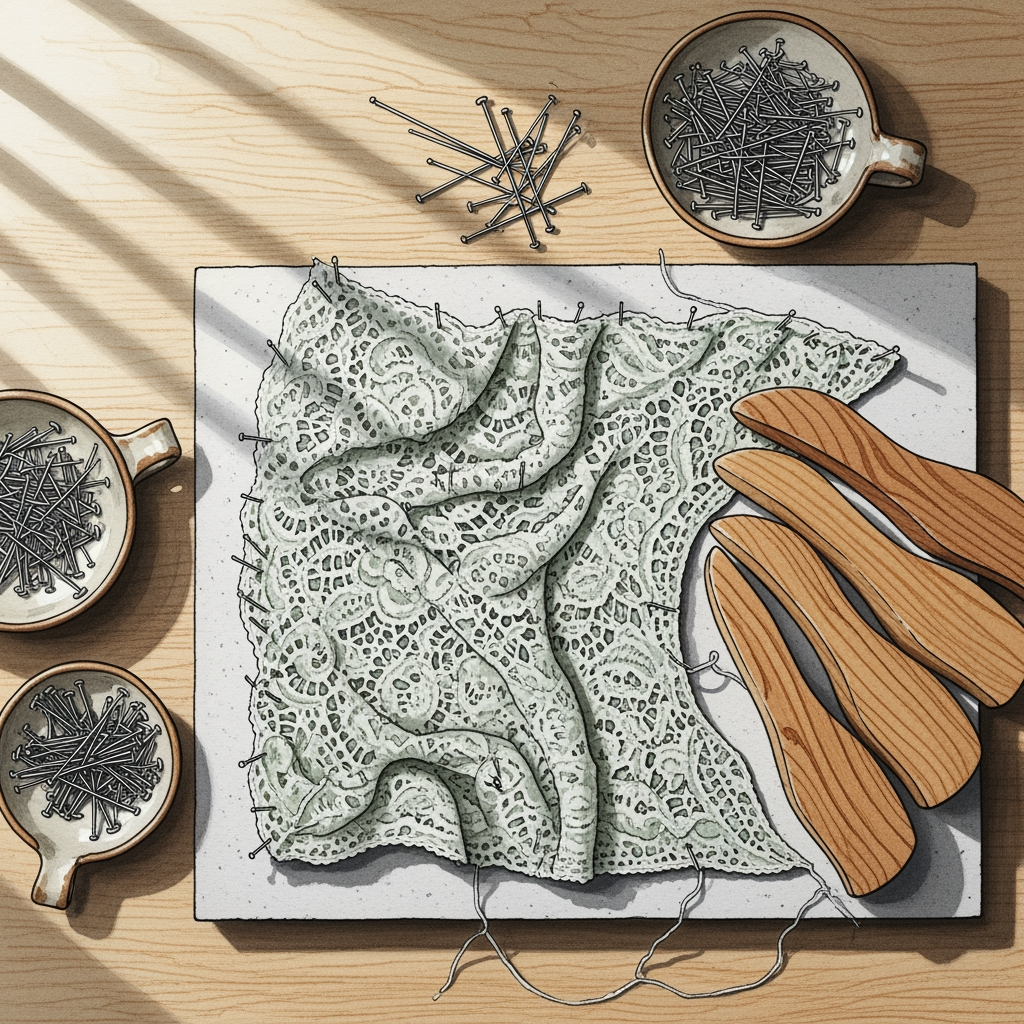
Foam-covered forms are superior for those who prioritize pinning and structural precision. They provide a stable, consistent surface that is essential when blocking delicate lacework or complex cables that require pinning into place to set the stitch pattern.
If you value the ability to change sizes quickly, choose a dial model. If you value professional-grade pinning and consistent shaping, a foam form is the better long-term companion.
Can You Actually Fit Pants on a Dress Form?
Fitting pants on a standard dress form is notoriously difficult because most models lack the necessary crotch anatomy. While some forms offer “pants legs,” they are rarely a perfect substitute for the human body.
For knitters crafting trousers or leggings, a form with a sturdy, thigh-length extension is a minimum requirement. Even then, the drape of a knit fabric—which has significant stretch—must be accounted for by calculating ease based on horizontal and vertical tension.
Most experts agree that while a form helps with the initial shaping of the waistband and hip, the final adjustment for trousers often requires a physical try-on. Use the form to establish the structure, but never skip the final fitting for complex leg garments.
Selecting the right dressmaker’s dummy requires balancing your specific knitting goals with the reality of your workspace and budget. A well-chosen form is not just a display piece; it is a vital tool that bridges the gap between raw fiber and a perfectly fitted garment.