7 Felt Tip Markers For Doodle Journals To Try
Upgrade your doodle journals with our top 7 felt tip markers. Explore our expert picks to find the perfect pens for your creative sketches and shop them today.
Doodle journaling provides a tactile space to sketch out cable charts, track yardage, or map out complex lace repeats. Much like selecting the right needle material for a slippery mohair or a heavy wool, choosing a marker requires matching the tool to the specific texture and weight of the paper. A poor pairing can lead to ink bleeding through pages, much like using a needle that is too sharp can split delicate silk plies. Precise linework and bleed resistance are as essential to a project journal as a consistent tension is to a sweater sleeve. Finding the right marker ensures the documentation of a craft stays as clean and organized as the finished knitwear itself.
Sakura Pigma Micron: Best for Archival Linework
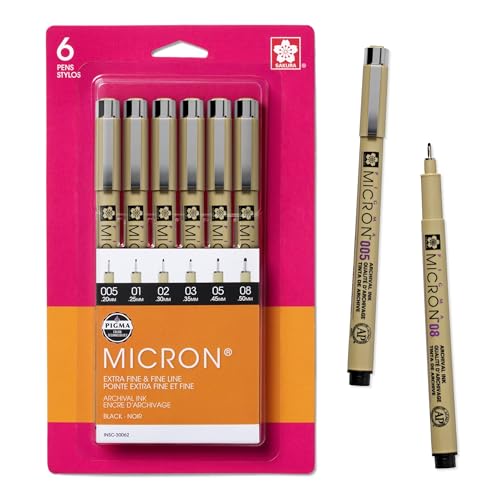

The Sakura Pigma Micron functions much like a reliable set of stainless steel needles; it provides consistent, predictable performance across every stitch. Its ink is pH neutral and chemically stable, ensuring that technical sketches or pattern modifications remain legible for years to come.
These markers excel at fine, precise linework. When charting intricate stranded colorwork or documenting the exact row count of a complicated decrease, the stability of the nib is paramount. A 0.25mm or 0.3mm tip allows for the same level of detail as a small-diameter needle used for sock cuffs.
Because the ink is archival, it will not fade or yellow, making it perfect for long-term project journals. While the nibs are delicate and can wear down if pressed too hard—much like a bamboo needle can lose its tip if used against a rough surface—they are the gold standard for lasting documentation.
Staedtler Triplus Fineliner: Best Ergonomic Pick

An ergonomic grip is just as vital for a journaler as it is for a knitter prone to hand fatigue during long lace-knitting sessions. The triangular barrel of the Staedtler Triplus prevents the pen from rolling off a craft table, much like square-shaped needles prevent stitches from slipping off too easily.
The ink flow is smooth and consistent, requiring very little pressure to produce a vibrant line. This is ideal for those who spend hours sketching out project layouts after a long session of knitting, as it minimizes strain on the small muscles of the hand and wrist.
These pens are water-based, meaning they wash out of most fabrics, a distinct advantage if an accidental spill happens near a stash of expensive hand-dyed yarn. However, they are not intended for use on paper that is prone to heavy feathering, so choose a thicker journal stock for the best results.
Faber-Castell Pitt Artist Pen: The Premium Choice
Faber-Castell Pitt Artist Pens are the professional-grade metal needles of the marker world. They offer a sophisticated range of India ink colors that are both lightfast and waterproof once dry, providing a level of permanence rarely found in standard felt tips.
These pens are best suited for those who treat their journals as a work of art rather than a simple scratchpad. The pigment quality is remarkably high, ensuring that colors remain as vibrant as a freshly blocked wool garment.
Because the ink is India-based, it adheres well to various surfaces without bleeding or smudging. For the knitter who enjoys hand-drawing fiber swatches or sketching design inspirations, this premium tool offers the reliability needed for archival-quality work.
Tombow Dual Brush Pens: Most Versatile Option
The Tombow Dual Brush Pen is the circular needle set of the marker world, offering two distinct ends to handle different types of work. One side features a flexible brush tip for filling in large swatches or color blocks, while the other provides a fine tip for labeling and note-taking.
The flexibility of the brush tip mimics the movement of a soft, drapey fiber. It is excellent for emphasizing headers in a journal or shading illustrations of garment construction.
Be aware that these pens contain a significant amount of water-based ink. On thinner paper, they can cause ghosting or even bleed-through, similar to how a high-moisture yarn might bloom excessively when wet-blocked. Test on a corner page before committing to a large layout.
Paper Mate Flair: The Colorful Everyday Classic
The Paper Mate Flair is the workhorse acrylic yarn of the stationery world. It is dependable, comes in a vast array of colors, and provides a bold, felted line that is easy to read at a glance.
The porous tip creates a signature feel, offering slight resistance on the page much like a wool-blend yarn grips a needle. This makes it an excellent choice for quick daily entries, such as logging total hours spent on a project or noting down the weight of a yarn skein.
While these markers are incredibly convenient, they are not suited for extremely fine detail work. The tips can flatten over time, creating a wider line, so use them primarily for headers, list-making, and quick color-coding of stash inventories.
Sharpie Pen Art Pens: Best No-Bleed Performance
The Sharpie Pen Art Pen is engineered specifically to prevent the dreaded bleed-through that can ruin a journal page. It provides the smooth, steady flow of a high-quality needle but with the added benefit of ink that resists soaking into the fibers of the paper.
These are ideal for journals with thinner pages, where even a slight amount of moisture might cause the ink to shadow on the reverse side. If you have ever experienced the frustration of a yarn that bleeds dye during the first wash, you will appreciate the stability and control these pens offer.
They provide a consistent line that does not skip, ensuring that important project data, like needle size or yarn gauge, remains clear and easy to read. They are the perfect, fuss-free companion for the minimalist creator.
Le Pen Fine Line Marker: The Sleek & Stylish Pick
The Le Pen is as sleek and minimal as a high-end set of nickel-plated needles. It features a slender barrel and a very fine plastic nib, making it the top choice for those who pack their journal along with a knitting bag for on-the-go sketching.
The ink is quick-drying, which is a major advantage for left-handed knitters or those who tend to flip pages rapidly while checking back on pattern notes. It produces a crisp, clean line that is perfectly suited for documenting small-scale stitch patterns.
While the nib is quite durable, it is best used on smooth, high-quality paper. Rough, toothy paper can wear down the fine tip prematurely, so pair these with a journal that has a refined, smooth surface for the best performance.
How to Pick a Marker for Your Journaling Style
Choosing the right marker starts by looking at the “gauge” of your paper. Thick, heavy-weight paper can handle the high pigment load of a brush pen, while thin, translucent pages require the light touch of a fine-line, bleed-resistant marker.
- For Technical Charting: Prioritize fine, pigment-based pens like the Micron.
- For Stash Organization: Use bold, colorful pens like the Flair for quick visibility.
- For Creative Sketching: Opt for versatile tools like the Tombow brush pens.
Consider how you interact with your journal. If you write fast and messy, prioritize quick-drying, no-smudge inks. If you are meticulous and take hours to plan a single pattern, invest in archival, lightfast pens that will keep your data legible for years.
Testing for Bleed-Through and Ghosting: A Guide
Before using a new pen in a prized journal, perform a “swatch test” on the final page of the book. Draw a dense square of color and a series of lines, then flip the page to check for ghosting or bleed-through, just as you would test a new yarn for colorfastness in a bowl of cold water.
- Bleed-Through: Ink soaking completely through the paper, ruining the next page.
- Ghosting: Ink showing through the back of the page, even if it doesn’t break the surface.
- Feathering: Ink spreading along the paper fibers, making lines look fuzzy instead of crisp.
If a pen bleeds, do not discard it. Use it only on heavy-stock paper or for loose-leaf note-taking. The goal is to match the tool to the substrate, just as you match the fiber type to the project purpose.
Water-Based vs. Pigment Ink: What’s the Difference?
Water-based inks are typically vibrant, non-toxic, and wash away easily. They are the “natural fiber” of the ink world—breathable, easy to work with, and generally gentle, though they can react to moisture if a journal gets damp.
Pigment inks are the “synthetic” equivalent; they are often suspended in a binder that, once dried, becomes permanent and water-resistant. If you expect your journal to face the elements or travel frequently in a bag full of stray stitch markers and notions, pigment-based ink is the safer, more durable choice.
Remember that permanence comes with the cost of being difficult to remove. Choose pigment pens for your “forever” entries and water-based pens for the day-to-day, ephemeral notes that might change as a project evolves.
A well-equipped journal is as essential as a well-stocked project bag. By choosing your markers with the same care you apply to selecting the perfect fiber for a heirloom piece, you ensure that your documentation is both beautiful and functional. Experiment with these options, understand your paper’s requirements, and enjoy the process of turning your craft ideas into a lasting record.