
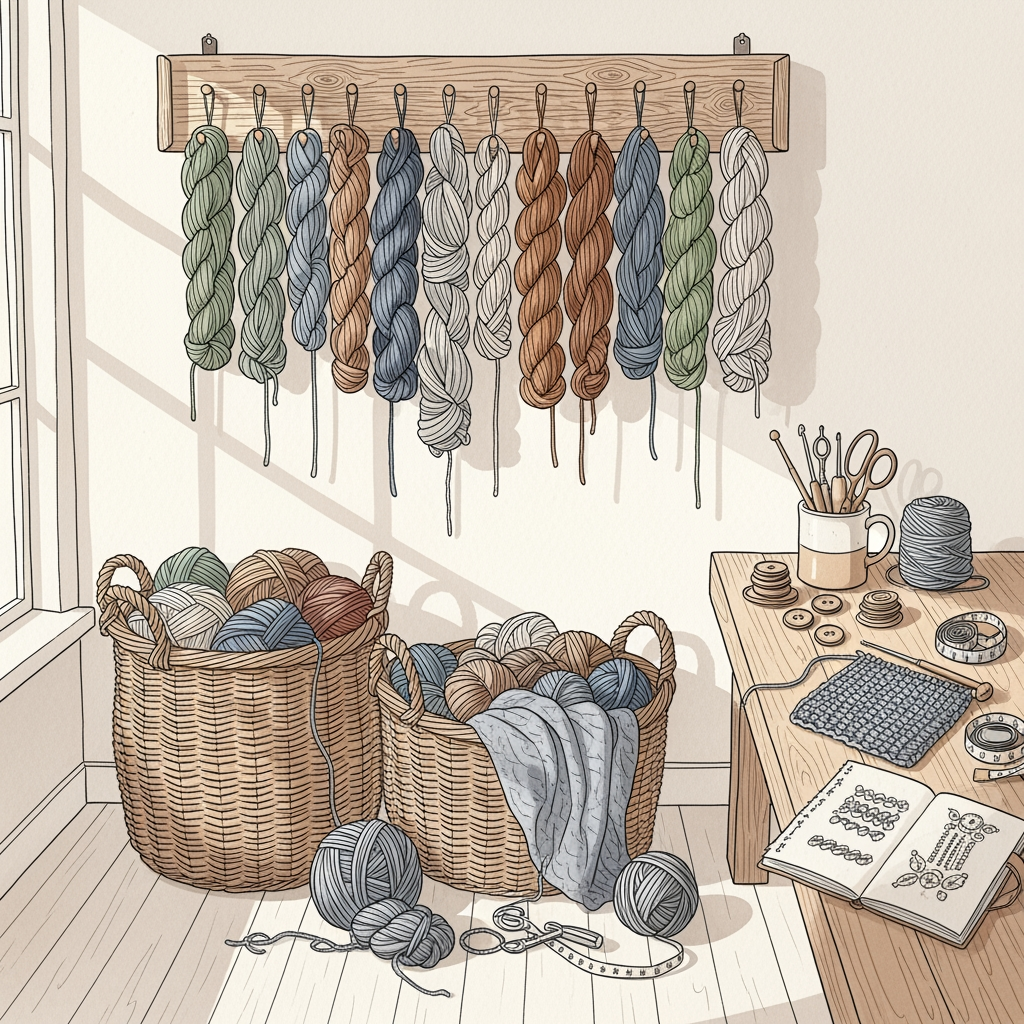
6 Best Cubby Inserts For Organizing Knitting Supplies
Struggling with messy yarn and needles? Discover the 6 best cubby inserts for organizing knitting supplies to keep your craft space tidy. Shop our top picks now.
A cluttered workspace is the silent enemy of a peaceful knitting session. When yarn is tangled and notions are misplaced, the joy of creating rhythmically with needles often fades into the frustration of searching for a lost stitch marker. Strategic cubby storage transforms a chaotic stash into an accessible library of potential projects. Selecting the right inserts ensures that every skein and tool has a dedicated home.
SONGMICS Fabric Bins: Best for Bulk Yarn Stash


Large-scale yarn collections require containment that balances capacity with accessibility. SONGMICS fabric bins offer a structured yet soft environment, making them ideal for housing quantities of sweater-quantity yarn.
These bins excel when the goal is to store yarn by weight or fiber type, such as keeping bulky wools separate from fine fingering-weight blends. Because fabric breathes, it is generally safer for natural fibers than airtight, non-porous containers that might trap moisture.
Keep in mind that while these bins hold a high volume, they lack transparency. Labeling the exterior—perhaps noting the fiber content and yardage—is essential to avoid rummaging through every bin to find a specific skein.
mDesign Divided Organizer: For Needles & Notions
Knitting notions often migrate to the bottom of bags and baskets, becoming lost just when they are needed most. The mDesign divided organizer provides a segmented home for tape measures, scissors, and cable needles.
The primary advantage here is visibility and separation. Small tools like point protectors and tapestry needles stay contained in individual slots, preventing them from slipping through the gaps of larger baskets.
However, consider the depth of the inserts against the length of your favorite needles. While these organizers are perfect for circular needles and fixed tips, they may require a different storage solution for longer, rigid straight needles that do not bend.
STORi Clear Plastic Bins: See Your Whole Stash
For the knitter who finds inspiration in the visual palette of their yarn collection, clear plastic bins are the gold standard. Seeing the colors and textures at a glance often sparks the next project idea without needing to pull everything out.
These bins are particularly effective for stash management because they provide an immediate sense of inventory. When a bin starts looking sparse, it acts as a visual cue that the supply is running low, helping to prevent unnecessary duplicate purchases.
One significant trade-off is the lack of airflow compared to fabric options. If you choose plastic, ensure the yarn is completely dry and clean before storage to prevent any potential mold growth or moisture buildup in the enclosed environment.
TheWarmHome Woven Baskets: For a Crafty Aesthetic
Woven baskets bring a natural, artisanal feel to a craft room, bridging the gap between utilitarian storage and home decor. They are perfect for storing active projects that move from the cubby to the living room chair.
The open weave allows for maximum airflow, which is the best-case scenario for long-term storage of high-quality animal fibers like alpaca, mohair, or sheep’s wool. These fibers need to breathe to maintain their natural elasticity and luster.
Be cautious of rough edges or frayed material on the interior of some woven baskets. Before placing delicate hand-dyed yarns or lace-weight mohair inside, line the basket with acid-free tissue paper to prevent snagging or pulling on the delicate fibers.

GoCrafts Caddy Insert: Tame Your Smallest Notions
The GoCrafts caddy insert is designed for the knitter who keeps a highly curated set of go-to tools. It acts as a portable station for items used in almost every project, such as row counters, crochet hooks for dropped stitches, and stitch markers.
This insert fits neatly into standard cubby systems while offering a specialized layout that mimics a professional workstation. It keeps the items you touch every single day—the ones you would be lost without—front and center.
If you are a knitter who tends to have multiple projects in various stages of completion, consider dedicating one caddy to “essentials” and keeping it mobile. This prevents the constant hunt for the same pair of embroidery scissors across the entire house.
Wayfair Basics Modular Cubes: A Customizable Fit
Not every cubby shelf is a standard size, and modular cubes allow for a bespoke storage setup. These units can be configured to fit everything from tiny, square-holed cubbies to wide, open shelving units.
The beauty of a modular system lies in its ability to grow alongside a stash. As a collection evolves from a few balls of cotton to a curated library of hand-dyed merino, the storage can be expanded one cube at a time.
Focus on the material quality when selecting modular pieces. Ensure they are sturdy enough to support the weight of heavy wool, which can become surprisingly dense when stacked in large quantities.
Fabric vs. Plastic Bins: Which Is Best for Yarn?
The choice between fabric and plastic often comes down to the environment and the fiber. Fabric bins offer breathability, which is vital for long-term storage of organic fibers that need to shed moisture.
Plastic bins, by contrast, offer superior protection against dust, light exposure, and pests. If you live in an area with high humidity or are prone to moth issues, the sealed environment of plastic may outweigh the breathability benefits of fabric.
- Choose Fabric: If the stash is kept in a climate-controlled room and is rotated frequently.
- Choose Plastic: If the stash is kept in a basement, attic, or an area exposed to dust and potential pests.
How to Protect Your Stash From Moths and Pests
Moths are the nightmare of every fiber artist, particularly when feeding on high-end protein fibers like cashmere or silk. Prevention is infinitely easier than dealing with an infestation after the fact.
Regardless of your storage choice, keep the environment clean and well-ventilated. Always store your yarn clean; even trace amounts of sweat or food oils left on yarn can attract hungry pests to your stash.
Consider using natural repellents like cedar blocks or lavender sachets within your cubbies. Replace these periodically to maintain their potency, and periodically pull all yarn out of the cubbies to inspect for any signs of damage or unwanted visitors.
Organizing Your Yarn: By Color, Fiber, or Project?
There is no single “correct” way to organize yarn, but the best system is the one that supports your knitting habits. Organizing by fiber type helps when planning specific projects, as you can immediately see your supply of wool versus plant fibers.
Organizing by color is a favorite for those who enjoy stranded colorwork or projects that rely on color theory. It makes creating a fade or choosing a palette for a complicated intarsia design much more intuitive.
Some knitters prefer organizing by project, keeping all the necessary yarn and tools for a specific sweater or blanket together. This is the most efficient method for project-focused knitters who want to pick up their needles and begin instantly.
Storing Needles and Tools Within Your Cubby System
Needles should never be stored in a way that risks bending or warping. Circular needles benefit from being stored in clear pouches or specialized cases that keep the cable from becoming kinked or tangled.
For straight needles, use upright containers within your cubbies to prevent them from becoming buried under yarn. Keeping a dedicated “tool cube” ensures that needle gauges, stitch markers, and cable needles are always in the same place.
Always sort needles by size and material. When you are in the middle of a complex pattern and need to switch to a specific needle size to hit gauge, knowing exactly where your 3.75mm needles are located is the difference between a productive session and a frustrating search.
A well-organized cubby system is more than just storage; it is the infrastructure that supports a creative practice. By thoughtfully categorizing your stash and protecting your tools, you create a space that invites you to knit more often and with greater focus. Remember, the best storage solution is the one that stays organized even when life—and knitting projects—get busy.

