6 Best Sewing Pillows For Back Support To Consider
Struggling with posture? Discover the 6 best sewing pillows for back support to improve comfort during long projects. Read our expert guide and shop your fit today.
Long hours spent hunched over a complex cable chart or rhythmic stockinette stitch can lead to significant spinal strain. Maintaining good posture is essential for preventing the chronic fatigue that often sidelines even the most passionate maker. Choosing the right support pillow transforms the crafting experience from a source of physical discomfort into a sustainable, pain-free hobby. Integrating the correct ergonomics allows for longer sessions and more consistent tension.
CraftComfort Ergo-Loom Pillow: Best Overall


This pillow bridges the gap between structured medical support and the soft comfort needed for long sessions. Its contoured shape mimics the natural curve of the lumbar spine, which helps maintain alignment while focus remains locked on intricate lace or colorwork.
The design excels because it doesn’t push the knitter too far forward in the chair. This is a critical distinction for those who need to maintain specific proximity to their work to avoid eye strain or dropped stitches.
Bottom line: If a singular, reliable solution for daily knitting is needed, this is the top contender for its balance of firmness and shape.
The Husband Pillow: Best for Long Sewing Sessions
When embarking on a marathon project—like finishing a heavy wool blanket before a deadline—this pillow provides essential full-back coverage. Its tall, arm-rest design creates a “cocoon” effect that prevents the shoulders from rounding forward.
This structure is particularly useful for maintaining posture when weightier projects pull the hands downward. The armrests support the elbows, taking the literal load off the shoulders and preventing the tension buildup that often leads to upper back tightness.
Bottom line: For projects involving heavy fabric or bulky yarns, the added structure of this design is an invaluable asset.
Milliard Reading Pillow: Top for Firm Support
A pillow must hold its shape under pressure to provide meaningful back relief. The Milliard option utilizes shredded memory foam, which provides a supportive, dense base that does not collapse after an hour of steady work.
This is ideal for knitters who find that softer, fiber-filled cushions lose their integrity during long sessions. Firmness acts as a physical reminder to sit upright, preventing the “slouch” that occurs when muscle fatigue sets in during complex pattern repeats.
Bottom line: Choose this if the primary goal is maintaining a rigid, upright posture throughout a difficult pattern chart.
ComfiLife Lumbar Support: Best Budget Option

Simple, portable, and highly effective, this gel-enhanced memory foam cushion is designed for versatility. Its compact size means it can be moved from a dedicated sewing chair to a kitchen table or even a travel bag for knitting on the go.
It specifically targets the lower lumbar region. By promoting an active, upright sitting position, it helps distribute weight evenly across the seat, which is crucial when spending long afternoons working on socks or smaller garments.
Bottom line: A cost-effective way to improve ergonomics without cluttering the workspace with large, specialized furniture.
DMI Lumbar Support Pillow: Most Versatile Pick
This pillow features a unique, adjustable strap that allows it to be secured to virtually any type of chair. It provides a reliable anchor, ensuring that the support does not slide away when shifting positions to reach for a different circular needle or skein of yarn.
The medium-density foam offers enough give to be comfortable for hours, yet enough resistance to support the spine. It is a workhorse option that performs consistently, regardless of whether the user is in a wooden dining chair or a plush armchair.
Bottom line: Select this for maximum flexibility if the knitting workspace changes frequently throughout the week.
The Everlasting Comfort Seat: For Your Chair
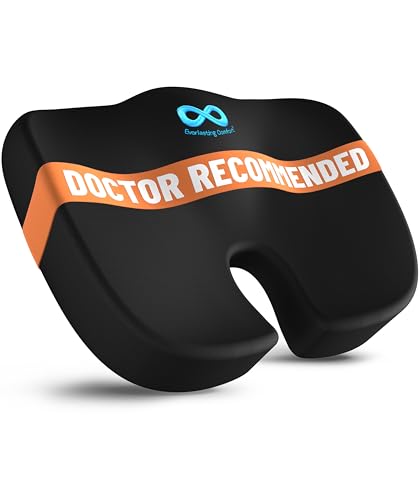
Often, back pain originates from a seat that is too flat or too hard. This memory foam seat cushion works in tandem with a lumbar pillow to correct the pelvic tilt that often causes lower back misery.
Improving the base of support changes the geometry of the entire spine. When the hips are properly aligned on a supportive seat, the shoulders and neck naturally find a more neutral, relaxed position for effortless knitting.
Bottom line: Invest in this if the current chair feels like the root cause of the discomfort rather than just the backrest.
How to Choose the Right Sewing Support Pillow
Selecting the correct support depends entirely on the chair being used and personal height. A pillow that is too thick for a deep chair will push the body into an unnatural, arched position, while one that is too thin will provide no benefit at all.
Consider the depth of the workspace and the frequency of sessions. Those who sew or knit for short periods might prefer a softer cushion, while those who commit to “marathon” sessions require high-density, supportive materials that won’t bottom out.
Bottom line: Evaluate the current chair’s deficiencies first, then match the pillow to address those specific gaps.
Pillow Firmness: What’s Best for Back Pain?
Firmness is not just about comfort; it is about structural alignment. Memory foam is generally preferred over standard polyester fill because it provides reactive support that contours to the body without losing its shape over time.
Too much softness can be deceptive, as it feels comfortable initially but fails to provide the necessary counter-pressure to keep the spine neutral. For those with chronic back pain, a medium-to-firm density is almost always the better choice for long-term health.
Bottom line: Aim for high-density foam that offers resistance; it prevents the spine from rounding during long periods of seated concentration.
Positioning Your Pillow for Maximum Comfort
The most common mistake is placing the pillow too high, near the shoulder blades. Effective lumbar support belongs in the natural inward curve of the lower back, right above the belt line.
Proper placement ensures that the pelvis is tilted slightly forward, which naturally stacks the vertebrae. When the spine is properly stacked, the muscles have to work less to hold the torso upright, leaving more energy for the delicate work of crafting.
Bottom line: The pillow should support the natural curve of the lumbar spine, not the mid-back area.
Fabric & Fill: What to Look for in a Pillow
Breathability is a factor frequently ignored in the search for ergonomics. Materials like velour or mesh covers are preferable, as they allow for airflow during long, warm knitting sessions.
Regarding the fill, shredded memory foam is often superior to a solid block. It allows the pillow to mold to the specific shape of the body and can be shifted around to provide custom support where the spine needs it most.
- Mesh covers: Best for temperature regulation.
- Memory foam: Essential for structural integrity.
- Adjustable straps: Necessary for maintaining position on varied chair types.
Bottom line: Prioritize breathable fabrics and high-density, adjustable fills to ensure the pillow remains a comfortable tool rather than a source of added heat.
Choosing the right lumbar support is just as critical to the fiber arts as selecting the correct needle size or fiber type for a project. By prioritizing ergonomics, the longevity of the crafting practice is secured, ensuring that back pain never becomes a barrier to the next creative endeavor.