6 Cutting Mats For Large-Scale Adhesive Layouts
Upgrade your workflow with our top 6 cutting mats for large-scale adhesive layouts. Find the perfect durable surface for your precision projects and shop now.
Precision in craft often begins long before a single stitch is cast onto a needle. Large-scale adhesive layouts require a stable, expansive surface that prevents fabric distortion and ensures accurate measurements for blocking complex, multi-panel garments. Selecting a high-quality cutting mat is not merely about protecting a tabletop; it is about creating a dedicated workspace that supports the structural integrity of your fiber projects. This guide evaluates six industry-standard mats to help align your workspace with the demands of serious textile construction.
Fiskars Eco Cutting Mat (36×48″): Best Value


The Fiskars Eco line offers a generous surface area at a price point that makes large-scale workspace upgrades accessible. This mat is constructed from a recycled material that balances self-healing properties with a firm, stable feel, which is ideal for those who frequently use spray adhesives for basting quilt layers or securing delicate lace motifs before blocking.
Because the surface is relatively stiff, it resists the buckling that often occurs with thinner, cheaper plastic alternatives. When working with heavier, rustic wools that might otherwise drag on a textured surface, this mat provides a smooth, reliable platform. It strikes a balance between professional-grade durability and the practical reality of maintaining a functional home studio.
If you are a frequent maker who values cost-effectiveness without sacrificing structural support, this is a sensible investment. It is sufficiently large to lay out most sweater pieces side-by-side, reducing the need to shift work repeatedly during the assembly phase.
OLFA Folding Cutting Mat (36×70″): Max Coverage

The OLFA Folding Mat is the gold standard for those managing expansive, floor-based layouts or large garment construction. Its primary advantage is the massive footprint, which accommodates the wingspan of a full-size knitted shawl or the various pattern pieces of a complex coat project simultaneously.
While the folding mechanism is a brilliant space-saving design, it does create a slight seam in the center of the surface. For the vast majority of knitting and textile tasks, this seam is negligible, but it should be accounted for when using exceptionally thin, delicate silk fabrics or fine-gauge lace that might catch or bridge the gap.
This mat excels in environments where space is at a premium and a permanent workstation is not possible. Once the session ends, it folds neatly into a compact size, making it a favorite for makers who alternate between active crafting and general living areas.
Dahle Vantage Self-Healing Mat: Most Durable Pick
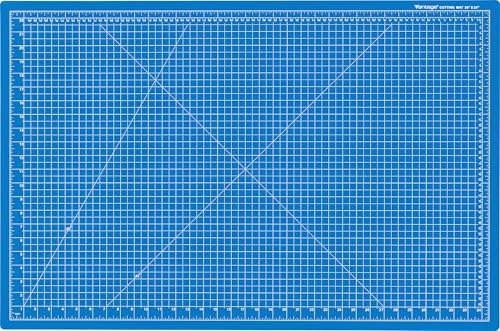
Durability is the defining characteristic of the Dahle Vantage, particularly for makers who rely on rotary cutters for precision fabric edge trimming. The self-healing technology on this mat is impressively dense, allowing for thousands of passes before visible grooves become a distraction to the eye.
For the knitter who frequently transitions between fiber arts and sewing, this mat proves its worth through longevity. It remains flat even after years of use, which is critical when you need to ensure that a blocking grid remains perfectly square. A warped mat is a dangerous tool, as it can inadvertently distort the grain of your knitwear during the final finishing stages.
While it lacks the portability of a folding mat, the trade-off is superior structural integrity. If you have a dedicated desk where the mat can live permanently, the Dahle Vantage will outlast almost any other option in your studio.
US Art Supply Cutting Mat (36×48″): Best Budget

The US Art Supply mat is a straightforward, no-nonsense tool that provides a massive working surface for a minimal investment. Its double-sided feature—green on one side, black on the other—offers high contrast for marking or identifying fine-gauge stitches and light-colored fibers.
The surface is softer than the professional-grade mats, which means it heals well but can be susceptible to deeper gouges if excessive pressure is applied. This is a common trade-off in the budget category, but it is entirely manageable if you adjust your cutting pressure to match the tool. It serves its purpose well as a secondary surface or an entry-level solution for those just beginning to expand their infrastructure.
This mat is an excellent entry point for the maker who is cautious about overspending on tools. It provides all the necessary grid lines and surface area required to manage large-scale adhesive layouts without the premium price tag.
Alvin Professional Cutting Mat: The Workhorse

The Alvin Professional series is built for heavy-duty, daily use in high-traffic workspaces. The material is notably thicker than competitors, which prevents it from rolling or “tenting” at the corners—a frustrating issue that often plagues lower-quality mats and interferes with accurate blocking measurements.
For knitters who work with heavy, bulky yarns or thick canvas backings, the Alvin provides a reliable, rigid surface. The grid lines are screen-printed with high precision, ensuring that a 10-centimeter square is exactly 10 centimeters, every time. This precision is essential when calculating tension or checking gauge for complex, structured garments.
This is a professional-grade tool designed for a lifetime of service. If you are committed to the craft for the long haul and prefer purchasing a tool once rather than replacing it every few years, the Alvin is an investment in your workspace stability.
Cricut Self-Healing Mat (24×36″): For Vinyl Art
While the Cricut mat is optimized for precision machine cutting, it is an excellent choice for knitters who also incorporate vinyl, leather, or other mixed-media elements into their fiber projects. Its scale is smaller, making it ideal for workstations where you are assembling small, intricate details rather than full-length garments.
The surface is specifically formulated for high-detail work, offering a smooth finish that allows for intricate layout and adhesive application. Because it is optimized for accuracy, it is excellent for detailed blocking of delicate lace swatches or decorative applique pieces.
The trade-off is that it cannot accommodate a full-size adult sweater layout. However, for the meticulous maker focusing on small, high-detail fiber art, its surface quality and precise grid are difficult to beat.
How to Choose the Right Mat for Your Craft Space
Choosing the right mat requires a clear assessment of your physical space and the scale of the projects you intend to undertake. If you regularly knit large garments, a 36×48″ mat is the baseline for success.
- Available Floor/Table Space: Measure your surface, then subtract two inches on all sides to prevent the mat from overhanging, which causes bowing.
- Primary Material Usage: Consider if you will be using adhesive sprays frequently, which require a mat that is easy to wipe clean.
- Cutting Tools: Heavier rotary cutters require a denser, self-healing mat, whereas lighter craft knives are fine on thinner surfaces.
Do not overlook the importance of the mat’s color. A dark, high-contrast mat is vital when working with white or natural, un-dyed fibers, while a lighter mat makes identifying dark, navy, or charcoal wool much easier.
Caring for Your Mat After Using Spray Adhesives
Spray adhesives are incredibly useful for basting layers, but they create a sticky residue that can attract lint and dust from your yarn fibers. Neglecting this buildup will eventually ruin the tackiness of your work surface and cause your layout to shift at critical moments.
To clean your mat, use a mixture of warm water and a very mild, non-abrasive soap. Gently scrub the surface with a soft sponge, ensuring that you do not scour the printed grid lines. Always allow the mat to air dry completely while laying it flat, as moisture trapped beneath a rolling mat can cause warping.
Avoid using harsh chemicals or solvents, as these will degrade the self-healing polymers in the mat and make it brittle. A regular wipe-down with a damp cloth after each project is far more effective than an aggressive deep clean once a year.
Folding vs. Solid Mats: Which One Should You Buy?
The debate between folding and solid mats is essentially a choice between convenience and consistency. Solid mats remain perfectly flat, providing a uniform surface that is indispensable when blocking delicate knits where every millimeter counts.
Folding mats offer undeniable portability, which is a major advantage for makers with small apartments or shared living spaces. If your workspace must double as a dining area or a general family space, the ability to store your mat in a closet is worth the minor inconvenience of a center seam.
If you have a dedicated studio room, buy a solid mat; the long-term structural advantage is significant. If you are a nomadic maker who attends retreats or craft nights, a folding mat is the only realistic option for large-scale work.
Keeping Your Cutting Mat Flat and Ready for Work
Keeping your mat flat is about environmental control as much as it is about storage. Never lean a mat against a wall for long periods, as it will eventually take on a permanent curve. Always store your mats perfectly flat under a bed, in a wide drawer, or hanging from a dedicated rack that supports the entire width of the tool.
If a mat develops a slight curl, do not panic. Place it in a sunlit room—not in direct, scorching sunlight—or near a warm vent to allow the material to become pliable, then weight it down with heavy books for twenty-four hours.
Consistency in the surface of your mat is directly related to the consistency of your finished knitwear. A flat mat ensures that your pinned-out projects dry to the exact dimensions intended, preventing the distortion that ruins the fit of a perfectly knitted garment.
Ultimately, the best cutting mat is the one that stays out of your way and lets your creative focus remain on the yarn. Whether you choose the massive coverage of an OLFA or the durable precision of a Dahle, ensure your selection matches both your current skill level and your physical workspace constraints. Investing in a quality surface now will prevent hours of frustration during your next blocking or assembly session.