
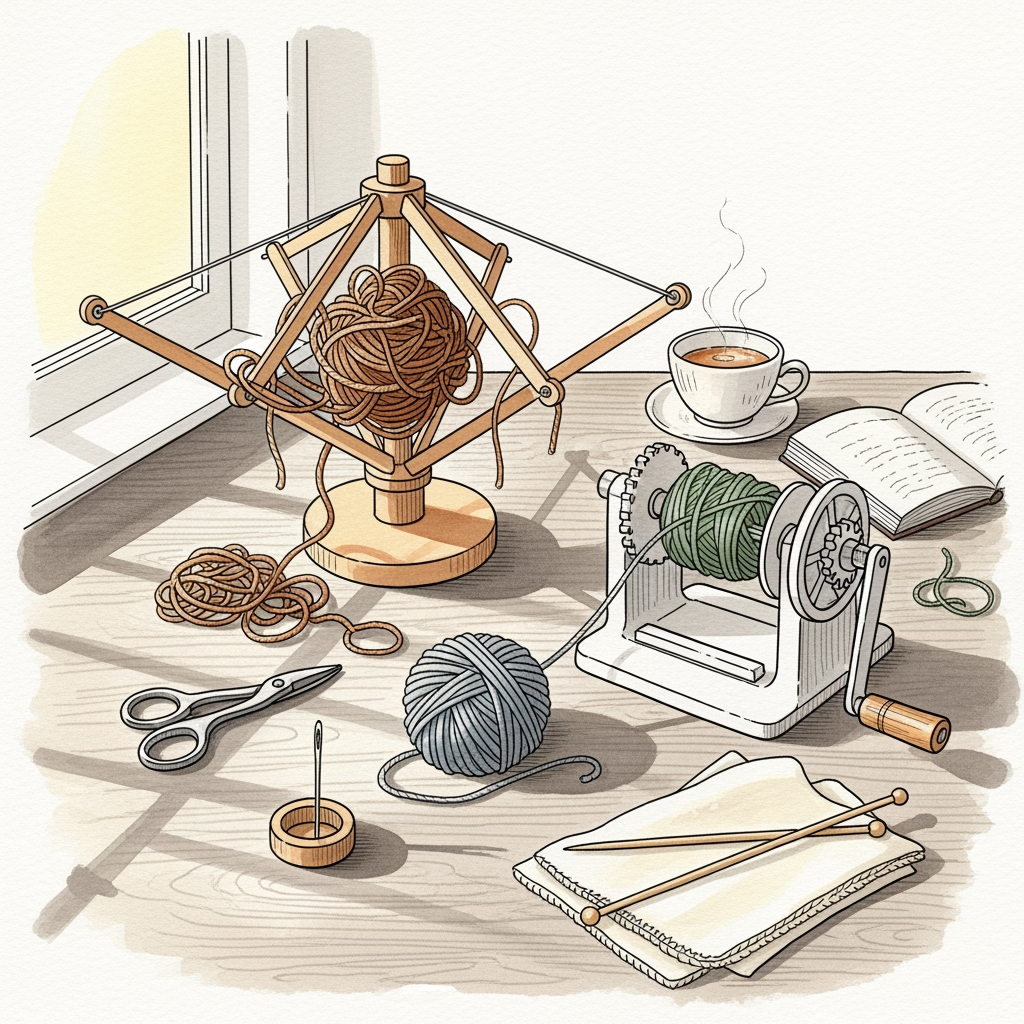
6 Wooden Yarn Swifts For Winding Hanks Worth Owning
Upgrade your knitting setup with our top picks for wooden yarn swifts. Explore these 6 durable, high-quality models and find the perfect tool for your hanks today.
Turning a beautiful, hand-dyed hank of yarn into a neat, workable cake is a fundamental skill that transforms the knitting experience. While a swift might seem like a simple tool, the mechanics of how it rotates and holds tension can mean the difference between a meditative winding session and a tangled, frustrating mess. Investing in a quality wooden swift brings a tactile pleasure and a lasting durability that plastic alternatives simply cannot match. Selecting the right model requires balancing storage space, budget, and the volume of yarn typically processed in a studio.
Stanwood Umbrella Swift: Best Overall Value


The Stanwood Umbrella Swift is the industry standard for a reason: it offers consistent, smooth performance that handles almost any hank size with ease. Its classic folding design allows it to collapse into a slim profile when not in use, making it perfect for knitters who lack a dedicated craft room.
The tension provided by the wooden slats is gentle yet firm enough to prevent the yarn from slipping off during high-speed winding. Because it clamps securely to a table, it stays stable even when managing bulky, heavy wools that might otherwise cause the swift to wobble or tip.
While the hardware is functional, the wood itself is finished well enough to ensure that delicate fibers like silk or mohair won’t snag. For the knitter who frequently works with a wide variety of weights, this is the most reliable workhorse on the market.
Schacht Maple Swift: The Heirloom Investment

If a swift is intended to be a centerpiece of a knitting space for decades, the Schacht Maple model is the definitive choice. Crafted from beautiful, durable hard maple, this tool is built with a level of precision engineering that makes every rotation feel virtually effortless.
The smooth finish is particularly beneficial when handling luxury fibers that are prone to friction or static. Because of its weight and balance, it spins with a quiet, satisfying rhythm that remains steady even when pulling yarn quickly from a large, heavy skein of hand-spun alpaca.
The price point reflects the superior materials and craftsmanship, positioning it as an investment rather than a casual purchase. It is the ideal tool for the dedicated fiber artist who views their equipment as an extension of their creative process.
Beka Tabletop Swift: Ideal for Small Spaces

The Beka Tabletop Swift is a brilliant solution for knitters who find that traditional umbrella swifts occupy too much surface area. Its compact, upright design allows it to function efficiently on small side tables or even crowded desks.
Instead of expanding outward like a large umbrella, it utilizes a smaller, vertical footprint that makes it exceptionally easy to store in a drawer or on a bookshelf. This design is particularly adept at handling smaller projects, such as sock yarn hanks or lace-weight skeins, which don’t require the massive radius of a larger swift.
It remains sturdy and effective for everyday use, though it may struggle with very large, oversized hanks of super-bulky yarn. For those living in apartments or working in shared spaces, this swift offers the perfect balance of utility and portability.
KnitPicks Swift: A Solid and Affordable Start
Entering the world of hanks can be intimidating, but the KnitPicks Swift provides a reliable, entry-level option that performs exactly as needed. It features a straightforward umbrella design that is easy to set up, take down, and store away in minutes.
The construction is simple and lightweight, which makes it highly portable for knitting groups or travel. While it may not have the heavy-duty feel of more expensive heirloom pieces, it provides the necessary functionality for a knitter who is just beginning to transition from pre-wound balls to hanks.
This model is best suited for standard-sized hanks and moderate winding speeds. It is an honest, utilitarian tool that simplifies the winding process without requiring a significant financial commitment.
ChiaoGoo Amish Swift: Sturdy, Simple, Smooth
The ChiaoGoo Amish Swift takes a departure from the umbrella style, opting instead for a four-piece wooden cross design that sits directly on the table. It is incredibly easy to assemble and disassemble, making it a favorite for those who value speed and simplicity.
Because it relies on pegs to hold the yarn rather than folding arms, it is virtually indestructible and very easy to clean. The wood is finished to a high degree of smoothness, ensuring that even the most delicate hand-dyed yarns glide across the pegs without catching or pilling.
This style is often preferred by knitters who find umbrella-style swifts to be fiddly or prone to mechanism issues over time. It is a minimalist, elegant solution that focuses entirely on the smooth rotation of the hank.
Fanciful Wood Swift: For a Touch of Luxury
When the aesthetic of a craft room matters as much as the utility of the tools, a handcrafted or specialty wood swift adds a sense of occasion to every project. These swifts are often made from high-quality hardwoods like cherry or walnut, featuring finishes that are polished to a mirror-like shine.
Beyond their looks, these swifts are typically balanced with extreme precision, allowing for the smoothest possible winding experience. The added weight of premium wood provides a stability that is both functional and satisfying, grounding the user as they prepare their materials for a project.
They are an excellent gift for the seasoned knitter who already owns the essentials and values artistry in their equipment. Choosing one of these models is about balancing the tactile joy of quality tools with the practical reality of daily knitting needs.
How to Choose: Umbrella vs. Tabletop Swifts
Choosing between an umbrella and a tabletop swift often comes down to the spatial constraints of the workspace. Umbrella swifts, which fold down like a standard umbrella, are ideal for larger hanks and provide a classic, adjustable radius that accommodates nearly any skein size.
Tabletop or “Amish-style” swifts are fixed in their orientation, often taking up less vertical space but occasionally requiring more horizontal surface area for the pegs. * Umbrella: Best for frequent users, large skeins, and those who need to save storage space. * Tabletop: Best for simplicity, durability, and a smaller permanent footprint.
Consider the “yarn volume” of the typical project. A knitter who frequently winds 100g hanks of fingering-weight wool will find an umbrella swift highly efficient, while a knitter working mostly with bulky wool may prefer the stability of a fixed-peg tabletop design.
Setting Up Your Swift for Tangle-Free Winding
Proper setup is the most common point of failure for beginners. The swift should always be positioned at a height that allows the yarn to travel from the hank to the ball winder without catching on table edges or other objects.
Ensure the yarn is placed on the swift with the twists removed from the hank first; failing to do this will cause the swift to seize up after only a few yards. When tensioning the swift, ensure the arms are expanded just enough to hold the yarn taut, but not so tight that the hank is stretched or distorted.
A swift should spin freely with a gentle touch. If the swift requires force to turn, the yarn is likely too tight or the hank is twisted; pause to reset rather than forcing it, which can cause snapping or uneven tension in the finished cake.
The Knitter’s Guide to Swift Maintenance & Care
Wooden swifts are susceptible to changes in humidity, which can sometimes cause wood to warp or joints to stiffen. A light application of a high-quality furniture wax once or twice a year will keep the wood supple and prevent the arms from sticking in their grooves.
If the rotation begins to feel gritty or slow, inspect the center pivot point for dust or yarn fiber buildup. Using a soft cloth to clear any debris will usually restore smooth operation.
Avoid storing wooden swifts in extreme environments, such as unheated attics or damp basements, as these conditions can lead to permanent structural damage. A little preventative care ensures that a wooden swift remains a reliable partner for many years of winding.
Wood vs. Metal Swifts: Which is Right for You?
Metal swifts are often praised for their industrial strength and their ability to handle massive, heavy skeins without flexing. However, they lack the organic, warm tactile experience that wood provides, and they can sometimes be cold to the touch or prone to loud, mechanical noise during operation.
Wood swifts offer a softer touch, which is crucial when handling expensive, delicate, or high-twist fibers. The natural grip of wood prevents fine yarns from sliding off the arms prematurely, providing a better, more controlled winding experience.
Ultimately, wood is the preferred choice for those who value the aesthetics of their craft and the gentle handling of premium fibers. Metal may be the choice for heavy-duty, high-volume production, but for the average knitter, wood offers the perfect marriage of form and function.
Whether a knitter is just beginning to buy hanks instead of pre-wound balls, or is a seasoned professional building a professional studio, the right swift is an investment in the longevity of their materials. By choosing a model that fits the specific needs of one’s workspace and fiber preference, the winding process transforms from a chore into a seamless, satisfying part of the craft. Select with care, maintain with consistency, and enjoy the smooth flow of yarn in every stitch.
