
6 Crimp Covers For Professional Jewelry Finishes To Use
Elevate your designs with these 6 essential crimp covers for professional jewelry finishes. Learn how to secure your jewelry projects and read our guide today.
Achieving a polished finish on a handmade piece is just as crucial as selecting the perfect yarn weight for a gauge swatch. Crimp covers are the essential “seaming” step for jewelry, much like a well-executed Kitchener stitch is for a seamless sock toe. Neglecting these small components often leaves otherwise beautiful wirework looking unfinished or fraying at the edges. Mastering their use elevates a project from a simple string of beads to a professional accessory ready for a gallery wall.
Beadalon Crimp Covers: The Industry Standard


Beadalon has long established itself as the baseline for reliable findings, much like a standard wooden needle set that every knitter eventually owns. These covers are engineered with consistent metallurgy, ensuring they respond predictably under pressure.
When you apply pressure with pliers, these covers collapse into a uniform, bead-like shape without cracking or peeling. This reliability is vital when working with delicate silk cords or expensive metallic wires that cannot withstand repeated re-crimping.
Consistency is the ultimate goal in both knitting and jewelry making. Stick to Beadalon when the project requires a predictable outcome and you want to avoid the frustration of materials failing during the final assembly phase.
Soft Flex Crimp Covers: For Beading Wire
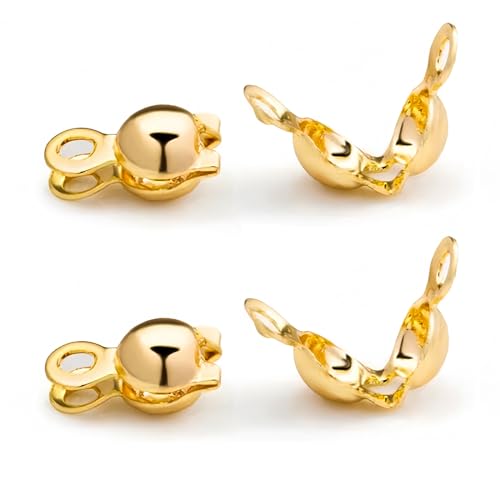
Soft Flex covers are designed specifically to pair with their proprietary flexible beading wire, creating a seamless integration between the wire and the finding. They possess a slightly softer temper, which allows the metal to mold more closely to the crimp tube hidden inside.
Because these covers are softer, they are more forgiving for those new to the process of applying them. A heavy hand often leads to crushed metal, but the ductility of these covers provides a margin for error that harder alloys lack.
If the project involves heavy stone beads or complex multi-strand designs, use these to ensure the connection remains flexible. They bridge the gap between structural integrity and the soft drape required for high-quality, wearable art.
Sterling Silver Covers: For Fine Jewelry Finishes
Sterling silver brings a level of quality and perceived value that matches the effort put into a high-end lace project. These are ideal when the finished piece is intended as a gift or a luxury item that will be worn frequently.
Unlike plated options, sterling silver will not rub off or change color over time. It reacts gracefully to the skin’s natural oils, developing a gentle patina that mirrors the character of premium wool fibers that bloom after blocking.
Consider these an investment in the longevity of the piece. While they come at a higher price point, the durability ensures that the jewelry remains a keepsake rather than a disposable accessory.
Gold-Filled Crimp Covers: A Durable Choice
Gold-filled findings offer a thick layer of genuine gold bonded to a base metal, providing the look of solid gold without the exorbitant cost. This is the “luxury wool blend” of findings—it offers the sheen and performance of high-end materials while remaining accessible for frequent use.
Because the gold layer is substantial, these covers won’t tarnish or turn skin green like inferior plating might. They are perfect for projects that will experience significant friction, such as bracelets or heavy statement necklaces.
Choose gold-filled when the aesthetic goal is a rich, warm finish that holds up to daily wear. It is the practical choice for creators who want professional, long-lasting results without the financial commitment of solid karats.
Artbeads Designer Covers: Best Style Variety
Artbeads offers a diverse range of designer covers, including ribbed, patterned, and oxidized finishes that go beyond the basic smooth sphere. These are the equivalent of choosing a unique, hand-dyed variegated yarn to make a simple stockinette sweater pop with personality.
The variety allows for creative detailing that incorporates the finish into the overall design language of the piece. If the project features matte-finished beads, a matte-finished crimp cover maintains the cohesion of the design.
Use these to add a deliberate design element to the ends of the jewelry. They allow the closure to become a feature rather than a necessary evil that needs to be hidden from view.
Plated Brass Crimp Covers: Most Budget-Friendly
Plated brass covers serve the same function as their precious metal counterparts but at a fraction of the cost. They are the ideal choice for practice pieces, test runs, or when making large batches of gifts where the material cost must remain low.
The tradeoff lies in the longevity of the plating; with constant exposure to moisture or chemicals, the finish may eventually wear away. Much like an inexpensive acrylic yarn, they have their place in the rotation, especially when the goal is to prototype a complex design.
Opt for these when the project is experimental or when the budget is the primary constraint. They provide the necessary function of hiding the crimp tube while allowing the maker to iterate and learn without high material waste.
How to Choose the Right Size Crimp Cover
Choosing the correct size is a matter of proportion, much like matching the needle size to the yarn weight to achieve the correct tension. A cover that is too small will fail to hide the crimp tube entirely, while one that is too large will look bulky and disproportionate.
- 3mm covers: Best for 1mm to 2mm crimp tubes.
- 4mm covers: Ideal for 2mm to 3mm crimp tubes.
- 5mm+ covers: Used for heavy-duty connections or decorative purposes.
Always measure the crimp tube after it has been compressed by the pliers before selecting the cover. If the crimped tube measures 2mm, a 3mm cover is usually the perfect fit.
The Best Pliers for Closing Crimp Covers
Using the right tool for the job is non-negotiable, just as one would never use a tapestry needle to pick up stitches. Nylon-jaw pliers are the gold standard for closing crimp covers because they provide enough grip without marring the surface of the metal.
Standard chain-nose pliers can leave unsightly scratches or indentations on the soft metal of the cover. Nylon jaws provide a flat, cushioned surface that distributes pressure evenly across the entire cover.
If you don’t have nylon-jaw pliers, you can wrap the tips of standard pliers with a bit of painter’s tape to protect the metal finish. However, a dedicated pair of nylon-jaw pliers is a worthwhile investment for a professional, clean result.
Attaching Crimp Covers: A Step-by-Step Guide
- Place the crimp cover over the crimped tube, ensuring the opening faces the wire.
- Grip the cover gently with your nylon-jaw pliers, positioning the pliers so the opening of the cover is oriented toward the jaws.
- Apply light, steady pressure to “cradle” the cover around the tube.
- Continue to rotate the cover and apply pressure until the two halves meet and form a seamless sphere.
Do not force the metal or apply sudden, sharp pressure, as this can cause the cover to collapse unevenly. Much like blocking a sweater, a gentle touch and patience are the keys to a finished product that looks intentional and refined.
Crimp Cover vs. Crimp Bead: What’s the Point?
A crimp tube or bead provides the mechanical strength to hold the jewelry together, while the crimp cover provides the aesthetic finish. The tube is the functional “cast-on” edge that secures the tension of the wire, while the cover is the “bind-off” that makes the piece look deliberate.
Without a cover, the crimped tube remains an exposed, industrial-looking metal bump that can snag on clothing. Using a cover effectively “masks” the mechanical connection, turning a functional necessity into a seamless, decorative element.
Every professional piece of jewelry requires both components to function correctly and look sophisticated. Think of the crimp bead as the structure and the cover as the polished veneer that hides the labor underneath.
The journey from a pile of loose components to a professional-grade accessory is defined by these small, thoughtful details. By selecting the right crimp cover and applying it with precision, the quality of the work is instantly elevated to a boutique standard. Always prioritize the correct size and tool usage to ensure the finish remains as enduring as the design itself.


