7 Best Ergonomic Handles For Long Crafting Sessions
End hand fatigue during long projects with these 7 best ergonomic handles. Read our expert guide to find your perfect fit and craft in total comfort today.
Long hours spent crafting often result in hand fatigue, cramping, or even repetitive strain injuries that sideline dedicated makers. Investing in the right ergonomic tools can be the difference between finishing an intricate sweater and setting the project aside indefinitely due to discomfort. These tools act as an extension of the hand, designed to redistribute tension and minimize the strain placed on small tendons. Choosing the correct handle style transforms a grueling marathon session into a sustainable creative practice.
Clover Soft Touch: The All-Around Workhorse


The Clover Soft Touch series remains the gold standard for crafters seeking a balance between functionality and comfort. These hooks feature a flattened, lightweight handle that sits naturally in the palm, preventing the need for a tight death grip.
For those prone to sweating while working with acrylic or synthetic blends, the matte, rubberized finish provides just enough tack to prevent slips. It is an ideal middle ground for makers who aren’t ready to commit to expensive artisan tools but have graduated from standard metal needles.
The tradeoff here is the thinness of the handle. Those with significant arthritis or dexterity issues might find they still need to exert too much force compared to thicker, contoured options.
Furls Streamline: Ultimate Luxury Hand-Saver
Furls Streamline hooks are engineered with a specific teardrop shape that forces the hand into a relaxed, open position. This design is built to encourage a “cradle” grip rather than a tight, pencil-like tension.
Because the handle is significantly thicker than standard hooks, the pressure is distributed across a larger surface area of the palm. This makes them a top-tier choice for working with heavy, non-elastic wools that require a firm hand to maintain consistent tension.
Potential buyers should note that the size of the handle can feel bulky for those with smaller hands. The aesthetic is undeniable, but the functionality relies heavily on the user being comfortable with a wider, rounded grip.
Addi Swing Hook: Best for the Pencil Grip

The Addi Swing is a unique tool characterized by its offset, curved handle that conforms to the natural anatomy of the hand. It is particularly effective for knitters and crocheters who utilize a pencil grip, as the handle weight is balanced toward the back, counteracting the natural droop of the wrist.
The plastic used is high-grade and durable, offering a smooth finish that allows for fast work. It is particularly effective when working with slippery materials like silk, bamboo, or superwash wool, where maintaining speed without dropping stitches is crucial.
The learning curve for this specific shape can be steep for those accustomed to straight, cylindrical handles. Expect a few hours of “getting used to it” before the ergonomics actually begin to pay off.
Boye Handle: Upgrade Your Existing Hooks
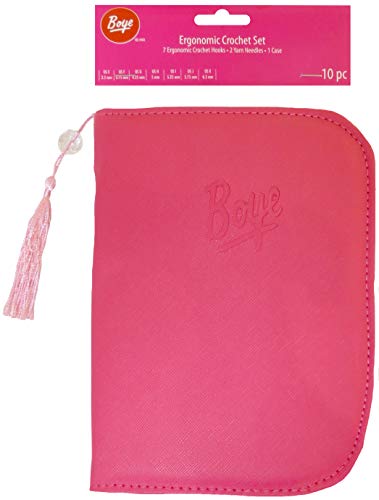
Sometimes the best tool is the one already owned, and the Boye ergonomic handle provides a universal solution. This adjustable sleeve can be swapped between different hook sizes, making it an economical choice for those building a collection.
This is the perfect entry point for someone who loves their vintage aluminum hooks but struggles with the thin shafts. It adds necessary girth to the tool, which immediately reduces the force required to pull the hook through tight cables or intricate lace stitches.
However, the adjustability can be a point of failure, as the fit can occasionally loosen during high-intensity sessions. Check the fit regularly to ensure the tool remains stable while in use.
Tulip Etimo Rose: The Smoothest Hook in Town

The Tulip Etimo Rose is widely celebrated for its proprietary cushion grip, which offers a soft, velvet-like tactile experience. It is designed specifically to reduce friction against the skin, which is a lifesaver during multi-day projects.
The hook heads are polished to a high sheen, ensuring that they glide through even the most “grabby” mohair or fuzzy alpaca fibers. If the project involves challenging, high-friction yarns, this handle is a superior choice for maintaining steady, effortless movement.
While these are premium-priced, the consistency of the hook tip and the comfort of the handle remain unmatched. They are a long-term investment for the serious maker who values precision engineering.
Prym Ergonomics: A Knitter’s Best Friend
Prym Ergonomics takes a modular approach, using high-performance synthetic materials that are remarkably light. Their needles and hooks are designed with a triangular cross-section that prevents them from rolling off the couch while offering a natural resting spot for the fingers.
The material is warm to the touch, which provides a significant advantage over cold metal when working in cooler environments. This thermal property is helpful for individuals whose joints tend to stiffen up in air-conditioned or winter knitting spaces.
Because they are made of a specialized plastic, they do not have the same “snap” or rigidity as stainless steel. They are best suited for those who appreciate a slightly flexible tool that gives a bit during complex stitch patterns.
Susan Bates Comfort Cushion: For Any Tool
The Susan Bates Comfort Cushion is a straightforward, no-frills foam slip that slides over almost any needle or hook. It is an inexpensive, effective way to turn an uncomfortable tool into a specialized ergonomic implement.
This is a versatile tool for those who prefer specific metal textures but need to avoid the strain of thin shafts. It is especially useful for beginners who are still experimenting with various hook shapes and aren’t ready to invest in high-end ergonomic sets.
The main drawback is durability; over time, the foam can lose its shape or tear. Consider this a temporary, high-impact comfort measure rather than a lifelong tool.
How to Find the Right Handle for Your Grip
Selecting the right handle requires analyzing how the tool is held during a project. A pencil grip user generally benefits from handles with a slight taper or offset balance, while a knife grip user typically requires a thicker, rounded palm support.
Consider the weight of the project as well. Large blankets worked in bulky-weight yarn require a handle that allows the palm to take the load, whereas delicate doilies and lace require a lighter tool to maintain fine motor control.
Always look for a handle that feels “neutral” in the hand. If a tool requires constant adjustment or readjustment, it is creating invisible stress that will manifest as discomfort after thirty minutes of work.
Stretches to Pair With Your Ergonomic Tools
No tool can replace the necessity of movement. Before starting a long session, perform gentle wrist rotations and palm extensions to warm up the tendons.
Every thirty minutes, drop the tools and perform a “tendon glide”—gently straighten the fingers and then curl them into a loose fist to ensure blood flow remains constant. Incorporate shoulder rolls to ensure tension isn’t being held in the traps, which often mirrors the tightness felt in the hands.
Even the most ergonomic handle in the world cannot save a crafter who remains completely static for six hours. Combine equipment upgrades with consistent movement to ensure longevity in the craft.
Are Ergonomic Craft Hooks Worth the Money?
The value of an ergonomic tool is defined by the number of hours the maker spends holding it. For the occasional hobbyist who knits once a month, standard metal hooks may suffice, but for those who craft daily, the price is a preventive investment against physical strain.
When considering the cost, balance the price of the tool against the potential cost of medical intervention for repetitive strain. The comfort provided by a quality handle extends the reach of one’s creative years.
If the choice comes down to buying more yarn or upgrading a single tool, prioritize the tool. A project is only enjoyable if the process remains pain-free.
Selecting the right ergonomic handle is an essential step in maturing as a maker and protecting one’s physical longevity. By matching the tool’s geometry to your unique grip and the requirements of your specific yarn, you create a sustainable practice that serves both your creativity and your health. Remember that even the finest ergonomic tool is only one part of the equation, as mindful posture and regular breaks remain the ultimate defense against fatigue. Use these recommendations as a starting point to curate a kit that supports your hands through every stitch.