6 Best Ergonomic Finger Inserts For Comfort To Try
Upgrade your workstation comfort with our curated list of the 6 best ergonomic finger inserts. Read our expert reviews and find your perfect fit for relief today.
Knitting for hours on end can transform a relaxing hobby into a source of finger strain and uneven tension. Finding the right ergonomic tool isn’t just about comfort; it is about maintaining a consistent gauge across complex patterns. The following collection of finger-assisted tools offers practical solutions for common aches and structural challenges. Selecting the correct support can mean the difference between finishing a project with ease or needing an extended break for recovery.
Artlandis Knitting Ring: Best for Even Tension


Maintaining a steady flow of yarn is the primary hurdle for knitters struggling with inconsistent gauge. The Artlandis Knitting Ring provides a stable path for the yarn, effectively acting as a tensioning anchor near the working needle.
This tool shines when working with splitty, low-twist yarns that tend to snag on fingers. By passing the yarn through the ringâs eyelet, the fiber remains elevated and controlled, preventing it from dipping or loosening during the stitch-forming process.
- Best for: Continental style knitters or those struggling with gauge consistency.
- Key advantage: Reduces finger friction and creates a mechanical stop for tensioning.
Keep in mind that ring size and positioning are critical for success. If the ring is too loose, it will rotate, negating the benefit of the tensioning eyelet.
Clover Yarn Guide: Top Pick for Stranded Colorwork
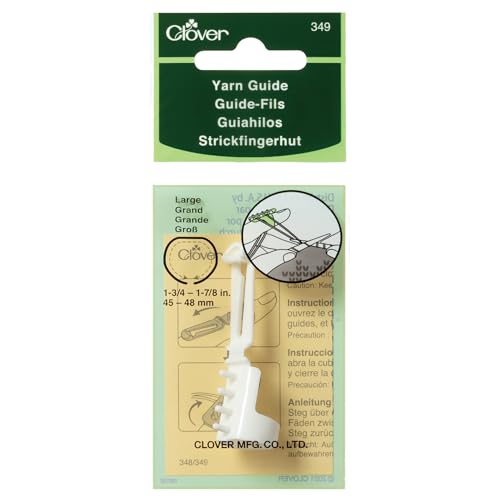
Stranded colorwork often requires managing two distinct strands of yarn simultaneously, which can quickly lead to tangled fingers and uneven floats. The Clover Yarn Guide sits comfortably on the index finger, providing dedicated channels to keep colors separate and organized.
By separating the strands, this guide ensures that the dominant color remains consistent throughout the row. This is particularly vital when working with high-contrast fibers where an accidental swap would ruin the pattern’s motif.
- Best for: Fair Isle, Intarsia, and multi-color stranded projects.
- Key advantage: Prevents color tangling and maintains uniform float length.
The tradeoff here is the learning curve of maneuvering two strands simultaneously. Practice with scrap yarn before diving into an expensive wool project to find the ideal finger placement.
Prym Ergonomics Knitting Thimble: Best for Pushers

Many knitters have a habit of using the tip of their index finger to push the needle tip forward during every stitch. Over a long session, especially with sharp metal needles, this contact point can become bruised and raw.
The Prym Ergonomics thimble features a specialized, soft-touch design that protects the skin while providing enough grip to maneuver the needle. It is shaped to follow the natural contour of the finger, making it significantly more comfortable than traditional, rigid metal thimbles.
- Best for: Knitters who push their needles with their fingers.
- Key advantage: Anatomical fit that prevents localized skin irritation.
Avoid this tool if the goal is yarn tensioning; it is designed for protection, not flow. For the pusher who suffers from sore pads, this is an essential ergonomic addition.
Thimble-It Finger Pads: Most Versatile Solution
Sometimes the issue is not the yarn tension, but the repetitive friction of the yarn sliding against the skin. Thimble-It pads are adhesive, textured discs that stick directly to the finger where the yarn makes contact.
These pads are incredibly thin, providing a protective barrier without adding the bulk of a full thimble. They are particularly useful for knitters who find traditional plastic or metal guides too restrictive or cumbersome.
- Best for: Sensitive skin and knitters who prefer a tactile, “naked finger” feel.
- Key advantage: Discreet, lightweight, and customizable placement.
Because they are adhesive, these pads will eventually lose their stickiness as lint and fiber oils accumulate. Keep a few spares in the project bag for longer, multi-day knitting sessions.
The Norwegian Knitting Thimble: Classic Metal Pick

The Norwegian thimble is a time-tested tool that utilizes a metal “pick” to guide the yarn. It is a favorite among traditionalists who require a more rigid and precise tensioning system than plastic guides can offer.
This tool is exceptionally effective when working with slippery, high-silk content yarns. The metal surface provides a controlled, predictable glide that synthetic materials simply cannot replicate under tension.
- Best for: Slippery yarns and those who prefer a rigid tensioning surface.
- Key advantage: Durability and precise control over yarn flow.
While highly effective, metal can be cold to the touch and less forgiving on sensitive skin. Ensure the loop is adjusted properly to the finger size to prevent it from sliding while the work progresses.
Dritz Soft Comfort Thimble: Best for Sore Fingers

When hands have reached their limit after hours of cabling or bobble-heavy work, a padded thimble becomes a necessity. The Dritz Soft Comfort thimble utilizes soft, pliable materials that accommodate the finger without cutting off circulation.
This is not a yarn guide, but rather an injury-prevention tool. It allows the knitter to continue working despite minor skin abrasions or sensitive finger pads caused by long-term, high-intensity projects.
- Best for: Long sessions involving heavy-weight yarn or repetitive, high-impact movements.
- Key advantage: Maximum cushioning and adjustable breathability.
Choose this tool when the project demands stamina over speed. It is the ideal choice for finishing large blankets or garments where the weight of the work increases the physical strain on the hands.
Yarn Guide vs. Thimble: Which Type Do You Need?
Choosing between a guide and a thimble comes down to identifying the specific pain point. If the challenge is uneven tension or tangled strands, a yarn guide is the necessary investment.
If the problem is physical pain, bruising, or skin sensitivity, a thimble or protective pad is the right direction. Do not attempt to force a protective thimble to act as a tensioning guide, as the geometry of the two tools serves opposite purposes.
- Guides: Focus on yarn position, flow, and pattern integrity.
- Thimbles: Focus on protection, pressure distribution, and finger longevity.
A well-stocked knitting kit should ideally contain both. Use the guide for the primary knitting work and the thimble for high-tension, heavy-duty finishing.
How to Find the Perfect Fit for Your Finger Tool
An ill-fitting tool is worse than no tool at all. A guide that is too large will move out of place with every stitch, while a thimble that is too tight will cause cramping and restrict blood flow.
Measure the circumference of the finger used for tensioning, and compare it against manufacturer size charts. Many ergonomic rings are adjustable, but they should only be adjusted once; frequent bending of metal rings will cause them to eventually snap.
- Check for: Snugness without constriction.
- Test: Wear the tool for five minutes while practicing basic stitches to ensure it doesn’t shift.
If the tool still moves, consider placing a small piece of moleskin or medical tape on the finger underneath it. This adds a layer of grip that keeps the tool in the intended position.
DIY Comfort Hacks for Pain-Free Knitting Sessions
When specialty tools aren’t available, simple DIY solutions can provide temporary relief. A piece of medical-grade cohesive bandage wrapped around the finger creates a non-slip, cushioned surface that works wonders for yarn tension.
Similarly, a small bit of silicone tubing placed over the needle tip can serve as a makeshift thimble for those who push the needle with their finger. These low-cost solutions are perfect for trial-and-error periods before investing in high-end ergonomic accessories.
- Tip: Keep fingers hydrated with non-greasy lotion to prevent friction burns.
- Hack: Use a small piece of sandpaper to smooth out any rough seams on plastic tools.
Remember that tool modification is a hallmark of an experienced knitter. If a store-bought tool is close but not perfect, do not hesitate to sand, pad, or adjust it to fit the specific needs of the hands.
Understanding Repetitive Strain in Fiber Crafts
Knitting involves a complex series of micro-movements that can tax the joints if not managed correctly. Repetitive strain often stems from a combination of excessive tension, improper posture, and holding the needles with a “death grip.”
Ergonomic finger inserts are part of the solution, but they are not a replacement for taking breaks. Every 30 minutes, release the needles, stretch the hands, and rotate the wrists to reset the muscle tension.
- Signs of strain: Tingling, numbness, or sharp pain in the thumb and index finger.
- The goal: A fluid, relaxed motion that requires minimal physical effort.
Prioritize tools that reduce the amount of work the hands must perform. By transferring the burden of tension or friction to a tool, the knitter can maintain the craft for a lifetime rather than just a single season.
Mastering the use of ergonomic tools is a vital step in evolving from a hobbyist to a serious fiber artist, ensuring that every project remains a pleasure to create. Through careful selection and proper fit, these simple accessories turn the physical act of knitting into a seamless extension of the mind’s intent.