6 Best Sorting Trays For Intricate Patterns To Try
Organize your complex projects with ease. We review the six best sorting trays designed to streamline intricate patterns, boosting your focus and efficiency.
When you are working on a complex beaded knitting project, the difference between a meditative rhythm and total frustration often comes down to your workspace organization. Beads have a mind of their own, and a single stray bead can disrupt the delicate sequence of a lace chart or a stranded colorwork motif. These six sorting trays are designed to turn chaos into a streamlined system, ensuring your focus stays on your needles rather than hunting for supplies. By choosing the right vessel for your beads, you protect your sanity and the integrity of your pattern.
BeadSmith Stackable Trays: Best Overall Choice


These trays are a staple for a reason. They offer a modular design that allows you to stack multiple colors or bead sizes vertically, which is a lifesaver when your project table is cluttered with stitch markers, needle gauges, and yarn cakes.

The shallow, curved walls are specifically designed to make scooping up beads with a needle or a specialized bead tool incredibly easy. If you are working on a project that requires a high volume of beads, the ability to keep them neatly contained while still having easy access is a game-changer.
The main trade-off is the footprint. While they stack well, they do take up a fair amount of horizontal space if you spread them all out. For most knitters, however, the balance of durability and accessibility makes these the gold standard for long-term projects.
Darice Bead Storage: Best Budget-Friendly Pick
If you are just dipping your toes into beaded knitting, you don’t need to invest in professional-grade equipment immediately. The Darice systems are perfect for those who want a simple, no-frills way to separate beads by color or finish.
These are often sold as part of a larger kit, which is great for beginners who haven’t yet built up their stash of notions. They are lightweight and portable, making them ideal if you do your knitting on the go or at a local fiber arts guild meeting.
Keep in mind that the plastic can be a bit thin, and the lids might not be airtight. If you are working with very tiny seed beads, be careful when opening these, as they lack the specialized anti-spill geometry of more expensive options.
ArtBin Super Satchel: Best for Large Projects
When you are tackling a massive project like a beaded bridal shawl or a complex heirloom blanket, you need a system that holds everything in one place. The ArtBin Super Satchel offers a robust, compartmentalized solution that keeps your entire project inventory secure.
The real benefit here is the ability to organize by chart sequence. You can dedicate specific bins to different sections of your pattern, ensuring that you aren’t digging through a pile of beads when you reach the transition points in your knitting.
Because these are larger, they aren’t meant to sit on your lap while you knit. Use these as your primary storage hub and transfer small batches into a smaller tray while you work to keep your workspace manageable.
Cousin DIY Sorting Tray: Best for Small Beads
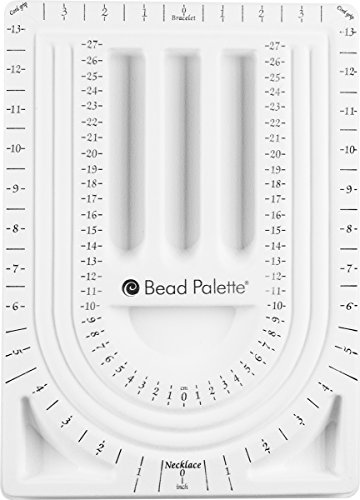
Small beads can be notoriously difficult to pick up, especially if you have arthritis or struggle with fine motor tasks. The Cousin DIY trays feature a design that gently funnels beads toward the center, making them much easier to capture with your knitting needle.
These are particularly effective when working with glass beads that have a tendency to slide around. The slightly textured surface helps keep the beads from skittering across the table if you accidentally bump your tray.
The size is perfect for a single-color section of a pattern. If your project uses a complex palette, you might find yourself needing several of these, but their low profile makes them easy to cluster together on a side table.
Beadalon Tuff Tray: Best for Intricate Work

The Tuff Tray is built for the knitter who demands precision. Its heavy-duty construction means it won’t slide around on your table, and the surface is specifically treated to reduce static electricity—a common enemy when working with tiny, lightweight beads.
If you are working with high-end materials like sterling silver or delicate crystal, you want a tray that won’t scratch or damage your supplies. This tray provides a stable, safe environment for your most expensive components.
The trade-off is the weight and the price point. This is an investment piece, but if you find yourself knitting intricate beaded lace regularly, the stability and quality are well worth the initial cost.
Sulyn Felt-Lined Trays: Best for Preventing Roll

There is nothing more frustrating than a bead rolling off your table and disappearing into the carpet fibers. The felt lining on these trays provides the perfect amount of friction to keep your beads exactly where you put them.
The soft surface is also much quieter than hard plastic. If you are a late-night knitter, you will appreciate the lack of clattering sounds every time you scoop up a new bead.
Be aware that the felt can attract lint or pet hair over time. Keep a small lint roller nearby to ensure your tray stays clean, especially if you are working with light-colored beads that might show debris.
Why Sorting Trays Improve Your Complex Knitting
Beaded knitting requires a high level of mental load. You are already tracking yarn-overs, decreases, and stitch counts; adding a bead sequence to that load increases the risk of error.
By organizing your beads into trays, you create a "pre-flight" check for your rows. When your beads are sorted, you can visually verify that you have the correct colors ready for the next repeat, which significantly reduces the need to undo your work.
Furthermore, a tidy workspace keeps your yarn clean. Beads scattered on a table can easily snag on delicate fibers like mohair or silk, leading to pilling or broken strands.
Key Features to Look for in Bead Sorting Trays
When shopping, prioritize the material and the shape. Hard plastics are durable, but felt or rubberized linings offer the best grip for tiny, slippery beads.
Consider the depth of the tray. Shallow trays make it easier to pick up beads with your needle, while deeper trays are better for storage and preventing spills.
Think about modularity. Can the trays stack? Do they fit into your existing project bag? The best tray is one that integrates seamlessly into your current knitting workflow.
How to Organize Your Pattern Beads Effectively
Don’t just dump your beads into the trays at random. I recommend organizing them in the order they appear in your chart, moving from left to right.
If your pattern uses multiple sizes or finishes, label your trays clearly. Even if you think you’ll remember which bead is which, a small piece of masking tape on the edge of the tray can save you from a costly mistake later.
Use your trays as a "staging area." Only pour out the number of beads you need for a single pattern repeat to keep your workspace from becoming overwhelmed.
Maintaining Your Sorting Trays for Longevity
Plastic trays can build up a static charge, which makes beads cling to the sides. A quick wipe with a dryer sheet or an anti-static cloth will neutralize this and make your work much smoother.

If you use felt-lined trays, store them in a dust-free environment when not in use. This prevents dust and stray yarn fibers from becoming embedded in the felt, which can make it harder to see your beads.
Finally, check the hinges and lids on your storage systems regularly. A small crack in a plastic hinge can lead to a massive spill, so replace or repair any damaged containers before they cause a disaster.
Integrating sorting trays into your knitting practice is a simple step that yields professional-grade results. By keeping your beads organized and accessible, you remove the friction that often prevents knitters from tackling more ambitious, embellished projects. Take the time to choose the system that fits your specific needs, and you will find that your beaded lace and colorwork become significantly more enjoyable. Happy knitting, and may your beads always stay exactly where you need them.