
6 Best Point Turners For Finishing Edges To Try
Achieve crisp, professional garment edges with these 6 top-rated point turners. Discover the best tools to improve your sewing precision and finish projects.
Achieving crisp, professional edges on your knitted garments often comes down to the small finishing tools you keep in your notions bag. While we spend hours perfecting our stitch tension and gauge, the final assembly is where a point turner earns its keep. These simple implements transform rounded, bulky corners into sharp, clean lines that elevate your handmade work. Here are six of the best options to help you master those final finishing touches.
Clover Bamboo Point Turner: The Essential Choice
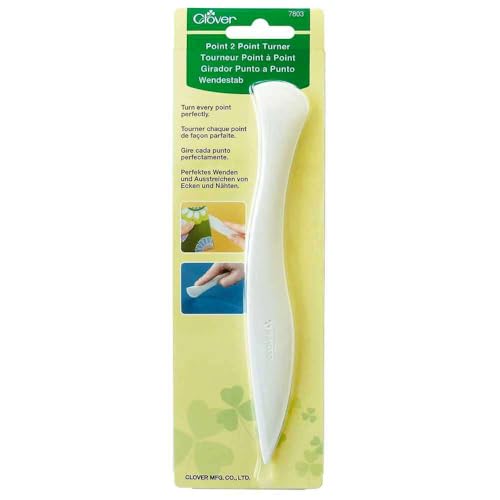

There is something inherently satisfying about using a wooden tool on natural fibers. The Clover Bamboo Point Turner offers a smooth, splinter-free surface that glides against delicate yarns without catching or pulling.
Because bamboo is naturally lightweight and warm to the touch, it feels more ergonomic during long finishing sessions. It provides enough rigidity to push out a corner, yet it possesses a subtle flexibility that prevents you from accidentally poking through your seam allowance.
If you are working with luxury fibers like alpaca or merino, this is your safest bet. The gentle texture of the bamboo ensures that you won’t leave unsightly marks or compress the loft of your yarn while nudging those corners into place.
Dritz Plastic Point Turner: Best Budget Option

For the knitter who is just starting out or keeping a secondary notions kit in their travel bag, the Dritz Plastic Point Turner is a reliable workhorse. It is inexpensive, widely available, and incredibly durable.
The plastic construction is inherently slick, which helps it slide into tight corners with minimal resistance. However, because it is rigid, you must exercise caution; it is easy to apply too much pressure and push the tip through a seam if you aren’t careful.
I recommend this for sturdier, plied wools or acrylic blends that can handle a bit of force. It is an excellent entry-level tool that proves you don’t need to break the bank to achieve a finished look.
Collins Sewing Gauge and Point Turner Tool

This tool is a clever two-in-one solution that saves space in your project bag. It combines a standard point turner with a built-in sewing gauge, making it perfect for measuring seam allowances before you finish your edges.
When you are sewing a knitted hem or attaching a facing, having a measurement guide right at your fingertips is invaluable. You can ensure your folded edge is perfectly consistent before you commit to the final stitch.
The point-turning end is well-shaped, offering a nice balance between a sharp tip and a wider base. It is a pragmatic choice for the detail-oriented knitter who values efficiency and precision in their workspace.
Hemline Point Turner for Precision Finishing

The Hemline point turner features a distinct shape that tapers to a finer point than most standard plastic options. This makes it ideal for complex, angular projects like geometric pillows or garments with sharp, decorative collars.
Precision is the name of the game here. If you find that your corners still look slightly rounded after using a thicker tool, the Hemline’s finer tip will reach into those tight spots to square them off completely.
Just remember that a sharper tool requires a lighter hand. Use it to gently coax the fabric into position rather than forcing it, especially if you are working with a delicate gauge.
Gingher Stiletto and Point Turner for Details

Gingher is a name synonymous with quality, and their stiletto-point turner hybrid is a professional-grade instrument. It is designed for those who demand absolute control during the finishing process.
The stiletto end is incredibly useful for guiding seams under a sewing machine foot or picking out a dropped stitch in a pinch. It is a versatile tool that bridges the gap between traditional knitting notions and sewing room staples.
Because of its metal construction, it is quite sharp and unforgiving. It is best reserved for experienced knitters who have developed the fine motor control needed to avoid snagging their yarn.
Dritz Ezy-Hem Gauge and Point Turner Combo

The Ezy-Hem is a classic for a reason, particularly when you are dealing with folded hems or complex facings. It allows you to press your hem to a specific width and then use the integrated point turner to finish the corners.
This tool is particularly helpful if you are working with superwash wools, which can sometimes be slippery and difficult to fold straight. The rigid edge provides a solid surface to press against, ensuring your hem stays exactly where you want it.
It is a must-have for knitters who incorporate fabric facings into their garments. It simplifies the transition from the knitting needles to the sewing machine, keeping your edges uniform and professional.
Why Point Turners Matter for Knitted Projects
A point turner is the difference between a project that looks "homemade" and one that looks "hand-crafted." Even the most beautiful cable work can be undermined by bulky, uneven corners on a pocket or a cardigan front.
When you finish an edge, the fabric is often doubled over, creating extra bulk that resists laying flat. A point turner allows you to redistribute that internal volume, ensuring the corner sits perfectly square.
Think of it as the final step in your blocking process. Just as you pin your project to shape, the point turner defines the structural boundaries of your work.
How to Use a Point Turner Without Snagging Yarn
The biggest fear for any knitter using a tool near their finished work is the dreaded snag. To avoid this, always insert the point turner into the seam allowance before you reach the very tip of the corner.
Work the tool slowly, using a gentle "wiggling" motion to ease the fabric outward. Never force the tip directly into the corner point, as this is where the pressure is most likely to break a yarn strand.
If you feel resistance, stop immediately. It is better to have a slightly rounded corner than a damaged, fuzzy, or broken stitch that requires visible repair.
Choosing Between Plastic and Wood Point Turners
Choosing between plastic and wood is largely a matter of the yarn fiber you are using. Plastic is slick and rigid, making it great for dense, synthetic, or heavy-weight yarns that need a firm nudge.
Wood, specifically bamboo, provides a bit of friction that can be beneficial when working with slippery fibers like silk or bamboo blends. It also feels warmer and less "industrial" in your hand.
- Plastic: Best for durability, slick surfaces, and heavy-duty seams.
- Wood/Bamboo: Best for delicate fibers, luxury yarns, and comfort during long sessions.
Ultimately, keep one of each in your notions bag to handle whatever fiber comes across your needles.
Essential Maintenance for Your Knitting Notions
Even simple tools like point turners benefit from a little care. If you are using a wooden turner, check it periodically for any small nicks or rough spots that could catch on your yarn.
If you find a rough patch, a quick buff with a very fine-grit piece of sandpaper will restore the surface to a smooth finish. For plastic tools, keep them away from high heat, as warping can ruin the precision of the tip.
Treat your tools with the same respect you give your needles, and they will help you finish your projects with confidence for years to come.
Investing in a quality point turner is a small but impactful way to improve the professionalism of your finished knitting projects. By selecting a tool that suits your preferred fiber and project style, you can ensure your hard work is showcased with clean, sharp edges. Remember to work slowly and with a gentle hand to protect your stitches from unnecessary wear. May your seams be straight and your corners perfectly square as you finish your next masterpiece.

