6 Best Embroidery Books For Learning Techniques
Master essential needlework with our top six embroidery books. These guides offer clear techniques and expert advice to help you refine your craft effectively.
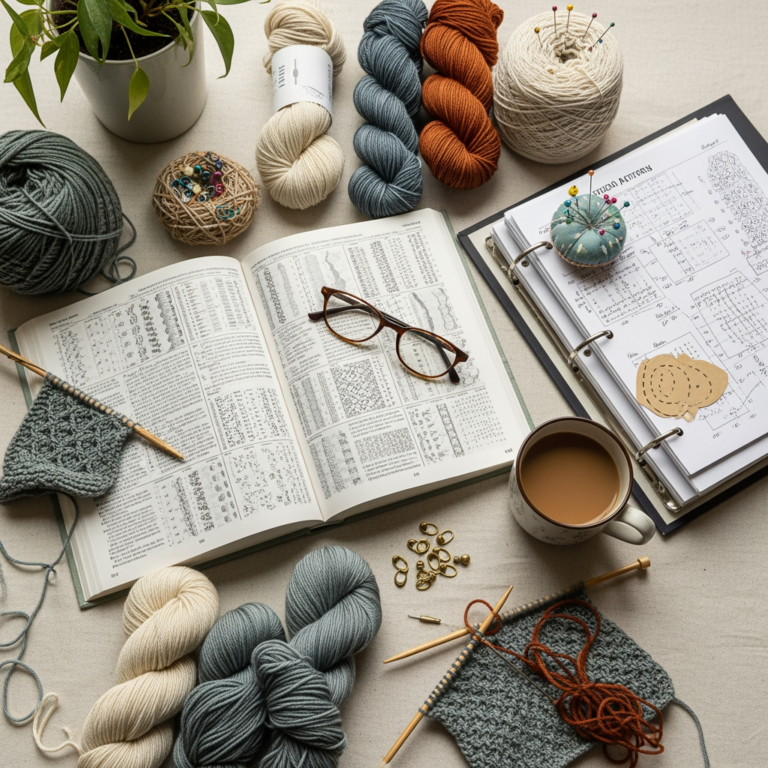
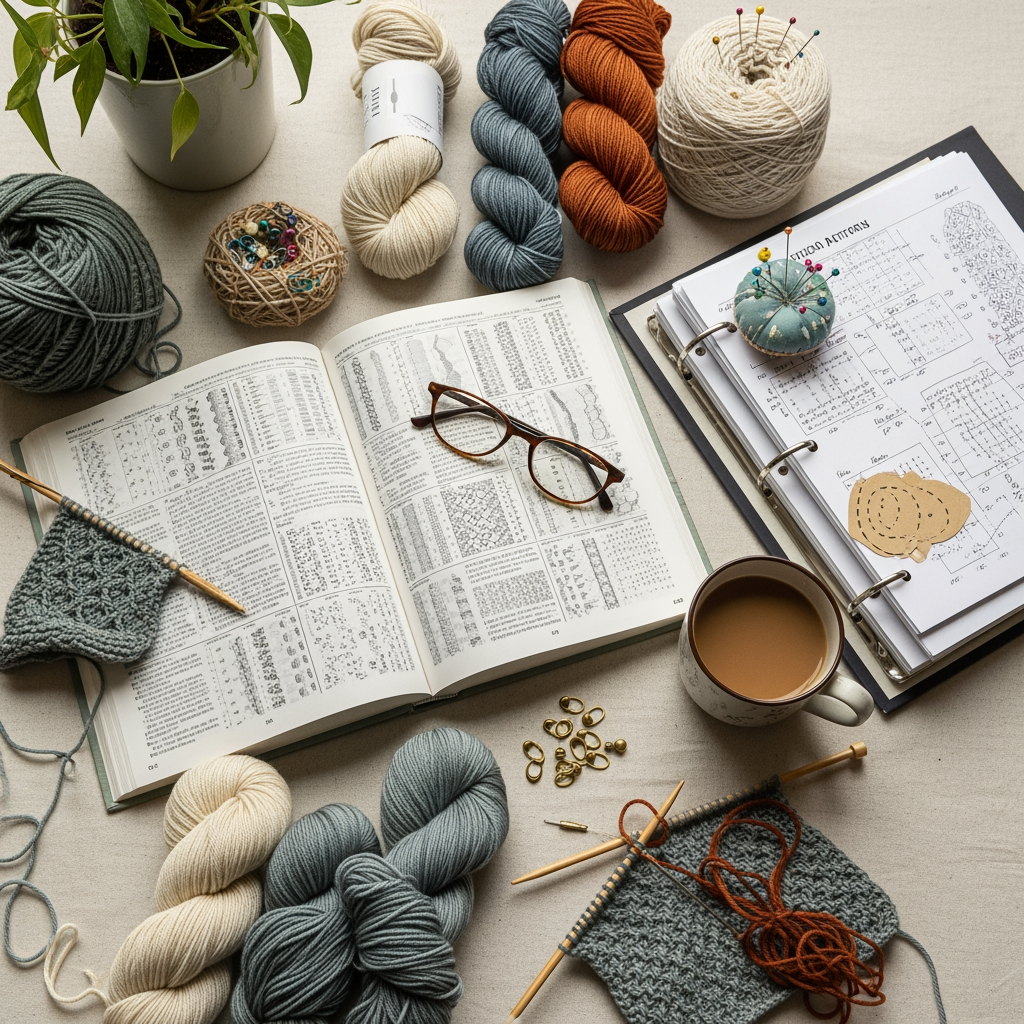
Embroidery and knitting are two sides of the same coin, both requiring patience, tactile sensitivity, and an eye for tension. Just as choosing the right wool weight determines the drape of a sweater, selecting the proper embroidery guide dictates the success of your surface embellishment. Whether you are adding a decorative motif to a hand-knitted cardigan or starting a standalone hoop project, these books provide the foundational wisdom you need. These six selections are the "go-to" references that sit on my workbench alongside my favorite circular needles.
DMC Embroidery: The Essential Stitch Guide Review


Think of this book as the "stitch dictionary" equivalent of a standard knitting pattern manual. It is the definitive reference for anyone who needs to quickly verify how to execute a specific stitch without searching through endless online tutorials.
The photography is crisp and clean, which is vital when you are trying to understand the mechanics of a stitch. If you’ve ever struggled to visualize how a cable cross works in knitting, you will appreciate how this book breaks down embroidery movements into clear, logical steps.
The trade-off here is that it focuses purely on technique rather than artistic composition. It won’t teach you how to design a masterpiece, but it will ensure your stitches are technically sound and consistent.
Rebecca Ringquist’s Embroidery Workshops Review

This book feels like sitting down with a mentor who encourages you to break the rules. Ringquist treats embroidery like a sketchbook, moving away from rigid patterns toward a more fluid, creative process.
For knitters who enjoy the improvisational nature of free-form knitting or color-pooling, this approach will feel right at home. It pushes you to treat your fabric as a canvas rather than a paint-by-numbers kit.
The downside is that it lacks the structured, step-by-step hand-holding found in more academic guides. If you prefer a clear path from A to B, you might find the artistic freedom here a bit daunting at first.
Sarah Homfray’s Essential Embroidery Guide Review

Homfray brings a level of precision that will satisfy the most meticulous lace knitter. Her explanations are incredibly thorough, covering everything from the way you hold your needle to the tension of your thread.
I find her focus on "tension" particularly relevant to fiber artists. Just as your gauge changes based on how tightly you hold your yarn, your embroidery will pucker if you don’t respect the relationship between thread weight and fabric weave.
This is a fantastic choice for those who want to master the "craft" of embroidery before diving into the "art." It is an investment in your technical foundation that will pay off for years.
Trish Burr’s Colour Confidence in Embroidery Review
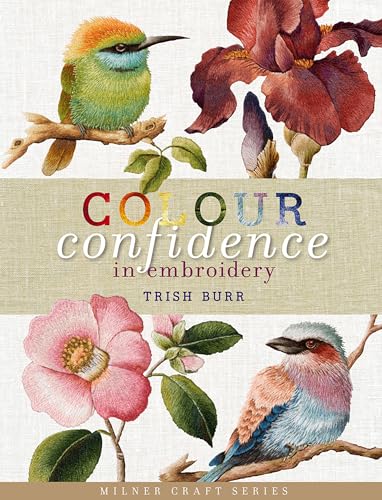
Trish Burr is a master of "needle painting," a technique that mimics the subtle color shifts found in high-end hand-dyed yarns. If you have ever spent hours choosing the perfect color palette for a stranded colorwork project, this book will resonate with you.
She teaches you how to blend threads to create depth and shadow, much like the way we use marling to soften transitions between yarn colors. It requires a high level of patience, but the results are painterly and stunning.
Be warned: this is not for the faint of heart or those looking for a quick finish. It is a slow, meditative process that demands the same focus as knitting a complex, multi-colored heirloom shawl.
Yumiko Higuchi’s Embroidery Designs Review

Higuchi’s style is clean, modern, and incredibly chic, making it perfect for customizing knitwear. Her designs often feature botanical motifs that look beautiful when stitched onto a plain stockinette sweater or a simple wool hat.
The patterns are simple enough that they won’t overwhelm your fabric, but detailed enough to look professional. It’s the perfect middle ground for someone who wants to add a personal touch to their knits without spending months on a single piece.
The primary limitation is that the book is more about the designs than the deep technical theory. You’ll want to have a secondary reference guide on hand if you get stuck on a specific stitch.
Mary Corbet’s Stitch Dictionary Book Review

Mary Corbet is a legend in the embroidery world, and her approach to teaching is as practical as it gets. Her dictionary is organized in a way that makes it easy to find exactly what you need when you’re in the middle of a project.
As someone who keeps a binder of stitch swatches for my knitting projects, I appreciate her systematic approach. She doesn’t just show you how to do it; she explains why certain stitches work better on specific fabrics.
This is arguably the most useful book for a beginner’s library. It is the "Encyclopedia of Knitting Stitches" for the embroidery world—an essential reference that you will pull off the shelf time and time again.
Essential Tools for Every New Embroidery Artist
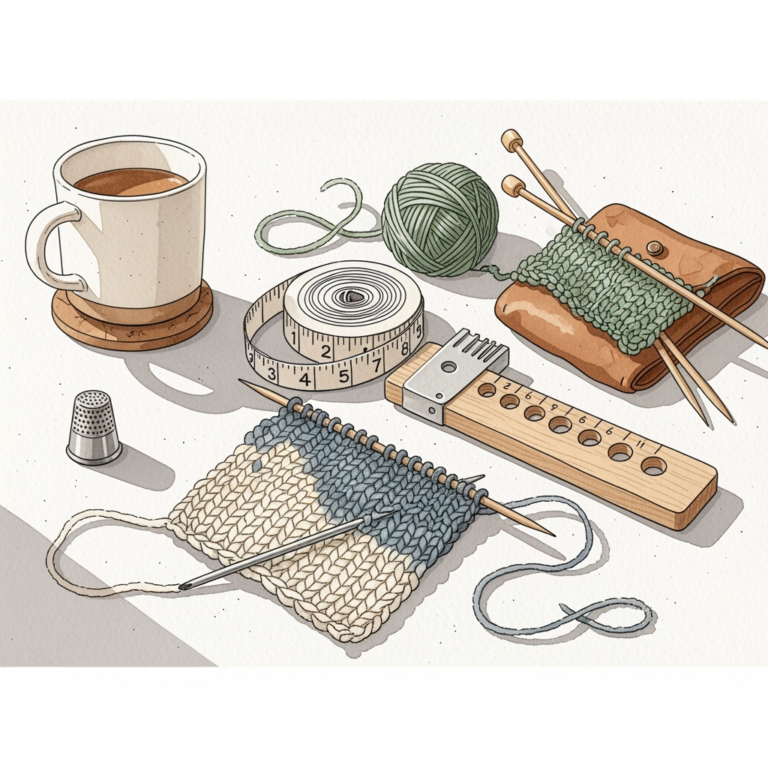
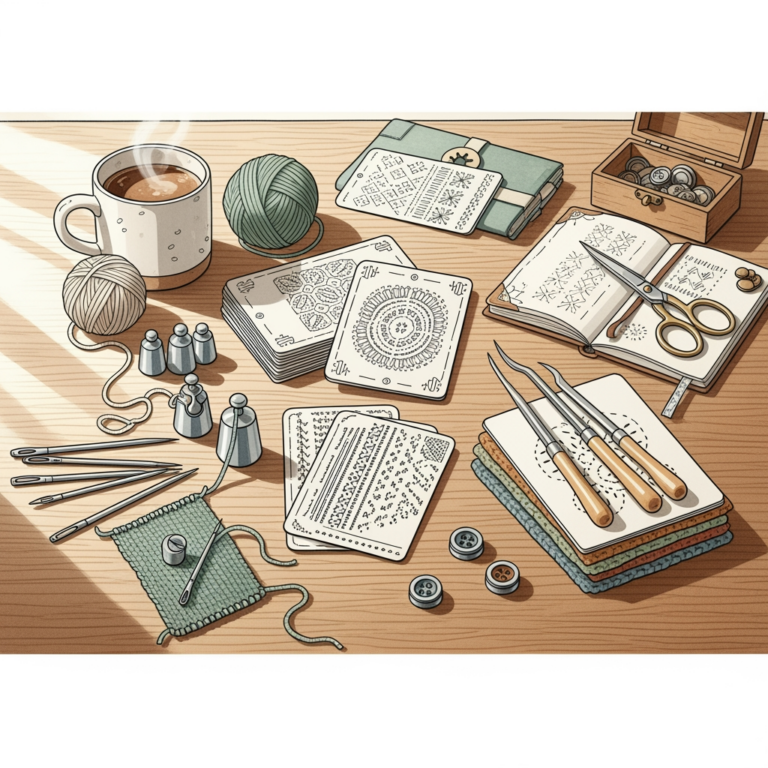
Just as you wouldn’t use a size 8 needle for a delicate lace project, you must choose your embroidery tools based on the specific task. You need a sharp, high-quality needle that won’t snag your fabric, and a hoop that holds your tension perfectly.
- Embroidery Hoops: Wooden hoops are classic, but plastic hoops with a "lip" often provide better grip for slippery fabrics.
- Needles: Use "crewel" needles for general embroidery; they have a sharp point and a long eye, perfect for multiple strands of floss.
- Scissors: Invest in a small, dedicated pair of embroidery scissors that are kept sharp; never use them to cut paper or yarn.
Don’t fall for the trap of buying cheap, multi-pack needles from big-box stores. A dull needle will fight your fabric, leading to fraying and frustration that will ruin the look of your stitches.
How to Choose the Best Fabric for Your Projects
The interaction between your thread and your fabric is just as critical as the interaction between yarn and needle size. If you are stitching onto a knitted piece, consider the "weight" of the knit; a bulky wool requires a thicker thread than a fine-gauge cotton.
- Cotton: A stable, even-weave cotton is the best starting point for learners.
- Linen: Beautiful and textured, but it can be unforgiving if your tension is inconsistent.
- Knits: If embroidering on knits, use a stabilizer on the back to prevent the fabric from stretching and distorting your design.
Always consider the "drape" of your base fabric. If you are embroidering a scarf, you want the final design to be as flexible as the knit itself, so avoid overly dense, heavy stitching.
Master These Five Basic Stitches to Get Started
You don’t need to know fifty stitches to create something beautiful. Focus on mastering these five, and you can tackle almost any design with confidence:
- Backstitch: The workhorse of embroidery, perfect for outlines and lettering.
- Running Stitch: Simple and quick, great for adding texture or decorative borders.
- Satin Stitch: Used for filling in shapes; it requires consistent tension to look smooth.
- French Knot: The ultimate texture stitch; practice these until you can make them uniform in size.
- Chain Stitch: Excellent for bold, continuous lines that have a lovely, braided appearance.
Treat these like the "knit, purl, yarn-over, k2tog, and ssk" of embroidery. Once these are in your muscle memory, you can combine them to create complex textures and patterns.
Troubleshooting Common Embroidery Design Errors
If your embroidery looks "loose" or "puckered," it is almost always a tension issue, much like when a knitter has uneven tension across a row. If the fabric is puckering, your stitches are likely too tight, or you haven’t used a stabilizer.
If your thread is fraying, check the eye of your needle. It might be too small for the number of strands you are using, causing the thread to rub and break as it passes through the fabric.
Finally, if your design feels "flat," try varying the number of strands in your needle to create depth. Just as we use different yarn plies to create structural interest, changing your thread count can turn a simple design into a dimensional piece of art.
Embroidery is a slow, rhythmic craft that rewards the same attention to detail that we bring to our knitting needles. By building your library with these foundational texts, you are giving yourself the tools to experiment and grow as a maker. Start with one, practice your tension, and don’t be afraid to make mistakes along the way. Your hands have already learned the language of fiber; now it is just time to translate that into a new, beautiful medium.