
7 Best Flick Cards For Opening Fiber Locks
Discover the top 7 flick cards for opening fiber locks. This guide evaluates performance, durability, and ease of use to help you achieve perfect results.
Preparing raw fleece is one of the most rewarding rituals in a knitter’s journey, transforming a matted lock into a cloud-like preparation ready for spinning. A high-quality flick carder acts as the bridge between a tangled raw fleece and the smooth, consistent yarn you dream of knitting into your next sweater. Choosing the right tool depends entirely on the fiber’s crimp, staple length, and your own hand comfort. This guide breaks down the best options to help you master the flicking process with confidence.
Strauch Finest Wool Flick Card: Best Overall
The Strauch flick carder is widely considered the gold standard for those who process a variety of fleece types, from fine Merino to long-staple Lincoln. Its reputation is built on the exceptional quality of the carding cloth, which grips fibers securely without tearing them.
When you are working with precious, expensive fleeces, you cannot afford to have your tool snap the fibers. The Strauch provides a consistent, smooth pull that aligns fibers beautifully, ensuring your eventual yarn has minimal slubs or weak spots.
The handle is designed for long sessions, which is vital if you are processing an entire sheep’s worth of fleece. While it is a higher initial investment, the durability of the teeth means you won’t be replacing this tool anytime soon.
Ashford Flick Carder: Best for Beginners
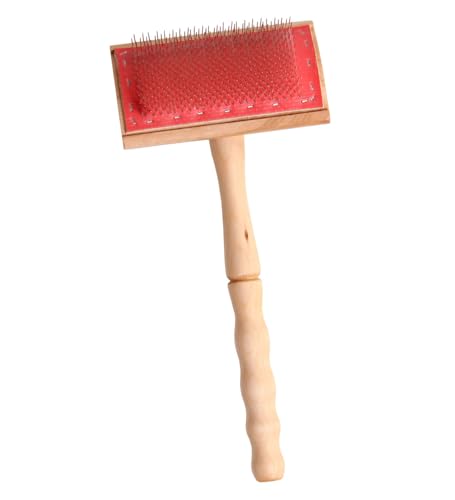

Ashford tools are ubiquitous in the fiber arts world for a reason: they are reliable, straightforward, and accessible. Their flick carder is an excellent starting point for someone who has just acquired their first raw fleece and isn’t quite ready for professional-grade equipment.
The design is simple, featuring a sturdy wooden handle and a standard tooth density that works well with most medium-staple wools. It removes vegetable matter efficiently without requiring a steep learning curve to master the flicking motion.
If you are just beginning your journey into processing raw wool, don’t overcomplicate your gear. This tool allows you to focus on developing your technique—learning how much pressure to apply—without the distraction of complex ergonomics or specialized features.
Howard Brush Flick Carder: Top Professional Pick
If you have spent years spinning your own yarn and are now looking for a tool that offers surgical precision, look toward Howard Brush. These are built for the fiber enthusiast who demands high-performance gear that stands up to heavy, daily use.
The carding cloth on a Howard Brush is remarkably dense and sharp, allowing for a thorough opening of the lock with very few passes. This saves you considerable time when you are prepping fiber for a large-scale project like a hand-knit heirloom blanket.
Because these tools are so efficient, they can be aggressive if used with too much force. They are best suited for the experienced hand who understands exactly how much tension to apply to prevent fiber breakage.
Schacht Flick Carder: Best Ergonomic Design

Processing raw fleece is physically demanding, and repetitive motion can lead to wrist fatigue if your tools aren’t well-balanced. The Schacht flick carder stands out because of its thoughtful, ergonomic handle shape that sits naturally in the palm.
This tool is a lifesaver for those who suffer from hand strain or arthritis but still want to enjoy the process of preparing their own spinning fiber. The weight distribution is excellent, allowing the tool to do the work rather than your wrist.
The teeth are set at an ideal angle to catch the tips of the locks and pull them open progressively. If you find yourself flicking locks for hours while listening to a podcast, this ergonomic design will make a noticeable difference in your comfort.
Brother Wool Carding Flick Card: Best Value Option

You don’t always need the most expensive equipment to achieve great results, especially when you are just experimenting with different breeds of wool. The Brother flick carder offers a functional, no-frills experience at a price point that is hard to beat.
While it may lack the refined finish of boutique tools, it performs the essential task of opening locks effectively. It is a perfect "backup" tool to keep in your spinning bag or to lend to a friend who is curious about the fiber arts.
If you are on a budget, this tool allows you to allocate more of your funds toward high-quality raw fleeces. It is a practical workhorse that proves you can achieve professional-looking results without a professional-sized budget.
Majacraft Flick Carder: Best for Heavy Fibers
When dealing with long-staple, coarser wools like Border Leicester or Wensleydale, you need a tool that can handle the extra drag. The Majacraft flick carder is built with a robust construction that doesn’t buckle under the pressure of thicker locks.
The teeth are set to handle larger volumes of fiber at once, which is essential when you are working with long, lustrous locks that tend to tangle easily. It provides the leverage needed to open these tough fibers without snapping them at the base.
If your knitting projects involve sturdy, rustic yarns that require a bit more "oomph" in the preparation stage, this is your go-to. It turns the chore of prepping heavy fiber into a much more manageable task.
Louet Flick Carder: Best for Versatile Blending

Louet is a brand that understands the holistic process of spinning, and their flick carder is designed to work seamlessly with their other blending tools. It is an incredibly versatile option for those who enjoy creating custom blends of fiber.
The tooth density is calibrated to be "middle of the road," meaning it handles both fine and medium wools with equal grace. If you like to experiment with mixing different breeds or adding a touch of silk to your wool, this tool handles the transition well.
This is the "Swiss Army Knife" of flick carders. If you want one tool that can handle whatever fiber happens to land on your desk, the Louet is an excellent, reliable choice that won’t let you down.
Understanding TPI: Why Card Density Matters Most
TPI stands for "teeth per inch," and it is the most critical technical specification to look for when buying a carder. A higher TPI means the teeth are packed closer together, which is necessary for fine, delicate fibers like Merino or Angora.
- High TPI (72-110+): Best for fine, short-staple fibers.
- Medium TPI (54-72): The "all-rounder" for most medium-staple sheep breeds.
- Low TPI (below 54): Best for coarse, long-staple fibers that would clog a denser carder.
Using a high-TPI carder on coarse wool will result in a "clogged" tool that pulls poorly and feels like you are dragging it through concrete. Conversely, using a low-TPI carder on fine wool will result in poorly opened locks that remain matted at the base.
How to Properly Flick Open Raw Fleece Locks
Flicking is a process of patience, not strength. Hold the base of the lock firmly in one hand and use the carder in the other to gently brush the tips of the fiber.
Start at the very ends of the lock, working in small increments toward the base. If you try to pull the carder through the entire length of the lock in one go, you will only create more tangles and break the fibers.
Always work in a rhythmic, sweeping motion away from your body. Once the tips are opened, move slightly further down the lock until you reach the base, leaving you with a soft, airy piece of fiber ready for the spinning wheel.
Essential Maintenance for Your Flick Carder Tool
Your flick carder is a precision instrument, and it requires regular cleaning to remain effective. After every session, use a "flicker" or a small stiff brush to remove the bits of wool and vegetable matter that get caught between the teeth.
Avoid leaving your carder in humid environments, as this can cause the wooden handle to warp and the metal teeth to rust. If you notice the teeth becoming dull or bent, it is time to consider a replacement, as damaged teeth will shred your fiber rather than opening it.
Store your tool in a dry place, ideally with a cover over the teeth if one was provided. By treating your flick carder with care, you ensure that every ounce of wool you process is prepped to the highest possible standard for your knitting projects.
Investing in a quality flick carder is a commitment to the quality of your finished hand-spun yarn. By understanding the relationship between TPI and fiber type, you can select a tool that makes the preparation process feel like a meditation rather than a chore. Take your time, experiment with your technique, and enjoy the tactile satisfaction of preparing your own fiber. Your knitting will thank you for the extra care you put into every single lock.
