
6 Best Fiber Blending Tools For Custom Batts
Discover the 6 best fiber blending tools for custom batts to elevate your spinning and felting projects. Read our expert guide and start creating yours today.
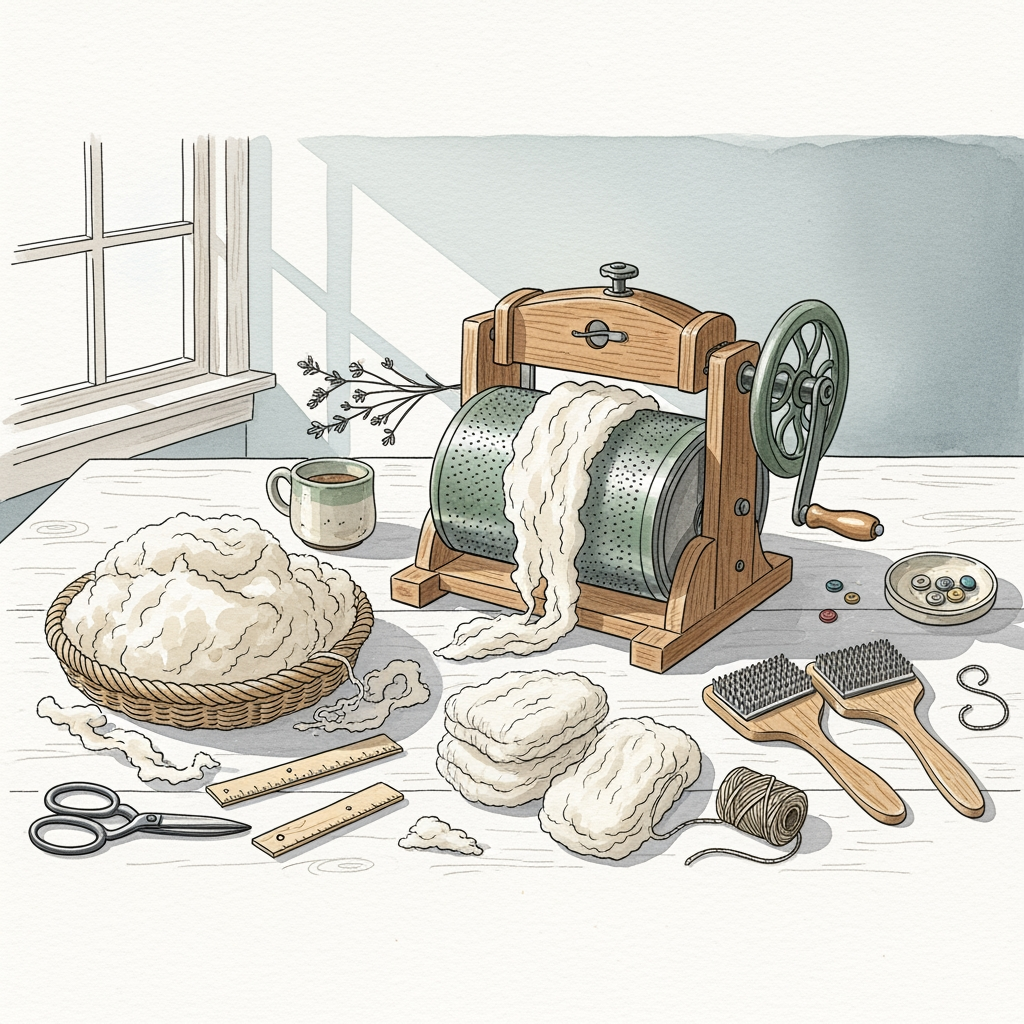
Creating custom batts allows fiber artists to control the color, texture, and loft of their handspun yarn with surgical precision. Whether blending luxury fibers like silk and cashmere or building rustic batts from raw fleece, the right equipment transforms a pile of disparate materials into a cohesive, spin-ready format. Selecting the perfect tool depends entirely on the volume of fiber handled and the specific aesthetic goals of the project. This guide breaks down the industry’s most reliable blending tools to help match the equipment to the intended spinning workflow.
Ashford Wide Drum Carder: Best Overall Value


The Ashford Wide Drum Carder stands as the workhorse of the spinning studio, offering a balanced combination of efficiency and accessibility. Its wider drum allows for the creation of larger batts, which reduces the number of joins needed when spinning long-yardage projects like sweaters or blankets.
For the production-focused spinner, the primary advantage is the speed at which a pile of loose, dyed roving can be converted into a uniform batt. The carding cloth is robust and well-suited for a wide range of wool breeds, from soft Merino to coarser longwools.
However, users should keep in mind that consistent maintenance is required to keep the gears moving smoothly. If the carder is left dusty or unlubricated, the turning resistance increases, which leads to uneven batt density. It is the ideal choice for those who want a reliable, professional-grade tool without moving into the highest price tier.
Strauch Finest Carder: The Ultimate Upgrade
The Strauch Finest Carder is engineered for those who demand precision, particularly when working with delicate or difficult-to-process fibers. With its signature “finest” carding cloth, it excels at blending fibers with very short staples, such as angora or fine alpaca, without tearing them.
The mechanical design provides an incredibly smooth turning action that minimizes physical strain during long blending sessions. Because the drum speed ratios are carefully calibrated, it creates exceptionally smooth, cloud-like batts that are a joy to draft while spinning.
This tool is a significant investment, but the durability of its components ensures it remains a permanent fixture in the studio for years. It is best suited for spinners who focus on high-end, luxury blends where fiber integrity is the highest priority.
Clemes & Clemes Elite: Most Versatile Choice
Clemes & Clemes is known for heirloom-quality construction, and the Elite drum carder is arguably the most versatile machine on the market. Its interchangeable drum system allows for different setups, enabling the user to switch between various carding densities depending on the fiber type.
The heavy-duty frame provides incredible stability, preventing the “skipping” or movement often felt with lighter models during heavy carding tasks. It handles everything from greasy, raw fleeces to slick synthetic add-ins like Angelina sparkle with ease.
While the price point is high, the ability to customize the drum setup makes it a one-time purchase that evolves with the spinner’s interests. It is perfect for those who want a single, heavy-duty machine that can tackle any project from raw fleece processing to complex art batts.
Howard Brush Blending Board: Best for Rolags

A blending board is an understated tool that offers a different approach to fiber preparation by creating airy, woolen-spun rolags instead of dense batts. The Howard Brush board is highly regarded for its sturdy construction and the quality of its carding cloth, which grips fibers just enough to align them without over-processing.
Using a blending board allows for precise color placement, making it a favorite for spinners who enjoy “painting” with fiber before it hits the wheel. The technique involves laying fibers in small, distinct sections, which results in beautifully gradient or marled yarns that are difficult to replicate on a drum carder.
This tool is exceptionally portable and takes up minimal space compared to a drum carder. It is the ideal solution for spinners who enjoy the tactile, slow process of hand-blending small, unique batches of fiber for one-of-a-kind projects.
Majacraft Fusion Engine: Best for Art Batts
The Majacraft Fusion Engine represents a modern leap forward in carding technology, designed specifically for the inclusion of non-fiber materials. If the goal is to incorporate silk scraps, sequins, locks, or thick slubs into a batt, this machine handles the chaos with remarkable control.
Its motor-driven nature allows for consistent tension and speed, which is crucial when blending disparate materials that might jam a manual drum carder. The ability to manipulate the batt thickness and composition with such high control makes it a standout for art yarn designers.
Because of the high level of engineering involved, it requires a steeper learning curve than a standard hand-cranked carder. However, for the serious art-batt maker, the creative freedom it provides is unmatched by any manual system.
Ashford Hand Carders: Top Budget-Friendly Pick

Hand carders remain the fundamental tool for any spinner, regardless of how many electric or drum carders they eventually acquire. The Ashford hand carders are designed with ergonomic handles that reduce wrist fatigue, a critical consideration when carding large amounts of fiber.
They are incredibly versatile and allow the spinner to have complete control over the “openness” of the fiber. By controlling the amount of passes, you can decide whether to maintain the crimp of the wool or fully straighten the fibers for a worsted-spun yarn.
While they are the most labor-intensive option, they offer a tactile connection to the fiber that machines cannot replicate. For those just starting their journey or those who only need to blend small amounts for color sampling, they are an essential, cost-effective addition to the kit.
How to Choose the Right Fiber Blending Tool
Choosing the right tool begins with an honest assessment of the projects you intend to spin. If you primarily spin raw, greasy fleeces, you need a machine with a sturdy frame and potentially a flicker attachment. Conversely, if you work exclusively with commercially processed top, a simpler, finer-tined carder will suffice.
Consider the physical space available in your studio. A drum carder is a permanent, heavy fixture, whereas hand carders or a blending board can be tucked away in a drawer when not in use.
- Project Volume: High volume necessitates a drum carder; low volume or sampling favors hand carders.
- Fiber Texture: Fine, short-staple fibers require fine TPI (tines per inch); coarse, long-staple fibers handle coarser cloth better.
- Physical Ergonomics: If you experience wrist pain, opt for a machine with a smooth gear ratio or a motorized option.
Understanding Carding Cloth TPI: What’s Best?
TPI, or “tines per inch,” is the measurement of how many wire teeth are packed into the carding cloth. A higher TPI means the teeth are closer together, which provides better separation for fine, short fibers like cashmere or fine Merino.
A lower TPI has fewer, often thicker teeth, which is better for coarse wools, curly locks, or heavy-duty blending. Using too high a TPI on coarse fiber can result in the fiber “floating” on top of the teeth, while using too low a TPI on fine fiber can result in clumpy, poorly blended batts.
Always match the TPI to the fiber type you use most frequently. Most manufacturers provide options, so if you are unsure, look for a “medium” TPI as a safe, all-purpose starting point.
Drum Carder vs. Blending Board vs. Hand Carders
These three tools are not interchangeable; they serve different spinning outcomes. A drum carder is for efficiency, creating large, uniform batts perfect for long-run spinning where consistency is the goal.
A blending board is for texture and color experimentation, producing long, fluffy rolags that are ideal for woolen spinning. Hand carders are the most versatile, allowing for deep control over fiber alignment, but they are significantly slower and physically demanding.
Understanding that you may eventually own more than one is common. Most advanced spinners keep a set of hand carders for quick touch-ups and a drum carder for large, production-style projects.
How to Clean and Maintain Your Drum Carder
Maintenance is the difference between a tool that lasts a lifetime and one that grinds to a halt. After every session, use a carding brush or a “dobby” to remove trapped fiber from the base of the teeth, as accumulated fiber will create resistance and uneven carding.
Periodically, check the drive belts for signs of wear or stretching, as loose belts will cause the drums to slip and produce “nests” of tangled fiber. A tiny drop of light machine oil on the bushings will keep the gears moving silently and efficiently.
Store your carder in a dust-free environment, preferably with a cover. Exposure to dust and humidity can cause the metal tines to rust or the wood to warp, significantly degrading the performance over time.
By selecting the right tool and maintaining it with care, the process of creating custom blends becomes an integral part of the creative joy of handspinning. Whether you choose the efficiency of a drum carder or the artistic freedom of a blending board, the investment in quality equipment directly translates to the quality of your finished handspun yarn. Happy blending, and may your batts always be light, lofty, and perfectly blended.
