7 Best Felted Fabric Shavers for Garment Care
Revive your wardrobe with our top 7 felted fabric shavers. Discover how to safely remove pilling and restore your garments to a like-new condition with ease.
There is nothing more heartbreaking than pulling your favorite hand-knit sweater out of storage only to find it covered in unsightly, rough pills. As someone who has spent decades working with everything from delicate lace-weight cashmere to sturdy Highland wool, I know that proper maintenance is just as important as the knitting process itself. Investing in a quality fabric shaver can extend the life of your garments by years, keeping them looking crisp and well-loved rather than worn out. Here is my curated guide to the best tools for keeping your hard work in showroom condition.
Philips Fabric Shaver: The Gold Standard Choice
When you’ve spent forty hours on a complex cable-knit sweater, you don’t want to trust it to a bargain-bin tool. The Philips Fabric Shaver is widely regarded as the industry benchmark for a reason: its precision-engineered blades handle even the most stubborn pills without snagging the delicate structure of your stitches.
The large shaving head covers significant surface area quickly, which is a lifesaver when you are tackling a full-length cardigan or a heavy blanket. It effectively draws in fuzz while keeping the shearing mechanism at a safe distance from the actual fabric surface.
However, keep in mind that this model is powerful. On very loose, airy mohair or brushed fibers, you must use a light touch to avoid catching the long, fluffy halo of the yarn.
Conair Fabric Shaver: Best Budget-Friendly Pick


If you’re looking for a reliable tool that won’t break the bank, the Conair model is a staple in many knitting bags. It is remarkably consistent, providing enough torque to remove pills from dense, plied wool yarns without stalling out.
It is particularly effective on tighter, high-twist yarns where the fibers are firmly locked into the stitch. Because it is so accessible, it’s a great "starter" tool for a beginner who is just beginning to understand how their different yarn choices—like superwash versus non-superwash—behave over time.
The trade-off here is the noise level and the battery consumption. It isn’t the quietest tool in the kit, so don’t plan on using it while watching a movie with your knitting group.
Gleener Fabric Shaver: Best for Delicate Knits
The Gleener is a unique beast because it doesn’t use electricity; it uses a series of interchangeable edges. This manual approach is a game-changer for those of us who are terrified of accidentally nicking a precious hand-dyed silk or fine alpaca blend.

Because you are the one providing the tension and the pressure, you have total control over the process. It comes with three different edges, allowing you to choose the "gentleness" level based on the fiber content and the weight of the fabric.
I recommend this for anyone who works primarily with hand-painted, luxury fibers. It requires a bit more elbow grease, but the peace of mind is well worth the extra effort.
Beautural Fabric Shaver: Top Rated Performance
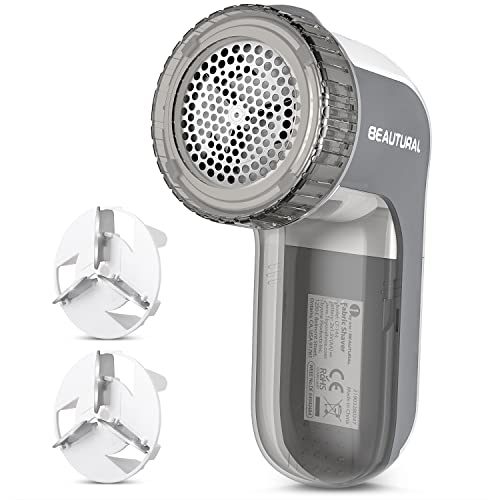
The Beautural model stands out because of its adjustable height settings, which are essential for the varying textures found in modern knitting. Whether you are working with a smooth, tightly-spun sock yarn or a rustic, single-ply wool, you can calibrate the shaver to protect the integrity of your stitches.
Its ergonomic design makes it comfortable to hold for long periods, which is vital if you are de-pilling a large stash of vintage sweaters. It also features a very effective collection bin that is easy to empty without making a mess.
Be aware that the performance remains best when the blades are kept clean. Like any tool, if you let the lint build up, the motor will struggle to maintain its speed.
Rowenta Fabric Shaver: Best for Heavy Woolens

For those heavy-duty projects, like a cabled Icelandic sweater or a dense felted bag, the Rowenta is a powerhouse. It is built to handle thick, robust fibers that would likely bog down a smaller, battery-operated shaver.
Its motor is exceptionally strong, meaning it can shave through dense pilling in a single pass. This is perfect for those who knit with rustic, high-lanolin wools that tend to pill more aggressively due to their natural texture.
Because it is so powerful, I advise extreme caution. Never use this on a delicate lace shawl or a fine gauge garment, as it is simply too aggressive for such thin, fragile structures.
Remington Fuzz-Away: The Portable Travel Option
We all know the frustration of arriving at a knitting retreat only to find our favorite sweater has developed pills during travel. The Remington Fuzz-Away is compact, lightweight, and perfect for tossing into your project bag for quick touch-ups on the go.
It is surprisingly effective for its size, handling basic pilling on standard acrylic or wool-blend garments with ease. While it won’t replace a full-sized unit for a deep clean, it is the best tool for maintaining your look while you are away from home.
Just remember to remove the batteries before packing it in your checked luggage to prevent it from accidentally turning on. It’s a simple, no-nonsense tool that does exactly what it promises.
SteamOne Fabric Shaver: Best Ergonomic Design

If you suffer from hand fatigue after long sessions of knitting, the SteamOne is a breath of fresh air. Its design is sleek and balanced, fitting naturally in the palm of your hand without requiring a tight, uncomfortable grip.
It is incredibly intuitive to use, and the build quality feels substantial rather than flimsy. This is a tool designed for someone who appreciates aesthetics as much as function, making it a lovely addition to a dedicated sewing or knitting room.
The performance is smooth and consistent, making it a great all-arounder for most common yarn types. It strikes a perfect balance between power and precision.
How to Safely De-pill Your Hand-Knit Garments
The secret to de-pilling is tension. When you work on a garment, lay it flat on a hard surface—a blocking mat or a clean tabletop is perfect—and ensure the fabric is pulled taut but not stretched out of shape.
Always move the shaver in a slow, circular motion rather than pressing down hard. If you press too firmly, you risk "eating" the fabric and creating a hole, especially if your gauge is loose or your yarn has a delicate ply.
Finally, always test a small, inconspicuous area first, like the inside of a hem or the underarm. If the shaver starts to pull at the yarn or creates a "chewed" look, stop immediately and try a gentler setting or a different tool.
Fiber Types: Which Fabrics Are Safe to Shave
Not all fibers are created equal, and some handle mechanical shaving much better than others. Understanding your fiber content is the first step in successful garment care:
- Superwash Wool: Generally very durable and handles shaving well.
- Cashmere/Mohair: Extremely delicate; use a manual tool or a sweater stone rather than an electric shaver.
- Acrylic/Synthetics: Tough and resistant, but prone to static; keep the shaver bin empty to prevent clumping.
- Silk/Plant Blends: These can be slippery and prone to snagging; exercise high caution and very light pressure.
Always check the yarn label or your project notes for fiber content before you begin. If you used a luxury fiber blend, err on the side of caution and use a manual comb instead of an electric device.

Essential Tips for Long-Lasting Knitwear Care
Prevention is always better than the cure. The best way to keep your knits pill-free is to wash them inside out and use a gentle, wool-specific detergent that doesn’t strip the natural oils from the fiber.
Avoid over-washing your hand-knits; often, a good airing out on a flat surface is enough to refresh the garment. When you do wash, always block the item back to its original dimensions to maintain the stitch structure.
Finally, store your garments folded rather than on hangers, as hanging can stretch out the shoulders and warp the fabric over time. Treat your knits with the same care you put into crafting them, and they will remain beautiful for decades.
Maintaining your hand-knits is a labor of love that honors the time and skill you invested in every stitch. By choosing the right tool for your specific fibers and using a gentle, patient technique, you can keep your wardrobe looking pristine for years to come. Remember that every garment has its own personality, so take your time, test your tools, and enjoy the process of keeping your favorite pieces in top condition. Happy knitting, and may your sweaters remain as pill-free as the day you cast them off.