7 Best Gift Sets for Felting Enthusiasts to Try
Discover the 7 best felting gift sets for all skill levels. This guide highlights top-rated kits featuring high-quality wool, tools, and easy instructions.
Needle felting is a meditative, tactile craft that shares the same fiber-focused DNA as knitting, making it a perfect parallel hobby for any yarn lover. Whether you are looking to create sculptural accents for your sweaters or simply want to explore fiber in a non-woven format, the right starter kit makes all the difference. This guide breaks down the best sets on the market to help you transition your skills from needles and hooks to felting pads and barbs. Here are seven top-tier options to help you begin your journey into the world of three-dimensional wool art.
Clover Needle Felting Tool: The Best Starter Pick


If you have ever struggled with the repetitive motion of holding a single, tiny needle, this tool will feel like a revelation. The Clover tool features a comfortable, pen-like grip that houses three needles, allowing you to cover more surface area in half the time.
This is the gold standard for beginners because it mimics the ergonomic comfort of a well-balanced knitting needle. When you are working on a dense project, the spring-loaded mechanism reduces hand fatigue significantly.
The primary trade-off is that it is designed for larger, flatter shapes rather than fine, sculptural details. If you are trying to sculpt a tiny animal ear, you will likely need to swap back to a single needle to avoid over-felting the surrounding fibers.
Dimensions Needle Felting Craft Kit: Best for Gifts

Dimensions kits are the "all-in-one" solution for those who want a finished project without the stress of sourcing materials separately. They provide everything from the foam block to the specific wool colors needed for a clean, professional result.
These kits are excellent for knitters who are used to following a clear, step-by-step pattern. Because the instructions are highly visual, they remove the guesswork often associated with free-form sculpting.
Keep in mind that these kits are project-specific. Once you finish the kit, you will still need to invest in your own stash of wool roving and spare needles to continue your practice.
Hamanaka Felt Wool Set: Best for Color Variety

Hamanaka wool is the luxury yarn of the felting world, prized for its incredibly soft texture and consistent fiber length. This set is essential if you are looking to create intricate, multi-colored designs that require precise blending.
Unlike standard craft-store wool that can be coarse or contain vegetable matter, Hamanaka fibers are processed to be exceptionally smooth. This makes them behave similarly to high-quality Merino wool, allowing for a seamless finish on your sculptures.
The color palettes are curated by designers, ensuring that every shade complements the others. It is the perfect investment for a crafter who values color theory and fiber quality above all else.
Woolbuddy Felting Kit: Best for Animal Sculptures

Woolbuddy kits are specifically engineered for those who want to jump straight into making charming, character-based figures. The wool included is slightly coarser, which actually helps the shapes hold their structure much more effectively than softer, finer fibers.
If you are a knitter who enjoys making toys or amigurumi, this will feel like a natural extension of your craft. The kit emphasizes the "basic shapes" approach, which is the same logic used to assemble stuffed knitted pieces.
Don’t let the simplicity fool you; the density of the wool is the real star here. It felts quickly and firmly, meaning your finished figures will be durable enough to handle or display without losing their shape.
Sarafina Fiber Art Kits: Best for Advanced Detail
Sarafina kits are for the knitter who has mastered the basics and is ready to tackle complex, realistic textures. These kits focus on advanced techniques like armature building and fine-detail surface felting.
You will find that these kits require a higher level of patience and dexterity, much like working with fine-gauge lace or intarsia. The inclusion of wire armatures allows you to create poseable figures, adding a level of sophistication that basic kits simply cannot offer.
This is not a "quick project" kit. It is a curriculum for those who want to treat felting as a serious fine art, demanding the same level of focus as a challenging stranded colorwork project.
Bucilla Needle Felting Set: Best Budget Option

Bucilla sets are the perfect entry point for those who are curious about felting but don’t want a significant financial commitment. They are widely available and provide a functional, no-frills experience that gets the job done.
These kits are ideal for testing whether you enjoy the tactile nature of felting before you invest in high-end tools or expensive wool. They are also great for younger crafters or those who want a low-stakes project to do while listening to an audiobook.
The needles included are often basic, so expect to replace them sooner than you would with professional-grade tools. Consider buying a separate, higher-quality needle if you find the included ones are dragging through the wool.
Galt Toys First Felting Kit: Best for Beginners

Galt Toys has perfected the art of the introductory kit, focusing on simple projects that yield immediate, satisfying results. It is the best choice if you are feeling intimidated by the prospect of "sculpting" from scratch.
The projects are designed to be forgiving, meaning that if your tension is a bit off, the final piece will still look charming and intentional. It removes the pressure of perfectionism, which is often the biggest barrier for new fiber artists.
This is a great kit to pick up if you want to teach a child or a friend the basics of the craft. It provides a structured, positive experience that builds confidence before moving on to more complex, free-form work.
Choosing the Right Felting Needles for Your Project
Felting needles come in different gauges, and choosing the right one is just as important as matching your needle size to your yarn weight. Higher gauge numbers represent thinner needles, which are used for fine detail and finishing work.
Conversely, lower gauge numbers are thicker needles with deeper barbs, designed for rapid felting and joining large pieces of wool together. Using a thick needle for fine detail will leave unsightly holes in your work, much like using a bulky needle on a lace-weight project.
Always keep a variety of gauges on hand. A good rule of thumb is to start with a medium gauge (36 or 38) for the bulk of your work, and switch to a fine gauge (40 or 42) for smoothing out the surface.
Understanding Wool Roving vs. Batts for Felting
In the world of felting, the preparation of the wool—roving versus batts—changes how the fiber behaves under the needle. Roving is wool that has been combed into a long, continuous rope, with all fibers aligned in the same direction.
Batts, on the other hand, are carded into a dense, fluffy sheet where the fibers are jumbled in every direction. Batts are generally much easier for beginners to use because they felt faster and provide a more stable base for 3D sculptures.
Roving is better suited for surface details, wrapping, or adding hair and texture to your projects. Think of batts as your "fabric" and roving as your "embroidery thread" for adding final, artistic flourishes.
Essential Safety Tips for Needle Felting Success
Needle felting is a process that requires sharp, barbed needles, and because you are holding the work in your hand, safety is paramount. The most important rule is to always keep your fingers clear of the needle’s path.
If you are working on a small piece, use a pair of long-nosed pliers or a dedicated finger guard to hold the wool in place. Never try to "catch" the needle if it falls; let it hit the floor to avoid accidental stabs.
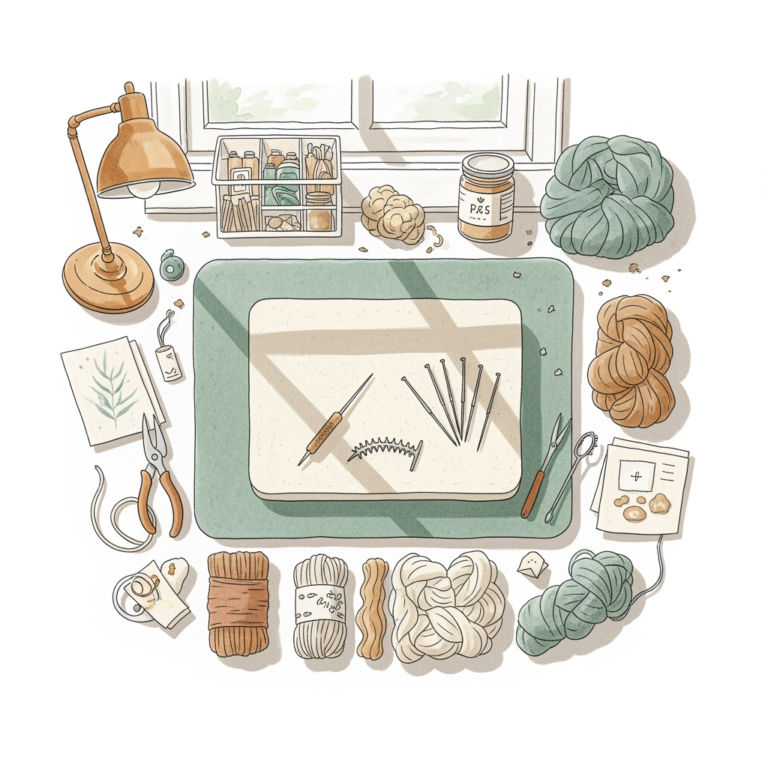
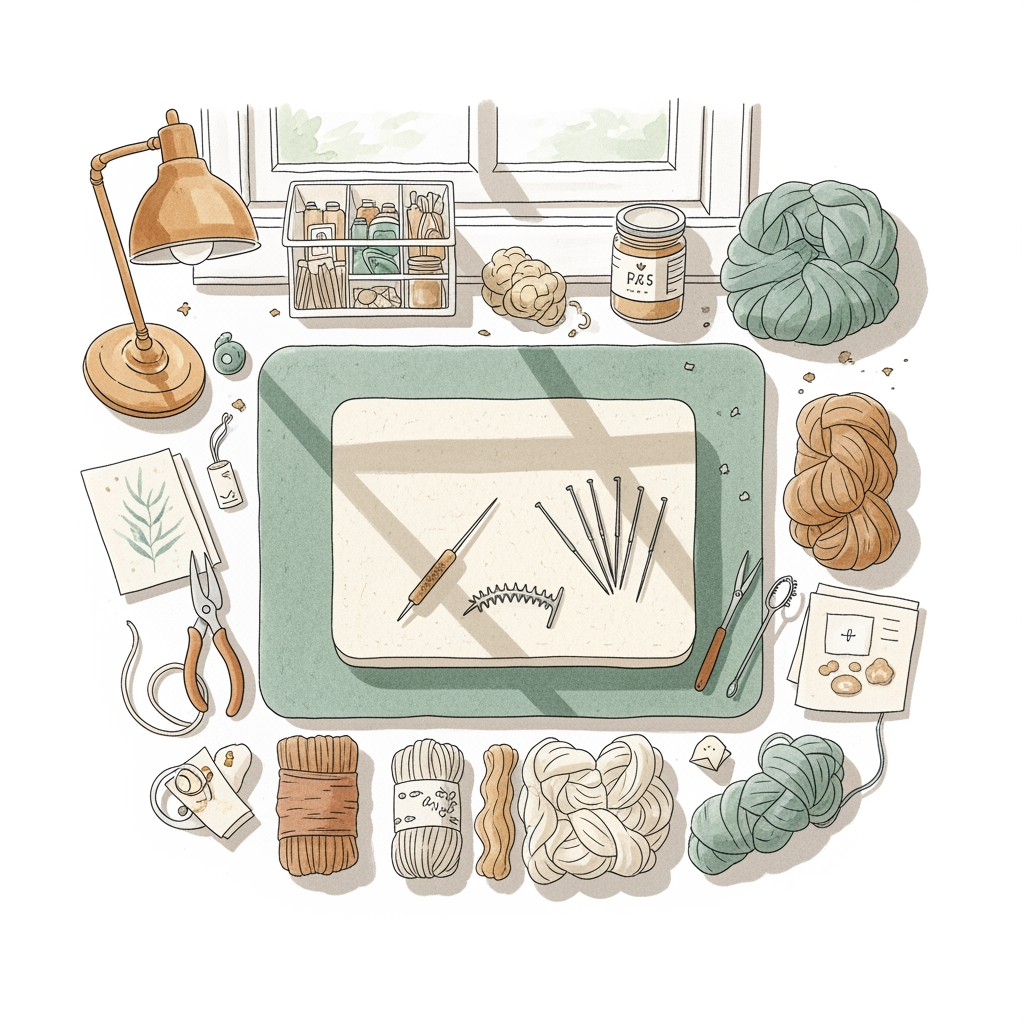
Lastly, always felt on a dense foam pad or a brush mat. A hard surface will break your needles instantly and can damage your tabletop, so ensure your work surface provides enough "give" for the needle to pass through the wool completely.
Needle felting is a rewarding journey that offers a unique, sculptural perspective on the fiber arts we all love. By starting with the right tools and understanding the nuances of your materials, you will quickly find yourself creating beautiful, tactile art. Don’t be afraid to experiment with different wool types and needle gauges as your confidence grows. Happy crafting, and may your projects be as firm and detailed as you envision.