6 Best Notebook Planners For Organizing Pattern Notes
Discover the top 6 notebook planners for tracking pattern notes. Learn how these curated tools help you organize designs, measurements, and project details.
Finding the right notebook is as critical to a successful knitting project as choosing the perfect yarn and needle combination. Whether you are tracking complex lace repeats or simply logging your yardage, a dedicated planner keeps your creative process from unraveling. The right system transforms a pile of disparate scraps and pattern printouts into a cohesive, professional archive. These six notebooks represent the best tools to help you master your craft and record your fiber journey.
Moleskine Classic Notebook: Best For Daily Notes


The Moleskine Classic is the reliable workhorse of the stationery world, much like a solid, worsted-weight wool that never lets you down. Its minimalist layout is ideal for knitters who prefer a blank canvas for quick sketches of garment silhouettes or jotting down row counts on the go.
Because it lacks pre-printed grids, you have total freedom to write in whatever format suits your current project. If you are working on a simple garter stitch scarf, you can easily track your progress without feeling constrained by rigid boxes.
However, the paper weight can be a limitation if you enjoy using heavy fountain pens or markers that bleed. If you tend to use bold ink to highlight your row counts, you might find some "ghosting" on the reverse side of the page.

Bottom line: Choose this if you value simplicity and portability over structured organizational prompts.
Leuchtturm1917 A5: Best For Bullet Journaling
The Leuchtturm1917 is a favorite among knitters who treat their project notes like a structured data set. With its numbered pages and pre-printed table of contents, it is perfect for keeping an index of every sweater, sock, and shawl you have ever completed.
The dot-grid paper is the real secret weapon here. It provides enough structure to draw out colorwork charts or cable repeats without the visual clutter of standard graph paper.
You will appreciate the two ribbon bookmarks, which allow you to keep one page open to your current pattern and another to your "stashed yarn" inventory list. It is a highly functional tool that encourages a more disciplined approach to documentation.
Bottom line: This is the gold standard for organized knitters who want to track multiple projects simultaneously.
The Knitting Journal: Best Dedicated Organizer
Unlike generic notebooks, a dedicated knitting journal is designed with the specific anatomy of a project in mind. These journals often include pre-formatted sections for yarn fiber content, needle size, and gauge measurements, ensuring you never forget the details of a project six months after casting off.
Using a specialized journal removes the mental load of remembering what to record. It prompts you to note the dye lot of your yarn or the specific blocking method used, which is vital if you ever need to replicate a garment.
The trade-off is the lack of flexibility; if you want to paste in a massive yarn swatch or a full-page schematic, you might find the fixed layout a bit restrictive. It is built for the data-driven knitter, not the scrapbooker.
Bottom line: Buy this if you want pre-built templates that ensure you capture every technical detail of your work.
Erin Condren LifePlanner: Best For Project Plans

The Erin Condren LifePlanner is a robust system for knitters who balance their hobby with a busy calendar. Its vertical layout allows you to treat your knitting time as a scheduled appointment, which is essential for meeting deadlines on gift knitting or KAL (Knit-Along) commitments.
The high-quality paper handles various pens and highlighters beautifully, making it a joy to use for color-coding different yarn weights or project phases. You can easily dedicate columns to "To-Knit," "In-Progress," and "Finished" categories.

Be aware that this planner is quite large and heavy. It is not something you will want to toss into a small project bag, so it functions best as a "command center" on your desk rather than a travel companion.
Bottom line: Ideal for the busy maker who needs to integrate knitting goals into their daily life management.
Hobonichi Techo Planner: Best For Detailed Logs
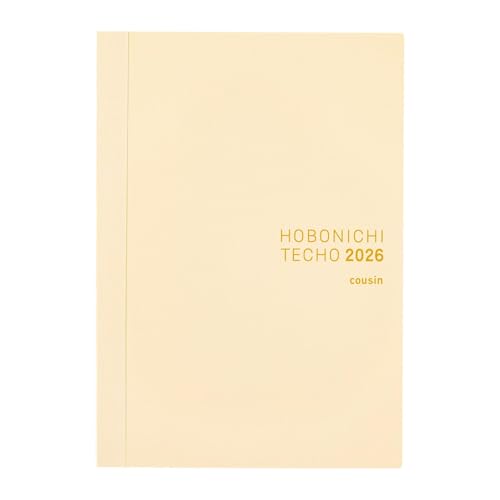
The Hobonichi Techo uses Tomoe River paper, which is incredibly thin yet remarkably resilient. This allows you to fit a massive amount of information—notes, sketches, and even small yarn snippets—into a compact, portable book that won’t weigh down your knitting bag.
The daily page format is perfect for "knitting diary" entries. You can record how many rows you completed, how your hands felt, or any modifications you made to the pattern on the fly.
The thin paper does require a bit of care, as it can crinkle if you use too much glue or heavy tape. However, for the knitter who wants to document the experience of knitting as much as the technical specs, it is unmatched.
Bottom line: Perfect for sentimental knitters who want to document their daily knitting progress in a compact space.
Rhodia Goalbook: Best For Custom Pattern Charts

The Rhodia Goalbook is a hybrid, offering both the structure of a planner and the freedom of a notebook. It is particularly excellent for knitters who need to draft their own charts for stranded colorwork or complex lace motifs.
The paper quality is legendary among fountain pen users, meaning your ink will stay crisp and vibrant without feathering. When you are drawing out a 12-stitch repeat, you want a surface that provides clean, sharp lines every time.
It also features undated monthly and weekly spreads, which you can repurpose to track your "stash-busting" goals or yarn acquisition history. It is a versatile tool that adapts to your evolving needs as a knitter.
Bottom line: The best choice for designers and chart-makers who need premium paper for detailed work.
Why Knitters Need A Dedicated Project Notebook
A project notebook is more than just paper; it is a historical record of your growth as a maker. Over time, you will find that your gauge changes, your taste in fibers shifts, and your technical skills expand.
Without a record, you are forced to rely on memory, which is notoriously unreliable when it comes to needle sizes or yarn quantities. If you find a pattern you loved three years ago, having the exact needle size and yarn brand written down saves you from the frustration of "re-learning" the project.
It also helps you identify patterns in your own knitting. You might notice that you consistently struggle with the same type of bind-off, or that you always run out of yarn on sleeve sections. A notebook turns these struggles into actionable data.
Bottom line: A notebook prevents the repetition of past mistakes and celebrates your progress.
How To Track Your Gauge And Needle Changes
Your gauge is the bridge between the designer’s intent and your finished garment. Always record your gauge before and after blocking, as some fibers—like superwash wool or alpaca—tend to grow significantly once introduced to water.
When recording needle changes, note the material of the needle as well as the size. A 4.00mm bamboo needle will often produce a different gauge than a 4.00mm nickel-plated needle because of the difference in "grip" and tension.
Include the following in your gauge notes:
- Needle material (wood, metal, plastic)
- Stitches and rows per 4 inches/10cm
- The specific blocking method (steam vs. wet soak)
- The yarn weight and ply
Bottom line: Treat your gauge swatch like a scientific experiment to ensure your garment actually fits.
Essential Data To Record For Every New Pattern
For every project, create a "header" in your notebook that captures the vital statistics. This ensures that if you ever want to make the same pattern again, or if you need to buy more yarn to complete a project, you have the information ready.
At a minimum, you should document:
- Pattern name and designer
- Yarn brand, colorway, and dye lot
- Total yardage used (or weight in grams)
- Needle size and cable length
- Any modifications made to the pattern instructions
Bottom line: Documentation is insurance for your time and expensive materials.
Tips For Organizing Your Knitting Pattern Archive
Organizing your patterns is just as important as organizing your yarn. Whether you use a digital app or a physical binder, keep your "to-knit" list separate from your "in-progress" notes to avoid mental clutter.
Use a tagging system for your archive. Tag patterns by fiber weight (fingering, DK, worsted) or project type (socks, sweaters, accessories). This makes it much easier to find a project when you suddenly find yourself with two skeins of DK-weight wool and no plan.
Don’t be afraid to purge your archive. If you haven’t looked at a pattern in five years, it is okay to let it go and make room for new projects that truly excite you.
Bottom line: A well-curated archive keeps your inspiration flowing and prevents "project paralysis."
Investing in a quality notebook is the first step toward becoming a more intentional and successful knitter. By tracking your gauge, documenting your modifications, and archiving your favorite patterns, you turn every project into a lesson that improves your future work. Choose the tool that best fits your personal style, and watch as your knitting practice becomes more organized and rewarding. Happy knitting, and may your stitches always remain consistent.