6 Best Archival Fine-Liner Pens For Journaling
Discover the 6 best archival fine-liner pens for journaling that ensure your writing stays crisp and fade-free. Read our expert reviews to find your perfect fit.
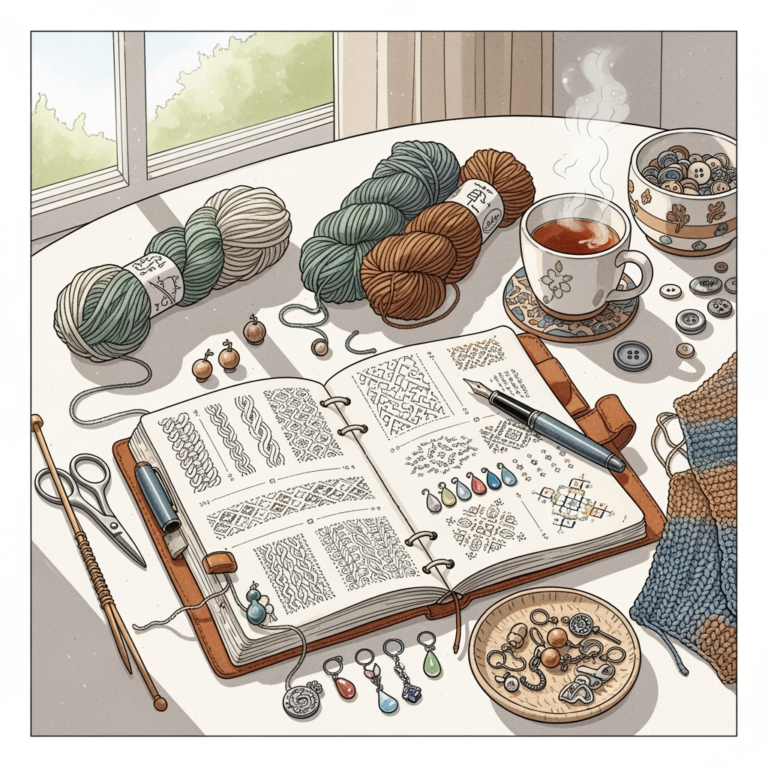
Just as a well-kept knitting journal preserves the history of tension adjustments and yarn substitutions, the right archival fine-liner ensures those notes remain legible for decades. Choosing a pen requires the same attention to detail as selecting a needle material; just as bamboo provides grip for slippery silk, certain pens provide the precision needed for complex pattern drafting. Archival-grade ink acts like a colorfast dye, resisting the passage of time and accidental spills. These tools are the essential companions for documenting projects, mapping out lace motifs, or sketching schematic diagrams that stand the test of time.
Sakura Pigma Micron: The Everyday Archival Workhorse
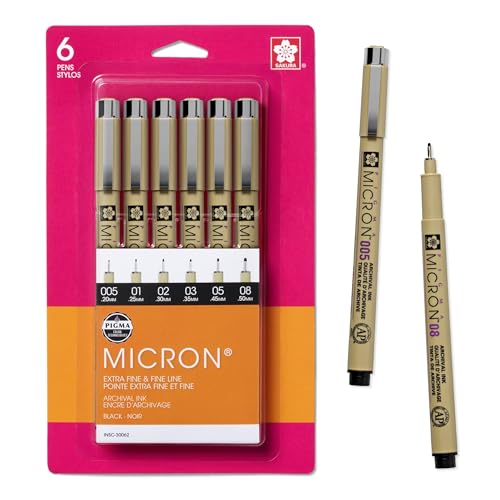

The Sakura Pigma Micron serves as the industry standard, much like a reliable set of nickel-plated circular needles. It is the go-to tool for documenting gauge swatches and structural notes because the ink flows consistently without skipping or feathering on most journal papers.
These pens feature a wide variety of nib sizes, allowing for fine-line detail work on complex stranded colorwork charts or thicker lines for headings. The ink is chemically stable, meaning it will not bleed through thin journal pages, provided a reasonable paper weight is used.
Keep in mind that the nibs are delicate. If you apply heavy pressure, as one might when working with stubborn, high-twist wool, the tip will fray or soften prematurely. Treat the pen with a light touch to ensure the line remains crisp through the completion of a long-term project.
Staedtler Pigment Liner: Best for Technical Drawing

For those who prioritize precision in their schematics, the Staedtler Pigment Liner offers exceptional control. Its firm, metal-clad nib provides the stability needed for drawing exact dimensions or drafting custom garment patterns.
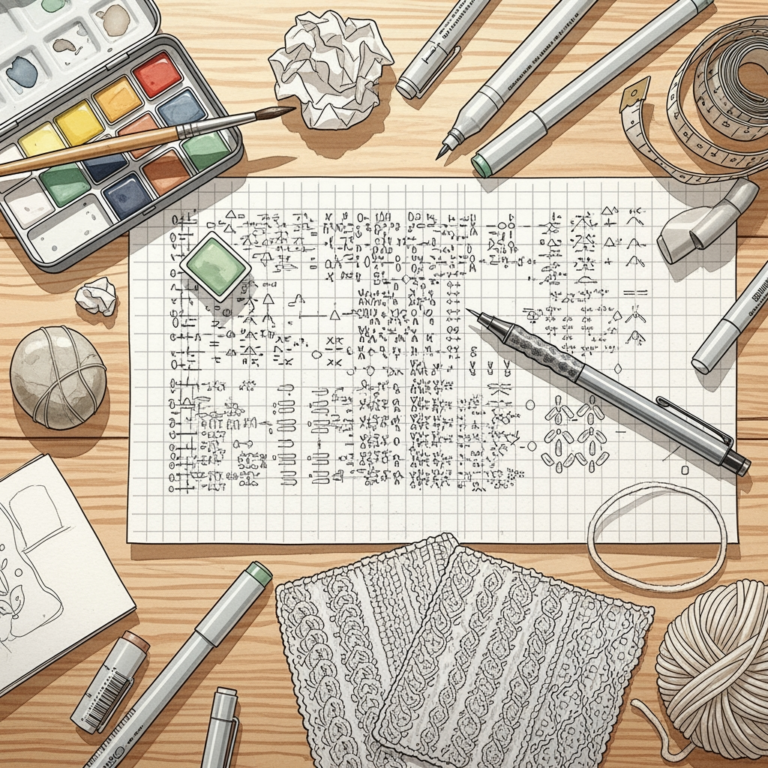
This pen excels in high-contrast situations, such as marking up printed grids or graph paper used for charting cables. The ink dries nearly instantly, which is vital for left-handed knitters or those who tend to rest their palm against the page while writing out row-by-row instructions.
Because the barrel is weighted similarly to a high-quality aluminum knitting needle, it feels balanced in the hand. While the ink is incredibly durable, it is best reserved for formal record-keeping rather than quick, messy notes, as the technical tip can be sensitive to aggressive use.
Copic Multiliner SP: The Best Refillable Option
The Copic Multiliner SP is an investment piece, comparable to purchasing a set of interchangeable wooden needles with a lifetime guarantee. Its aluminum body provides a solid, professional feel that stands up to years of frequent use.
Beyond the durable housing, these pens are both refillable and feature replaceable nibs. This sustainability factor is highly attractive for those who maintain detailed journals for hundreds of projects and prefer to maintain a consistent writing tool rather than constantly discarding plastic components.
While the upfront cost is higher, the long-term utility is significant. Be aware that the replacement process requires a steady hand, similar to the precision needed for grafting a kitchener stitch. It is the most economical choice for the dedicated, high-volume project logger.
Faber-Castell Pitt Artist Pen: Top India Ink Pick
The Faber-Castell Pitt Artist Pen utilizes India ink, which offers a deep, permanent pigment that is virtually indistinguishable from professional illustration markers. It is the ideal choice for those who want their journal entries to look as refined as a vintage knitting manual.
Because India ink is waterproof and pH-neutral, it won’t fade or yellow over time, even if the journal is stored in a humid environment or near natural light. This makes it an excellent choice for recording heritage patterns or family knitting lore that you intend to pass down.
Note that these pens require a moment to set on glossy or coated paper surfaces. If you are using a smooth, high-gsm notebook often found in premium planners, give the ink a few seconds to stabilize before turning the page to prevent smudging.
Uni Pin Fine Line: Most Fade & Water Resistant
The Uni Pin Fine Line stands out for its extreme ink durability, making it the most reliable option for journals that might travel in a project bag. If your journal frequently lives alongside sharp cable needles and stray stitch markers, this pen is built to survive.
The ink exhibits remarkable resistance to water and light, ensuring that your precious notes on fiber content and dye lot numbers remain readable even if a water bottle leaks in your knitting bag. The nibs are exceptionally robust, holding their shape better under pressure than most fiber-tipped pens.
They are available in a range of sizes, including a unique “brush” tip for those who like to use calligraphy to label their yarn storage or project dividers. It is a workhorse tool that bridges the gap between delicate drawing and rugged daily use.
Marvy Le Pen Technical: Great Budget-Friendly Pick
The Marvy Le Pen Technical is a slim, lightweight option that is perfect for tucking into a small notion case. While it lacks the heavy-duty build of the Copic, its affordability allows you to keep several sizes on hand for different mapping tasks.
These pens are surprisingly capable, offering a clean, sharp line that works well on standard notebook paper. They are excellent for the knitter who wants to maintain a tidy project log without feeling the need to baby their writing tools.
Because the barrels are thin, they may feel slightly less ergonomic for very long writing sessions. However, for quick updates on row counts or tension notes, they are perfectly functional and reliably archival.
How to Choose the Right Nib Size for Your Journal
Selecting a nib size is much like choosing a needle diameter; the result depends on your intended “stitch density” or, in this case, text density. A 0.1mm or 0.2mm nib acts like a fine-gauge needle, perfect for fitting complex charts into small spaces.
For standard journaling and writing out instructions, 0.3mm to 0.5mm is the equivalent of a middle-ground needle, offering a balance of legibility and clarity. Thicker nibs, such as 0.7mm or 0.8mm, are best reserved for bold headings or emphasizing key takeaways, like a particularly successful yarn combination.
Always consider the scale of your notebook grids or lines. If you are working on a small pocket-sized journal, avoid nibs over 0.3mm, as the ink will overwhelm the limited writing space.
Pigment vs. Dye Ink: What’s Best for Journaling?
Pigment-based inks consist of solid color particles suspended in a liquid carrier, which sit on top of the paper fibers. Much like a natural wool fiber that holds dye firmly within its structure, pigment ink is naturally resistant to light and moisture once it dries.
Dye-based inks, by contrast, soak into the paper fibers like a semi-transparent stain. While these can be more vibrant, they are prone to fading over time if exposed to sunlight, similar to how an improperly treated natural yarn might lose its luster after years of display.
For archival purposes, always prioritize pigment inks. They ensure that your records of unique colorways, needle sizes, and pattern modifications remain perfectly legible for the life of your collection.
Matching Your Pen to Your Paper for Best Results
The relationship between your pen and paper is as critical as the synergy between a specific yarn and a needle material. If you use a thin, fibrous paper, a porous ink will spread or “bleed,” much like using a fuzzy mohair on a needle that is too smooth, causing the stitches to slide and lose definition.
Heavier-weight, smooth-finish papers (such as those found in high-end stationary) are the best match for archival fine-liners. They allow the ink to sit clearly on the surface without soaking into the paper’s base, ensuring the crispest possible lines for your sketches.
Avoid highly textured or handmade papers unless you are prepared for some ink spreading. Just as you would swatch a new yarn on a variety of needle materials to see how the fabric drapes, test your favorite pen on the back pages of your journal before committing to a permanent record.
Tips for Making Your Fine-Liner Pens Last Longer
Archival pens are precise instruments that require simple care to perform optimally. Always cap your pen immediately after use, as the drying time that makes the ink permanent also makes it prone to clogging the nib.
Avoid storing your pens nib-down for long periods, as this can cause the ink to pool and potentially flood the tip. Similar to how you should store your needles in a protective case, keep your pens horizontal to ensure an even distribution of ink across the internal felt reservoir.
Finally, resist the urge to press hard while writing or drawing. Archival pens are designed to deposit ink with minimal resistance; using excessive force will only damage the delicate tip structure, leading to inconsistent line width.
A well-organized journal is an essential tool for any knitter looking to refine their craft and track their creative growth over time. By selecting the right archival fine-liner and maintaining it with care, you ensure that your technical notes and design ideas remain as vibrant and accurate as the day you first put them to paper.