
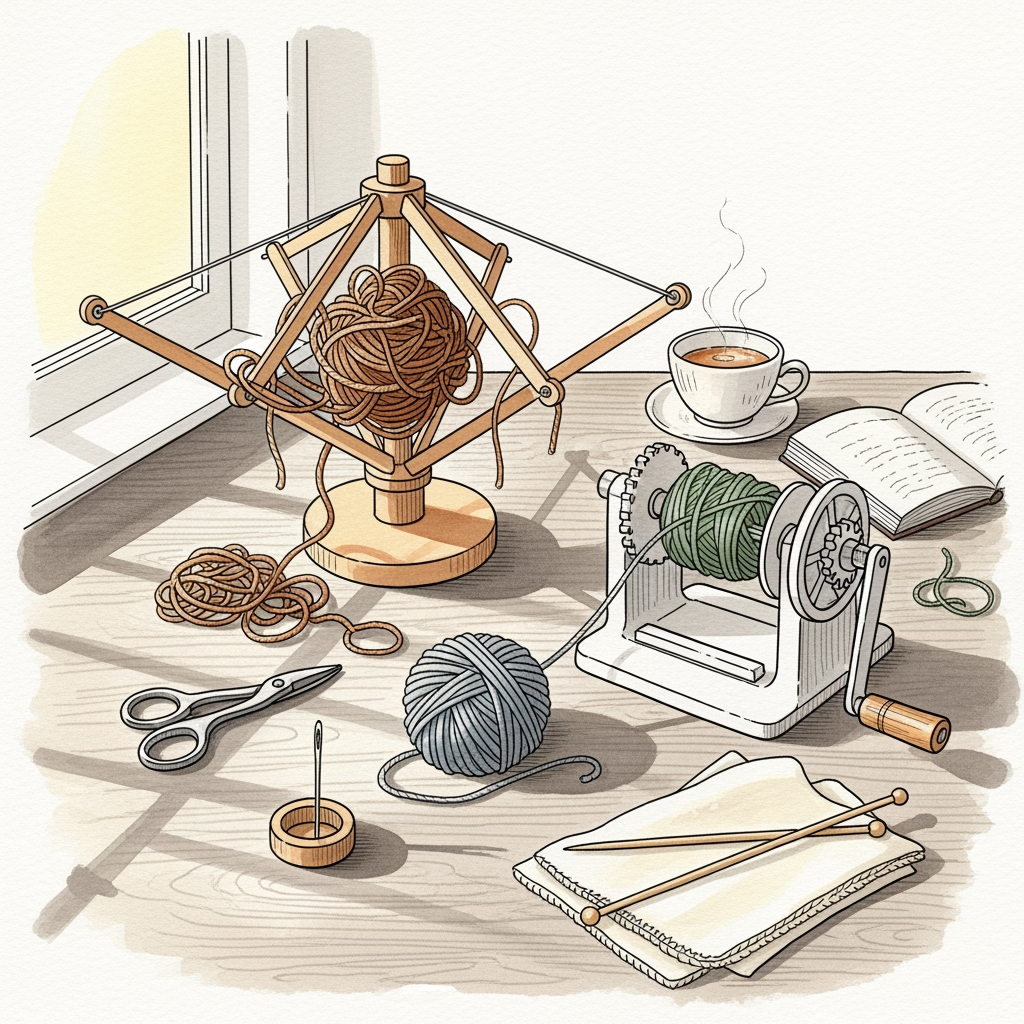
6 Best Yarn Swift Nylon Bearings For Quiet Operation
Upgrade your yarn swift with these 6 top nylon bearings. Discover how these smooth, quiet components reduce friction for a seamless, noise-free experience.
There is nothing quite as frustrating as sitting down to wind a fresh skein of hand-dyed wool, only to have your swift squeak and shudder with every rotation. A high-quality yarn swift is the unsung hero of a knitter’s studio, transforming tangled hanks into tidy, manageable cakes. The secret to a smooth, silent winding experience almost always lies in the quality of the bearings tucked away in the central hub. Choosing the right mechanism ensures your yarn flows freely without snags or unnecessary tension.
Stanwood Needlecraft Table Swift: Best Overall


The Stanwood Table Swift is widely considered the gold standard for a reason. Its heavy-duty construction and remarkably smooth rotation make it a favorite for those who wind large, bulky skeins of wool or delicate lace-weight mohair.

The secret here is the precision-engineered nylon bearing system. Unlike cheaper models that rely on friction-heavy plastic pivots, the Stanwood glides with minimal resistance. This is vital when working with fragile single-ply yarns that might snap if they catch on a jerky, uneven swift.
If you are a frequent winder, the stability of this unit is a game-changer. It anchors firmly to your table, allowing you to focus on the tension of your ball winder rather than wrestling with a wobbling tool. For the serious knitter, this is the investment piece that pays for itself in saved time and frustration.
Knit Picks Yarn Swift: Best Budget Option
If you only wind yarn occasionally, the Knit Picks swift is a reliable entry point that doesn’t sacrifice basic functionality. It is lightweight, portable, and gets the job done without taking up permanent residence on your crafting table.

While it lacks the heavy-duty feel of more expensive models, it uses a simple nylon-on-wood pivot system that functions surprisingly well. It is perfectly adequate for standard worsted-weight wool or cotton blends that don’t require high-tension precision.
Be mindful that this model is best suited for standard-sized hanks. If you regularly work with massive, 400-gram "jumbo" skeins, you might find the arms a bit flimsy. It is the perfect choice for the casual hobbyist who needs a functional tool without a professional-grade price tag.
Amish Style Wooden Swift: Best Manual Choice
The Amish-style swift is a beautiful, classic piece of equipment that operates on a different mechanical principle entirely. Instead of spinning on a central vertical axis, these units consist of wooden arms that expand to hold your hank in a stationary, upright position.
Because there are no high-speed rotating bearings to wear out, they are incredibly durable and quiet. You simply place your hank over the wooden pegs, and the yarn feeds off as you pull it toward your winder.
This design is particularly excellent for those who struggle with "yarn vomit" or tangles. Since you control the speed entirely, there is zero risk of the swift spinning out of control and causing a bird’s nest of yarn. If you prefer a slow, meditative winding process, the simplicity of this wooden design is unmatched.
U-nitt Tabletop Swift: Best Quiet Operation
The U-nitt Tabletop Swift is designed specifically for knitters who value a silent studio environment. Its internal nylon bearing assembly is shielded and polished, which virtually eliminates the grinding noise often associated with metal-on-metal components.
This swift is particularly helpful if you wind yarn in the evening while others are nearby. The rotation is fluid and consistent, meaning your yarn tension remains uniform throughout the entire cake.
The build quality is substantial, providing a steady base that doesn’t vibrate against your tabletop. For the knitter who wants a seamless, silent experience, the U-nitt is an exceptional choice that prioritizes smooth mechanics over flashiness.
Lacis Wooden Swift: Best Professional Grade
Lacis has long been a name associated with high-end fiber arts tools, and their wooden swift reflects that heritage. This is a tool designed for the professional or the dedicated enthusiast who handles expensive fibers like silk or cashmere on a daily basis.
The craftsmanship is superior, featuring smooth, sanded wood that won’t snag delicate fibers. The internal mechanism is robust, designed to handle thousands of rotations without developing the "wobble" that plagues lesser wooden tools.
Because it is made of natural wood, it feels substantial and premium in the hand. It is an heirloom-quality tool that will likely last you a lifetime if treated with basic care.
Nancy’s Knit Knacks Swift: Best Performance
Nancy’s Knit Knacks is known for engineering solutions to common knitting problems, and their swift is no exception. This model is designed for high-performance winding, featuring a specialized bearing system that is perhaps the most responsive on the market.
It is incredibly sensitive to the slightest pull, which is essential when winding fine lace weight or slippery synthetic fibers. If you are a high-volume knitter, you will appreciate how quickly and effortlessly this swift keeps up with your yarn winder.
It is a more technical-looking piece of equipment, but the performance gains are undeniable. If you find yourself winding multiple skeins a week, the efficiency of this model makes it a top-tier contender.
Why Nylon Bearings Matter for Quiet Knitting
Nylon is the preferred material for swift bearings because it is naturally "self-lubricating." Unlike metal, which requires regular oiling to prevent friction and noise, nylon provides a smooth, low-friction surface that stays quiet even after years of use.
If you have ever used a swift that sounds like a cricket chirping, it is likely because the bearing surface has worn down or the lubricant has dried out. Nylon bearings are much more forgiving in this regard, maintaining their integrity even in dry, dusty environments.
Furthermore, nylon is resistant to the natural oils from your hands and the humidity in your home. Choosing a nylon-bearing swift ensures that your winding process remains a peaceful part of your knitting routine rather than a noisy chore.
How to Maintain Your Yarn Swift for Longevity
Even the best nylon bearings benefit from basic maintenance to keep them rotating silently. Every few months, check the central hub for any stray yarn fibers or dust bunnies that may have migrated into the mechanism.
If your swift begins to feel sluggish, a tiny drop of sewing machine oil or a silicone-based lubricant can work wonders. Avoid heavy greases, as these tend to attract dust and can actually increase friction over time.
Always store your swift in a dry, cool place when not in use, especially if it is wooden. Extreme temperature fluctuations can cause wood to warp, which will throw off the alignment of your bearings and lead to uneven rotation. A little bit of preventative care ensures your swift stays as smooth as the day you bought it.
Comparing Metal vs Nylon Bearing Mechanisms
Metal bearings are often marketed as "heavy duty," but they are frequently overkill for the light resistance required by a yarn swift. They can be noisy, and if they are not perfectly sealed, they are prone to grit and grime buildup.
Nylon bearings, by contrast, offer a dampened, soft-touch rotation that feels more controlled. They are lighter, which allows the swift to start spinning with very little initial pull, reducing the risk of your yarn snapping during the first few turns.
Ultimately, metal bearings are better suited for high-speed, industrial applications, whereas nylon is perfectly optimized for the delicate, variable speeds of hand-winding yarn. For the majority of home knitters, nylon is the superior choice for both noise reduction and ease of use.
Troubleshooting Common Yarn Swift Noises
If your swift starts making noise, start by inspecting the base for stability. Often, a "squeak" is actually the sound of the swift’s clamp vibrating against the table surface rather than the bearing itself.
If the noise is definitely coming from the hub, check for yarn debris. A single strand of wool wound around the central spindle can create enough friction to cause a rhythmic clicking or dragging sound.
If the unit is clean and still noisy, check the tension of the center screw. Sometimes, simply loosening or tightening the central nut by a fraction of a turn can realign the nylon races and eliminate the sound entirely. Don’t panic at the first sign of noise; most swift issues are simple mechanical adjustments that take seconds to fix.
Investing in a high-quality yarn swift is one of the best decisions you can make for your long-term knitting comfort. By prioritizing nylon bearing systems, you ensure a quiet, smooth, and tangle-free winding experience every single time. Whether you choose a budget-friendly option or a professional-grade wooden model, the right tool makes all the difference in your creative process. Happy winding, and may your yarn cakes always be perfectly tensioned.

