6 Best Swift Clamps For Heavy Tables For Stability
Secure your heavy-duty projects with our guide to the 6 best swift clamps. Discover top-rated options that ensure maximum stability for large, stable tables.
Nothing ruins the rhythm of a productive winding session quite like a yarn swift that wobbles or slides mid-turn. When you are dealing with large, heavy hanks of hand-dyed wool, the physical drag can easily topple an unsecured tool. Choosing the right clamp is the difference between a meditative process and a tangled, frustrating mess. Here are the best options to keep your fiber stable and your winding smooth.
Stanwood Needlecraft Table Clamp: Best All-Rounder
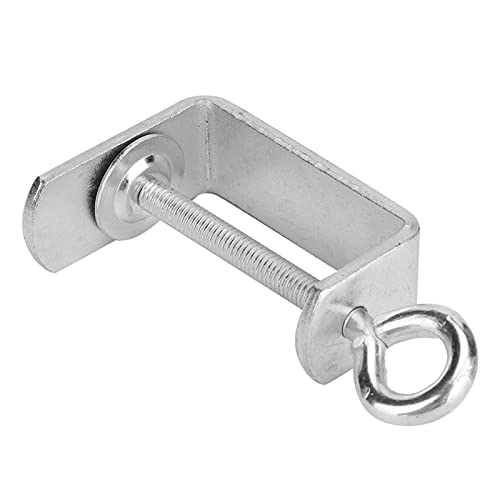

The Stanwood clamp is the gold standard for most home knitters who need reliability without overcomplicating their setup. Its design focuses on a wide, flat contact surface that distributes pressure evenly across the underside of your table.
This clamp excels because it accommodates a wide range of table thicknesses, from thin folding tables to thick wooden dining surfaces. It doesn’t rely on aggressive teeth that might mar your furniture, which is a major plus if you value your heirloom wood pieces.
If you frequently switch between winding lace-weight mohair and heavy, bulky wool, this clamp provides the consistent tension required for both. It is the steady hand you need when your swift is spinning at high speeds.
Lacis Heavy Duty Table Clamp: Top Pro Choice

When you move into the territory of winding massive, 500-gram hanks of rustic, high-twist yarn, the Lacis heavy-duty clamp becomes a necessity. This is a substantial piece of hardware built for the kind of torque that would snap a lesser, plastic-based clamp in half.
Its primary strength lies in the depth of the throat and the sheer force of the tightening screw. This allows you to lock the swift into place so firmly that it becomes an extension of the table itself.
For those who run a small business or share a swift with a knitting guild, this is the professional choice. It is overkill for a 50-gram ball of sock yarn, but for serious stash management, it is unparalleled.
Knit Picks Yarn Swift Clamp: Best Value Option

The Knit Picks option is a straightforward, no-nonsense solution that prioritizes accessibility and ease of use. It is lightweight, which makes it perfect for knitters who need to stow their gear away in a project bag or a small closet after use.
While it lacks the industrial-grade steel of more expensive models, it is more than sufficient for standard hanks of worsted-weight yarn. It grips well on most flat, finished surfaces, provided you don’t over-tighten the plastic components.
If you are a beginner or someone who only winds yarn occasionally, this is the smartest financial choice. It effectively solves the "slippage" problem without demanding a large investment in heavy hardware.
Amish Style Swift Mounting Base: Sturdy Design
The Amish-style base is unique because it often utilizes a wide, wooden footprint that relies on gravity and surface friction as much as the clamp itself. This design is inherently more stable because it creates a larger base of support for the rotating swift.
Because these bases are usually crafted from hardwood, they offer a tactile experience that matches the natural fibers we love to knit with. They feel substantial and look beautiful sitting out on a craft room table.
However, ensure your table edge is completely flat before purchasing, as these bases don’t always play nicely with beveled or rounded edges. They are best suited for traditional, sturdy wooden tables where you can really crank down the mounting hardware.
Strauch Fiber Equipment Clamp: Best for Heavies

Strauch is a name synonymous with high-end fiber preparation, and their clamp reflects that commitment to durability. This is engineered specifically to handle the weight and drag of large, heavy fiber loads without budging a millimeter.
If you are working with slippery fibers like silk or bamboo blends, you know that consistent tension is vital to avoid "yarn barf" or tangles. The Strauch clamp provides that rock-solid foundation, ensuring the swift rotates with perfectly uniform resistance.
It is a significant investment, but if you have a collection of high-end, expensive fibers, it acts as an insurance policy. You are paying for the peace of mind that your yarn won’t end up on the floor during a winding session.
Wooden Swift Extension Clamp: Top Custom Pick

The wooden extension clamp is the "hacker’s choice" for those with non-standard furniture. Many modern tables have deep aprons or thick edges that standard metal clamps simply cannot reach.
These custom wooden extensions allow you to bridge the gap, giving you a flat, secure mounting point where none existed before. It is a brilliant solution for knitters who are forced to use small side tables or desks that weren’t designed with fiber arts in mind.
While it requires a bit of DIY spirit to set up, it is often the only way to achieve stability on modern, minimalist furniture. It is a specialized tool that turns a "difficult" table into a functional winding station.
Why Heavy Tables Require Specialized Clamps
Heavy tables, by their nature, often have thick aprons or beveled edges that standard clamps cannot grip. A clamp that works on a thin card table will often fail to seat properly on a heavy, solid oak dining table.
Furthermore, the weight of the table itself doesn’t compensate for a poor clamp connection. If the clamp isn’t deep enough to reach the structural support of the table, the swift will still wobble, regardless of how heavy the table is.
You need a clamp that matches the geometry of your furniture. Always prioritize depth and surface area over simple tightening force when dealing with substantial, high-end tables.
How to Measure Your Table Edge for Stability
Before buying any clamp, take a tape measure and check two critical dimensions: the thickness of the tabletop and the depth of the apron. Many knitters forget the apron—the wood piece that sits beneath the tabletop—which can block a clamp from seating fully.
- Table Thickness: Ensure the clamp’s jaw capacity exceeds this by at least half an inch.
- Apron Depth: Check if there is enough flat space behind the apron for the clamp’s back plate.
- Surface Texture: Very slick, lacquered tables may require a thin piece of rubber shelf liner to prevent the clamp from sliding.
If your table has a decorative, rounded edge, a flat-jawed clamp will only contact at two points, making it prone to slipping. In this scenario, look for a clamp with a pivoting or padded head that can conform to the curve.
Proper Installation Tips for Yarn Swifts
Always start by placing a protective barrier between the clamp and your table. Even the best clamps can leave pressure marks on soft woods like pine or cherry over time.
When tightening, do so in small increments. You want the clamp to be firm, but you don’t need to treat it like a structural bolt on a bridge. If the swift still moves, the issue is usually a lack of surface area contact, not a lack of torque.
Check the alignment of your swift after installation. It should be perfectly level; if it’s tilting, the yarn will naturally drift toward the low side, leading to uneven tension and potential tangles.
Troubleshooting Common Swift Slippage Issues
If your swift is sliding, the most common culprit is a slick table surface. A small square of non-slip rug pad or a silicone coaster placed under the clamp base will provide the "bite" needed to stop lateral movement.
If the clamp itself is twisting, check if the jaw is fully seated against the underside of the table. If it’s only catching the edge, it will inevitably work itself loose under the centrifugal force of the spinning swift.
Finally, consider your winding speed. Even the most robust clamp will struggle if you are spinning the swift at an aggressive, uneven pace. Smooth, steady rotations are the secret to a perfect cake of yarn every single time.
Investing in a quality clamp is one of the most practical upgrades you can make for your knitting practice. By securing your swift properly, you stop fighting your tools and start focusing on the fiber itself. Take the time to measure your workspace, choose the clamp that fits your specific table, and enjoy the smooth, tangle-free winding you deserve. Happy knitting!