6 Best Swift Stands For Yarn Skeins Worth Owning
Discover the best yarn swifts for smooth winding. We compare six top-rated models to help you prevent tangles and streamline your fiber crafting projects.
Every knitter eventually reaches the point where a beautiful, hand-dyed hank of yarn becomes a tangled nightmare on their living room floor. A quality swift is the difference between a relaxing winding session and an hour spent detangling a bird’s nest of luxury fiber. These tools transform hanks into manageable cakes, ensuring your yarn stays pristine and ready for your next project. Investing in a reliable swift is a rite of passage that saves your sanity and protects your precious stash.
Stanwood Needlecraft Tabletop Yarn Swift


The Stanwood Needlecraft swift is often the first "serious" tool a knitter buys, and for good reason. It features a robust wooden construction that feels substantial under the hand, providing the stability needed when winding large, heavy skeins of worsted weight wool.
Its smooth rotation is the standout feature here, as it minimizes the tension spikes that can accidentally stretch out delicate yarn. If you are winding high-twist merino or silk blends, that consistent, low-friction spin is vital for maintaining the fiber’s original integrity.
While the clamp is generally reliable, be mindful of your table surface thickness. It is a workhorse for the average hobbyist, though it may require an occasional tightening of the screws to keep the umbrella mechanism gliding perfectly.
Amish Style Wooden Yarn Swift by Lacis

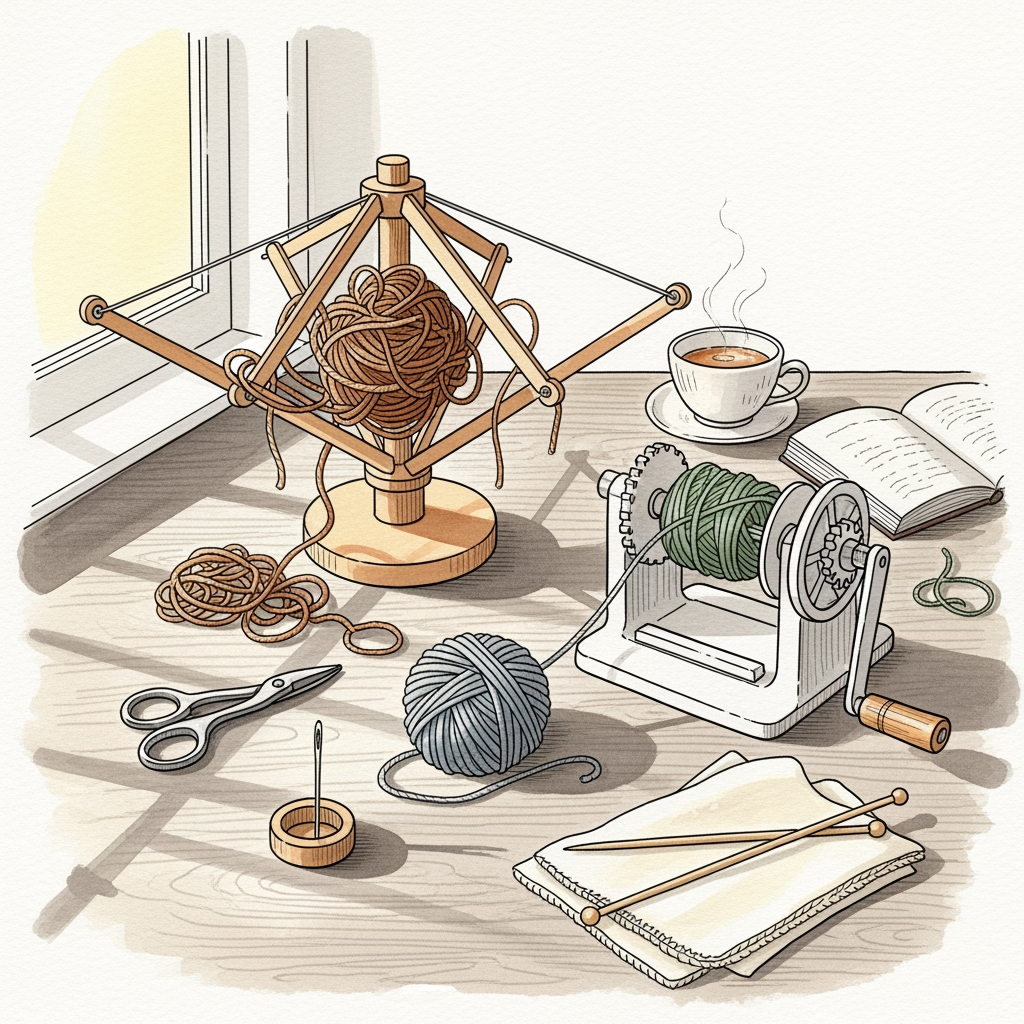
Amish-style swifts are a breath of fresh air for those who find the umbrella-style mechanisms prone to snapping or tangling. These consist of two perpendicular pieces of wood that rotate on a central spindle, offering a minimalist, "what you see is what you get" approach.
Because they lack complex moving parts, they are incredibly durable and easy to store. They are particularly excellent for those who work with very large or oddly shaped skeins that might overwhelm a standard umbrella swift’s capacity.
The trade-off is the footprint; these swifts require a wider surface area to operate effectively. However, for a knitter who values simplicity and longevity, the Lacis Amish swift is often the last one they will ever need to purchase.
KnitPicks Wooden Umbrella Yarn Swift

KnitPicks has mastered the balance of affordability and function with their wooden umbrella swift. It is a popular choice for knitters who want a classic, attractive tool that doesn’t break the bank but still performs reliably during routine winding.
The wood is finished smoothly, which is a non-negotiable requirement for me; you never want a rough edge catching on a strand of mohair or a single-ply yarn. It operates with a satisfying, rhythmic motion that makes the task of turning hanks into cakes feel like a meditative part of the craft.
It is best suited for standard-sized hanks of fingering to DK weight yarn. If you regularly handle massive, 200-gram skeins of bulky yarn, you might find yourself needing to keep a closer eye on the tension to ensure the umbrella doesn’t wobble.
Strauch Jumbo Ball Winder and Swift
If you are a serious stash-builder who frequently buys massive, artisan-dyed hanks, the Strauch system is the gold standard. This is not just a swift; it is an engineered solution for high-volume winding that handles weight and tension with professional precision.
The build quality is exceptional, designed to stand up to years of heavy use without the squeaking or loose joints that plague cheaper models. When you are winding expensive cashmere or hand-spun yarns, the peace of mind provided by a steady, high-capacity swift is worth every penny.
This is an investment piece for the dedicated fiber artist. If your knitting habit involves multiple sweaters a year, the efficiency and lack of frustration this tool provides will pay for itself in saved time and preserved yarn quality.
Nancy’s Knit Knacks Heavy Duty Swift
Nancy’s Knit Knacks is legendary in the knitting community for creating tools that are built to survive an apocalypse. Their heavy-duty swift is designed for the knitter who is tired of lightweight plastic or flimsy wood that shifts across the table during use.
The engineering focus here is on structural integrity and smooth, silent operation. It is heavy, stable, and features a design that prevents the yarn from slipping off the arms, even if you are winding at a brisk pace.
If you have a dedicated craft space where you can leave your swift set up, this is the one to choose. It is a specialized tool that prioritizes performance over portability, making it a favorite among those who value precision above all else.
ChiaoGoo Wooden Umbrella Yarn Swift
ChiaoGoo is already a household name for their needles, and their swift carries that same reputation for clean, thoughtful design. It is a beautiful piece of equipment that looks as good as it functions, fitting seamlessly into a modern knitting setup.
The umbrella mechanism is snappy and responsive, allowing for quick adjustments to accommodate different hank circumferences. It handles the transition from lace-weight silk to rustic wool with equal grace, provided you maintain a steady hand while winding.
This is a fantastic "middle-ground" choice for the intermediate knitter. It provides a significant step up in quality from entry-level options without the massive footprint or expense of professional-grade equipment.
Essential Features of a Reliable Yarn Swift
A reliable swift must have a smooth, snag-free surface to prevent damaging delicate fibers. If you work with natural fibers like alpaca or merino, any splinter or rough patch will snag the yarn, potentially causing pilling or breakage before the yarn even hits your needles.
Stability is the second pillar of a great swift. You want a heavy-duty clamp that secures firmly to your table, ensuring the device doesn’t "walk" or vibrate during the winding process.
- Adjustability: Can it handle different hank sizes?
- Rotation: Does it spin freely without resistance?
- Materials: Is the wood sealed or polished to prevent fiber friction?
Ultimately, the best swift is the one that disappears into the background of your process. You should be thinking about your upcoming project, not fighting with a tool that refuses to spin.
How to Properly Use a Swift With a Ball Winder
The secret to a perfect cake lies in the alignment between your swift and your ball winder. They should be positioned so that the yarn flows in a straight, gentle line, rather than at a sharp angle that creates uneven tension.
Start by placing your hank on the swift and removing the ties, but keep the yarn slightly taut. If the yarn is too loose, it will tangle; too tight, and you will stretch the fiber, which can lead to gauge discrepancies later in your project.
Always wind at a consistent, moderate speed. Rushing leads to "yarn barf," where the center of the cake collapses, or tension inconsistencies that can make your knitting look uneven. Take your time; the winding process is the start of your project’s journey.
Maintenance Tips for Your Wooden Yarn Swift
Wooden swifts are living tools and require a bit of care to stay in top shape. Periodically check the screws and joints to ensure they are secure, but avoid over-tightening, which can cause the wood to crack or the mechanism to bind.
If the rotation starts to feel sluggish, a tiny drop of furniture wax or a specialized wood lubricant can work wonders. Avoid using heavy oils that might stain your yarn or attract dust, which will eventually grind into the wood and cause friction.
Keep your swift in a climate-controlled area when not in use. Extreme humidity or dryness can cause wood to warp or shrink, which will eventually throw the entire umbrella mechanism out of alignment.
Choosing Between Umbrella and Amish Swifts
Choosing between these two styles usually comes down to your storage space and the volume of yarn you process. Umbrella swifts are excellent for those with limited space, as they fold down into a compact, easy-to-store form.
Amish swifts are the better choice for knitters who prioritize durability and have the table space to accommodate them. They are virtually indestructible and provide a very stable base for winding heavy-duty yarns or large skeins.
- Choose Umbrella if: You have limited storage and prefer a compact, portable tool.
- Choose Amish if: You want a lifetime tool that handles large skeins with ease and you have the space to keep it accessible.
Selecting the right swift is about matching your tool to your specific knitting habits and the types of fiber you love most. Whether you opt for the space-saving convenience of an umbrella model or the rugged simplicity of an Amish-style setup, the goal is to make your winding process as seamless as possible. Remember that a well-cared-for tool will serve you for decades, protecting your stash and ensuring every project starts on the right foot. Happy knitting, and may your yarn always flow smoothly from hank to hook.