6 Best Tabletop Yarn Feeders For Tangle-Free Knitting
Stop tangles from ruining your rhythm. We review the 6 best tabletop yarn feeders to ensure smooth tension, effortless knitting, and organized workspaces.
Every knitter knows the frustration of a yarn cake rolling off the sofa or a tangled mess of fiber mid-row. A quality tabletop yarn feeder transforms your workspace from a chaotic pile into a smooth, professional-grade studio. By stabilizing your fiber, you ensure that every stitch is worked with consistent, even tension. These six tools are the gold standard for keeping your yarn flowing exactly where you need it.


Yarn Valet: Best Desktop Yarn Feeder Overall
The Yarn Valet is a staple for a reason: it is simple, effective, and incredibly compact. It sits unobtrusively on your table, holding your yarn cake steady while allowing the strand to pull freely from the center.

It is particularly useful when you are working with slippery fibers like silk or bamboo blends that tend to slide off the table and pick up floor dust. By guiding the yarn through a weighted tension arm, it prevents the "yarn vomit" that often happens when a center-pull cake collapses.
The bottom line? If you want a no-fuss solution that works with almost any weight of yarn, the Yarn Valet is your best bet. It doesn’t require complex setup, making it perfect for knitters who want to grab their needles and start immediately.
Amish Style Wooden Yarn Swift: Best for Skeins
If you buy hand-dyed yarn, you are likely dealing with hanks that must be wound before use. An Amish style swift is a beautiful, functional piece of equipment that allows you to wind those hanks into cakes without a second pair of hands.
Unlike umbrella swifts, which can be bulky and prone to mechanical failure, the wooden Amish style is sturdy and collapsible. It provides just enough resistance to keep the yarn taut, ensuring your resulting cake is wound perfectly for a center-pull experience.
However, remember that these require a bit of floor or table space to rotate freely. If you are working in a cramped nook, you will need to clear a radius around the swift to prevent the yarn from snagging on nearby furniture.
Stanwood Needlecraft Yarn Ball Winder: Best Pick
A high-quality ball winder is the partner to your swift, turning loose hanks into compact, manageable cakes. The Stanwood model is widely regarded for its heavy-duty metal gears and smooth operation.
When you wind your own cakes, you have control over the tension of the ball itself. A cake wound too tightly can stretch the yarn, which is a disaster for delicate fibers like merino or alpaca, as it can ruin the elasticity of your finished garment.
This winder is an investment, but it pays off when you spend hours knitting a sweater. It creates a stable, flat-bottomed cake that sits perfectly on your table or inside a yarn bowl, ensuring it won’t topple over mid-row.
Nancy’s Knit Knacks Yarn Ball Butler: Best Value
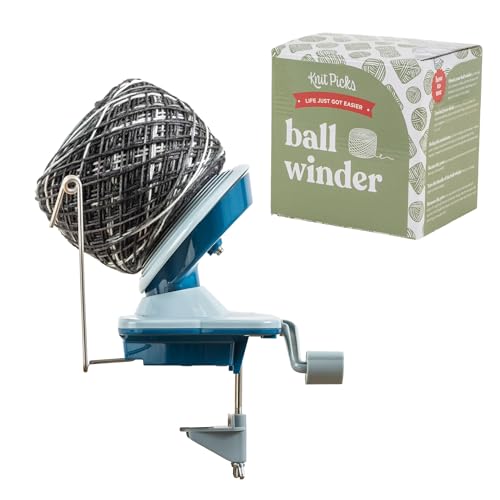
The Yarn Ball Butler is a clever, budget-friendly tool that uses a simple vertical spindle to hold your yarn cake. It is incredibly effective at keeping the yarn from tangling while you work through complex colorwork or long lace repeats.
It is a fantastic choice if you already have a winder but need a way to keep the resulting cakes from unraveling. Because the spindle is tall, it can accommodate larger cakes, making it ideal for those projects requiring 200+ grams of yarn.
The trade-off here is the footprint; it is a dedicated piece of gear that needs its own spot on your table. If your knitting space is shared with other hobbies, ensure you have a stable surface where it won’t be knocked over.
Cocoknits Yarn Ball Holder: Best Modern Design

Cocoknits is known for their minimalist, functional aesthetic, and their yarn ball holder is no exception. It features a weighted base and a smooth center spindle, designed to keep your yarn cake from dancing across the table.
This tool is particularly helpful for knitters who prefer a clean, organized workspace. It looks beautiful on a desk, but more importantly, it functions perfectly for those who use center-pull cakes and want to ensure the yarn doesn’t catch on the edges of the cake.
If you are a knitter who values both form and function, this is the premium choice. It is durable, easy to clean, and provides a very smooth feed that is essential for maintaining even gauge during long knitting sessions.
KnitIQ Yarn Feeder Stand: Best for Portability

If you are a traveling knitter who frequents cafes or knitting circles, the KnitIQ stand is a game-changer. It is designed to be lightweight yet stable, providing a consistent feed for your yarn wherever you set up.
The stand keeps the yarn at the perfect height, which reduces the drag that happens when yarn pulls directly from a bag on the floor. This reduction in drag is critical for maintaining your gauge, especially when working with sticky wools that naturally resist sliding.
It breaks down easily, making it the most portable option on this list. While it may not have the heavy-duty weight of a stationary wooden stand, its convenience for the on-the-go maker is unmatched.
Why Use a Yarn Feeder for Consistent Tension
Consistent tension is the hallmark of a professional-looking project. When you pull yarn directly from a ball rolling on the floor, the tension fluctuates every time the ball hits a snag or rolls over itself, leading to uneven stitches.
A yarn feeder acts as a stabilizer, smoothing out these fluctuations. When you use a feeder, your hands can focus entirely on stitch formation rather than managing the erratic movement of the yarn source.
This is especially vital for beginners who are still developing their "knitting rhythm." By removing the variable of erratic yarn supply, you allow your muscle memory to develop more quickly, leading to smoother, more uniform fabric.
Essential Features to Look for in Yarn Feeders
When choosing a feeder, prioritize stability, material, and friction control. You want a base that is heavy enough to stay put, or one that clamps securely to your table edge.
- Weight: A heavy base prevents the feeder from tipping when you pull quickly.
- Smoothness: The spindle or guide must be polished or coated to avoid snagging delicate fibers.
- Versatility: Look for a feeder that handles both center-pull cakes and outside-pull balls.
- Portability: Consider if you need to move the tool between rooms or take it to workshops.
Avoid flimsy plastic models that flex under the tension of bulky yarn. You want a tool that feels solid, as any vibration or movement in the feeder will transfer directly into your knitting.
How to Prevent Tangles with Desktop Feeders
Even with the best equipment, tangles can happen if the yarn is wound improperly. Always ensure your yarn cakes are wound with even tension; a cake that is too loose will collapse, while one that is too tight will "grab" itself.

If you are using a center-pull cake, make sure you have pulled out a small amount of "slack" before you start your row. This prevents the yarn from catching on the inner core of the cake as you work.
If you notice your yarn is twisting as it comes off the feeder, rotate the ball or the feeder itself 180 degrees. Often, the direction of the wind on the ball conflicts with the direction of your stitch, and a simple flip is all it takes to restore a smooth flow.
Maintenance Tips for Your Knitting Accessories
Treat your yarn feeders like the precision tools they are. If you have a wooden swift or holder, keep it away from direct heat or moisture, which can cause the wood to warp or the finish to become sticky.
Periodically check the moving parts of your ball winder or the spindle of your feeder for dust or stray fiber. A buildup of wool fibers can create friction, causing the yarn to snag or the winder to seize up.
A quick wipe-down with a soft, dry cloth is usually sufficient for most materials. If you have a metal component that feels stiff, a tiny drop of sewing machine oil can work wonders, but always wipe away the excess to ensure no oil transfers to your precious yarn.
Investing in a tabletop yarn feeder is a commitment to the quality and longevity of your knitting projects. Whether you choose a portable stand or a sturdy wooden swift, the goal is to remove friction and frustration from your process. By stabilizing your yarn, you empower yourself to focus on the rhythm of your needles and the beauty of your stitches. Happy knitting, and may your yarn always flow as smoothly as your patterns.