6 Best Notebook Inserts For Knitting Patterns To Try
Organize your projects with these 6 top notebook inserts. From stitch trackers to yarn logs, discover the best tools to streamline your knitting workflow.
Knitting is as much about the process of documentation as it is about the rhythmic click of needles. While digital trackers are convenient, the tactile experience of logging your progress on paper provides a permanent, tangible record of your craft. Choosing the right notebook insert can transform your knitting journal from a messy collection of scraps into a cherished library of your fiber journey. Here are six notebook systems that elevate the way you track your stitches, swatches, and design ideas.
Hobonichi Techo Planner: Best for Daily Tracking
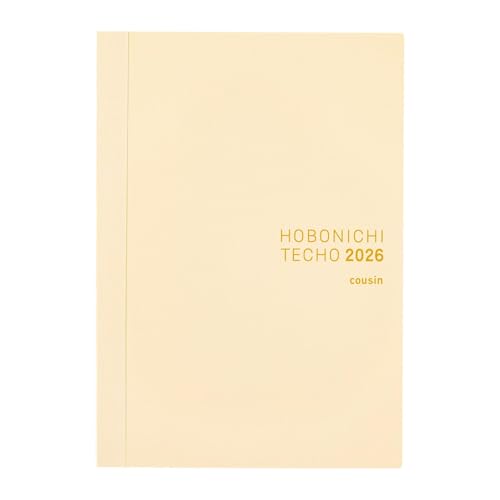

The Hobonichi Techo is a favorite among knitters who treat their craft like a daily ritual. Its grid layout is perfectly sized for recording a few rows of progress or noting a quick gauge adjustment before heading to the yarn shop.
Because it uses Tomoe River paper, it is incredibly thin yet durable enough to handle fountain pen ink without bleeding. If you are the type of knitter who keeps a "knitting diary" alongside your projects, this offers enough space to track daily row counts for complex lace patterns.
However, the small size can be a limitation for larger, more intricate charts. If you are working on a stranded colorwork sweater with a massive motif, you may find the page real estate a bit cramped.
The bottom line: Choose this if you value daily consistency and want to keep your knitting life neatly folded into your everyday schedule.
Midori MD Notebook: Best for Minimalist Knitters
Midori MD notebooks are the blank canvas every designer craves. Their paper has a slight "tooth" that feels wonderful under a pencil, making it ideal for sketching out sweater schematics or cable motifs by hand.
Minimalism here isn’t just an aesthetic; it’s a functional choice. Without pre-printed lines or grids to constrain you, you are free to tape in yarn labels, attach tiny fiber samples, or write long-form notes about how a specific wool blend bloomed after its first wash.

The trade-off is the lack of structure. If you struggle with keeping your notes organized, you might find yourself losing track of vital information like needle sizes or yardage requirements amidst a sea of sketches.
The bottom line: This is for the knitter who wants a clean, distraction-free space to document the evolution of their own original designs.
Leuchtturm1917 Dotted: Best for Pattern Mapping
The Leuchtturm1917 dotted layout is essentially the gold standard for mapping out knitting patterns. Those subtle dots provide just enough guidance for drawing out complex stitch repeats without the visual clutter of a full graph paper grid.
I often recommend this for knitters who are transitioning from following patterns to modifying them. You can easily draw out a custom chart for a sleeve increase or a neckline adjustment while keeping your columns perfectly aligned.
The paper is slightly thicker than the Hobonichi, which means you can use heavier pens or markers to color-code your charts. Just be mindful of ghosting if you press hard with dark ink while marking your stitch repeats.
The bottom line: If you love to modify patterns or create your own charts, the dotted grid is your most versatile tool.
Rhodia Goalbook: Best for Charting Custom Designs
Rhodia paper is famous for its smoothness, which makes it a dream for those who use technical pens to draw crisp, clean charts. The Goalbook specifically includes undated monthly and weekly spreads that can be repurposed to track project deadlines or yarn stash inventory.
When you are designing a garment, you need a system that can handle both the mathematical side—like calculating stitch counts for different sizes—and the creative side. This notebook handles both with ease.
Be aware that the paper is very slick. If you prefer the tactile feedback of a pencil, you might find it a bit too smooth, causing your lead to slide more than you’d like.
The bottom line: Ideal for the technical knitter who demands high-precision paper for drafting complex design schematics.
Traveler’s Company Refill: Best for Modular Sets

The Traveler’s Company system is the ultimate choice for the knitter who juggles multiple projects at once. Because the inserts are modular, you can dedicate one refill entirely to socks, another to sweaters, and a third to your yarn stash records.
This modularity allows you to carry only what you need to the local knit night or on a long flight. You can swap out a finished project insert for a fresh one without ever losing the continuity of your overall journal.
The challenge is keeping the separate booklets organized. You will need a system, like color-coded covers or labels, to ensure you don’t grab your lace shawl notes when you’re looking for your hat pattern.
The bottom line: Perfect for the multi-project knitter who needs a portable, flexible system that scales with their workload.
Archer & Olive Dot Grid: Best for Ink Bleed Proof
Archer & Olive notebooks are legendary for their thick, heavy-weight paper. If you like to use fountain pens, highlighters, or even paint to illustrate your knitting notes, this is the only choice that will prevent bleed-through.
When you are documenting a project that involves a lot of colorwork, you might want to use markers to represent specific yarn colors in your charts. This paper handles that kind of heavy ink application without warping or ruining the opposite side of the page.
Because the paper is so thick, the notebook itself is heavier and less portable than others on this list. It’s a stationary workhorse rather than a travel companion.
The bottom line: The go-to for knitters who love to use vibrant, wet-ink media to bring their project pages to life.
Why Paper Notebooks Still Beat Digital Pattern Apps
Digital apps are great for row counting, but they lack the soul of a physical journal. When you write down your notes, you are forced to slow down and process the mechanics of the stitch, which often leads to fewer mistakes in the long run.
A paper notebook also preserves your "knitting history." Looking back at a journal from five years ago allows you to see how your tension has improved, what fibers you’ve grown to love, and how your style has evolved.
Apps can crash, update, or disappear, but a well-kept notebook is a legacy. It becomes a reference book for your own unique gauge and preferences that no generic app can replicate.
How to Organize Your Knitting Notes by Project Type
To get the most out of your notebook, categorize your entries by project type. I recommend keeping a "Master Index" at the front of your notebook where you list the project name, the yarn used, and the needle size for quick reference.
For garments, dedicate a spread to "Fitting Notes." Record your gauge, the size you chose, and any modifications you made to the length or shaping, as this will save you hours of math on your next sweater.
For accessories like socks or hats, keep a "Stitch Library" section. If you find a cable repeat you love, document it once in the back of the book so you can easily reference it for future projects.
Key Features to Look for in Knitting Journal Paper
When shopping for inserts, look for paper that balances texture and performance. You want enough tooth to grab a pencil, but not so much that it causes your pen to fray or feather.
- Weight: Aim for 80gsm or higher to prevent ink bleed.
- Layout: Dot grid is generally the most versatile for both writing and drawing charts.
- Binding: Ensure the notebook lays flat; a book that snaps shut while you are trying to read a chart is a knitter’s nightmare.
Always test your preferred writing instruments on the back page before you start your main project. A pen that works beautifully on standard copy paper might behave differently on high-quality stationery.
Tips for Documenting Your Yarn Swatches and Notes
Never throw away your swatch without documenting it. Tape a small snippet of the yarn into your notebook and write down the needle size used, the gauge achieved, and whether the fiber grew or shrank after blocking.
Include the WPI (Wraps Per Inch) for mystery yarns found in your stash. This simple measurement helps you identify the weight of a yarn when the label has long since vanished.
Finally, be honest about the experience. Did the yarn split? Was it itchy? Did it pill after a few wears? Recording these details turns your notebook into a personal database that will guide your future yarn purchases and prevent repeat mistakes.
Your knitting journal is a living document that grows alongside your skills, capturing both the triumphs and the tangled moments of your craft. Whether you prefer the structure of a dot grid or the freedom of a blank page, the act of writing down your process is what truly cements your development as a maker. Invest in a notebook that feels good in your hands, and you will find yourself reaching for it as often as your favorite pair of needles. Happy knitting, and may your stitches always be even and your notes always clear.